

Equinor Awards NOK 6 Billion in Contracts to Accelerate Four Norwegian Continental Shelf Subsea Projects
Equinor, acting on behalf of its project partners, has awarded contracts valued at approximately NOK 6 billion to support four major subsea development projects on the Norwegian continental shelf (NCS). The investment represents the first coordinated wave of several planned subsea developments that are expected to transform how offshore resources are developed over the coming decade.
The contract awards are part of Equinor’s broader strategy to streamline subsea development activities by coordinating procurement across multiple projects. Through standardized equipment, closer collaboration with suppliers, and simplified execution models, the company aims to significantly reduce project costs and shorten development schedules while maximizing the value of offshore discoveries.
The four developments are expected to collectively contribute between 130 million and 220 million barrels of oil equivalent (boe) to future production on the Norwegian continental shelf, reinforcing Norway’s position as one of Europe’s leading energy producers.
Coordinated Development Strategy
The latest contract awards mark the beginning of a long-term subsea development program that Equinor plans to implement through 2035. Rather than executing each project independently, the company is introducing a coordinated approach that allows multiple developments to progress simultaneously using standardized equipment and shared procurement strategies.
This model is designed to improve efficiency while providing suppliers with greater visibility into future demand. By consolidating procurement activities across several projects, Equinor expects to reduce duplication, simplify engineering work, and optimize installation schedules.
According to Gunnar Nakken, Senior Vice President for Projects and Subsea on the Norwegian continental shelf at Equinor, the company anticipates approximately 75 subsea developments by 2035.
He explained that unlocking these resources requires a fundamentally different approach to project execution. Many of the remaining offshore discoveries are relatively small compared with traditional developments, making cost efficiency and faster execution essential for ensuring commercial viability.
Equinor’s long-term objective is to reduce both project costs and execution time by as much as 50 percent through standardized solutions, improved planning processes, and stronger collaboration with project partners and the offshore supply chain.
Supporting Future Energy Production
The four subsea developments included in this first coordinated wave represent an important contribution to Norway’s future oil and gas production.
Together, the projects are expected to deliver between 130 million and 220 million barrels of oil equivalent over their operating lives. These additional resources will help sustain production from existing offshore infrastructure while maximizing recovery from mature producing regions.
Rather than constructing entirely new production facilities, each project will utilize existing offshore platforms through subsea tie-back solutions. This development strategy reduces capital expenditure, lowers environmental impact, and accelerates production timelines by making use of existing processing capacity.
Subsea tie-back developments have become an increasingly important component of offshore field development on the Norwegian continental shelf because they enable operators to commercialize smaller discoveries that would otherwise be uneconomic.
Industry Collaboration Drives Cost Reduction
Equinor believes that stronger cooperation with suppliers is essential to achieving its ambitious efficiency targets.
Jannicke Nilsson, Chief Procurement Officer, emphasized that coordinated procurement increases competition while providing suppliers with improved predictability regarding future project opportunities.
Instead of awarding contracts individually over several years, the company is creating larger procurement packages that enable suppliers to optimize production planning and deliver equipment for multiple projects simultaneously.
This approach also strengthens long-term partnerships across the offshore supply chain and encourages suppliers to invest in manufacturing capacity, innovation, and standardization.
According to Nilsson, the industry’s positive response demonstrates significant potential for reducing costs while maintaining high quality and technical performance.
She noted that expanding this collaborative model could make smaller offshore discoveries commercially attractive while helping sustain long-term activity across the Norwegian continental shelf.
Major Contracts Awarded
Several leading offshore engineering and technology companies have secured contracts under the NOK 6 billion investment program.
TechnipFMC has been awarded responsibility for delivering subsea production systems for the Brime, Omega Sør, and Tyrihans Nord developments.
In addition to supplying subsea production equipment, the company will install rigid pipelines for the Troll field. The linepipe required for these installations will be supplied by Tenaris, providing critical infrastructure for transporting hydrocarbons from the subsea developments.
OneSubsea has secured the contract to deliver the subsea production system for the TWIN project.
The company will also provide umbilicals for all four developments. Umbilicals play a critical role in subsea operations by transmitting power, communications, hydraulic fluids, and chemical injection services between offshore platforms and subsea production systems.
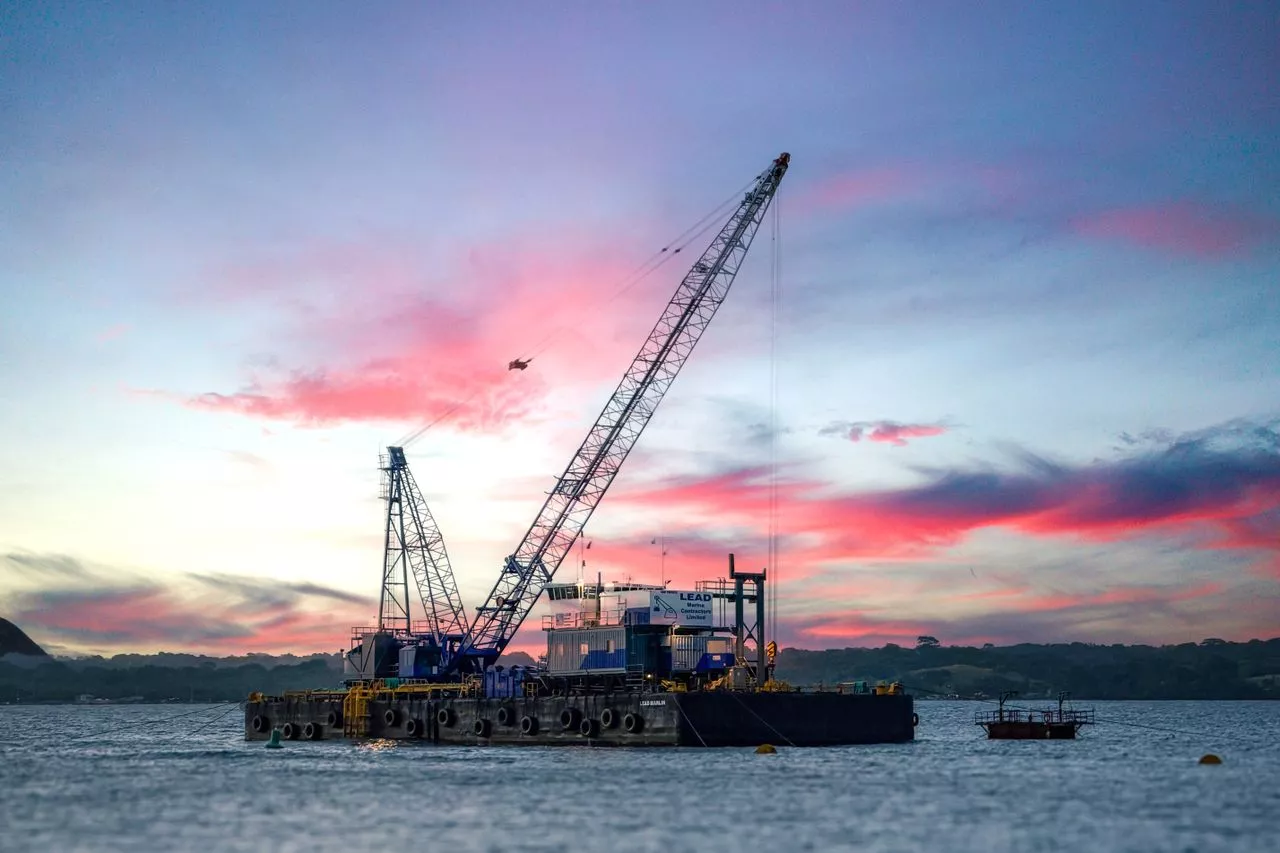
Ocean Installer has received the contract covering marine installation operations.
Its scope includes installing and connecting subsea facilities, flexible pipelines, and subsea control cables. Marine installation represents one of the most technically demanding phases of offshore development, requiring specialized vessels and experienced offshore crews.
NOV has been selected to manufacture and supply flexible pipelines for the Omega Sør, Tyrihans Nord, and Brime developments.
Flexible pipelines are designed to transport oil and gas safely under challenging offshore conditions while accommodating movement caused by ocean currents and production operations.
Investing Early to Accelerate Development
A notable feature of Equinor’s strategy is its decision to order equipment before every project has received final investment approval.
Many subsea production components have long manufacturing lead times, which can delay development schedules if procurement begins only after project sanction.
By placing orders early, Equinor intends to shorten the time required to move discoveries into production.
The company is purchasing standardized equipment that can be redeployed if any project in the initial development wave is delayed or does not receive regulatory or partnership approval.
This flexible procurement model reduces project risk while maintaining momentum across the broader development portfolio.
According to Nakken, early investment is essential if Equinor is to achieve its goal of cutting the time from discovery to first production by half.
Overview of the Four Projects
The coordinated development program includes four subsea projects located in different producing areas of the Norwegian continental shelf.
The TWIN project will be connected to the Troll A platform, utilizing existing infrastructure to process production from the new subsea facilities.
Omega Sør is planned as a subsea tie-back to the Snorre A platform, one of the major producing assets in the North Sea.
Tyrihans Nord will be developed using the existing Kristin platform, allowing hydrocarbons from the new subsea installations to be processed through established production facilities.
The Brime project will be tied back to Gullfaks C through the existing Visund Sør subsea template, further extending the productive life of existing offshore infrastructure while minimizing new capital investment.
Each project follows the industry’s growing preference for subsea tie-back developments, enabling operators to maximize existing offshore assets while reducing both development costs and environmental footprint.
Project Approval Status
Among the four developments, only the TWIN project has so far received formal approval from the ownership partnership.
In accordance with Norway’s Petroleum Act, the partnership has submitted the required notification regarding the planned development to the Ministry of Energy.
The remaining projects—Omega Sør, Tyrihans Nord, and Brime—are continuing through their respective partnership evaluation and approval processes.
Final investment decisions for these developments will be made following internal partner reviews and regulatory consideration by Norwegian authorities.
Although additional approvals remain outstanding, the coordinated contract awards ensure that critical long-lead equipment will be available when project sanctions are granted, minimizing delays and supporting faster execution.
Building the Future of Norway’s Offshore Industry
The NOK 6 billion contract awards represent more than the launch of four individual projects. They illustrate a broader shift in how Equinor and its partners intend to develop offshore resources in the years ahead.
By combining standardized subsea technology, coordinated procurement, early equipment investment, and stronger supplier collaboration, the company aims to unlock smaller discoveries that may previously have been considered uneconomic.
With approximately 75 subsea developments envisioned by 2035, this first coordinated wave establishes a framework for improving efficiency across the Norwegian continental shelf while sustaining offshore production, supporting the domestic supply chain, and maintaining Norway’s position as a leading global energy producer. The initiative demonstrates how innovation in project execution can deliver both economic and operational benefits, ensuring that offshore resources continue to contribute to Europe’s long-term energy security.
Source Link: https://www.equinor.com/