

Iberdrola Advances Circular Economy Through UK Wind Farm Refurbishment
Iberdrola is reinforcing its commitment to the circular economy by demonstrating how the refurbishment and repowering of aging renewable energy assets can deliver environmental benefits while supporting local businesses, employment and the wider clean energy supply chain.
Through ScottishPower Renewables, Iberdrola Group’s renewable energy business in the United Kingdom, the company has highlighted the potential of modernising older wind farms following the decommissioning of Hagshaw Hill 1 in Scotland. The facility, which began commercial operations in 1995, was Scotland’s first commercial wind farm and has now been replaced by a new generation of larger and more efficient turbines.
A report prepared by engineering and consultancy company Mott MacDonald found that 99.9% of the materials removed during the decommissioning of Hagshaw Hill 1 were either recycled or reused. The result illustrates how applying circular economy principles throughout the life cycle of renewable energy infrastructure can significantly reduce waste and maximise the value of materials once a facility reaches the end of its original operating life.
The findings also highlight the broader economic opportunities associated with repowering established wind farm sites. Rather than simply replacing old infrastructure, refurbishment and repowering projects can create demand for specialist engineering, construction, logistics, recycling and manufacturing services. This can strengthen domestic supply chains while enabling renewable energy companies to make more efficient use of existing sites and infrastructure.
Repowering Creates New Clean Energy Capacity
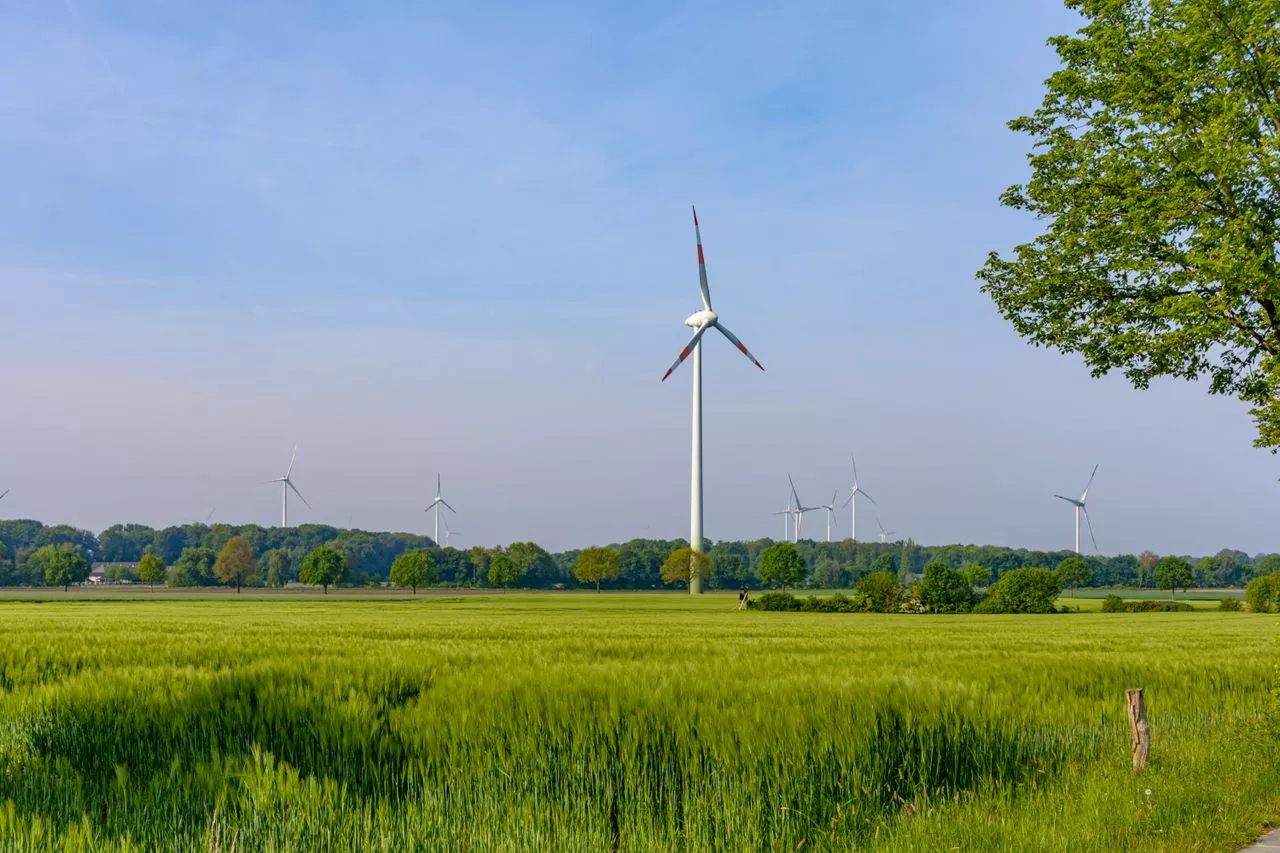
The redevelopment of Hagshaw Hill 1 represents a significant increase in the amount of renewable electricity that can be generated at the site. The original wind farm has been replaced by 14 modern turbines, raising the site’s generation capacity to 80 megawatts (MW).
According to Iberdrola, the upgraded facility is capable of supplying electricity equivalent to the annual consumption of approximately 57,000 homes. The increase demonstrates the potential of repowering as a way of expanding renewable electricity production without necessarily requiring entirely new locations to be developed.
Modern wind turbines can generate substantially more electricity than many of the machines installed during the early stages of the UK’s commercial wind industry. Improvements in turbine design, rotor dimensions, efficiency, digital monitoring and operating technology mean that a smaller number of modern machines can often deliver significantly greater output than older turbines.
For developers, this creates an opportunity to maximise the energy potential of established wind farm locations. For communities and policymakers, repowering can also provide a pathway to increase renewable generation while making productive use of sites that already have a history of supporting clean energy infrastructure.
Circular Economy Principles at the Core
One of the most notable aspects of the Hagshaw Hill 1 project is the high proportion of decommissioned materials that were diverted from waste streams. The 99.9% recycling and reuse figure demonstrates the potential for renewable energy infrastructure to participate in a more circular model of resource management.
Wind farms contain a range of valuable materials, including metals, electrical equipment, concrete and composite components. Recovering these materials at the end of a project’s operating life can reduce the need for virgin resources and limit the amount of material sent to landfill or otherwise discarded.
Wind turbine blades have traditionally presented a particular challenge because they are primarily manufactured from complex composite materials designed for strength and durability. As the global wind industry expands and an increasing number of older turbines reach the end of their original service lives, blade recycling and reuse are becoming increasingly important areas of development.
Iberdrola has identified blade recycling as one of the opportunities emerging from the transition toward a more circular renewable energy industry. Recovered blade materials can potentially be processed and incorporated into applications such as construction and engineering products, helping to extend the useful life of materials that would otherwise become waste.
The development of recycling solutions for turbine components could also help reduce the environmental impact associated with manufacturing new infrastructure. By recovering and reusing materials, the renewable energy sector can move closer to a model in which equipment and resources remain in productive use for as long as possible.
Benefits for Scotland’s Supply Chain
The Hagshaw Hill 1 refurbishment also illustrates the economic role that renewable energy repowering can play in Scotland and across the wider UK.
According to ScottishPower Renewables, the project generated contracts for businesses in Scotland and other parts of the United Kingdom. Such activity can support employment while providing opportunities for companies involved in engineering, construction, transportation, equipment handling, materials recovery and other specialist services.
Repowering can therefore deliver benefits beyond the electricity generated by a wind farm. The process requires a range of activities, from dismantling and transporting existing equipment to preparing sites, installing new turbines and managing materials recovered from the previous development.
The emergence of businesses specialising in renewable equipment refurbishment, component reuse and recycling could create additional opportunities as more wind farms reach the end of their initial operating periods.
This could become increasingly relevant as the UK continues to expand its renewable energy capacity and seeks to build a stronger domestic clean energy supply chain. Maintaining expertise in areas such as turbine maintenance, decommissioning, recycling and repowering can help ensure that economic value remains within local and national markets.
Extending the Value of Renewable Energy Assets
Iberdrola views Hagshaw Hill 1 as an example of how the renewable energy sector can combine increased clean power generation with resource efficiency and economic development.
Instead of treating the end of a wind farm’s initial operating period as the end of its economic and environmental value, repowering allows an existing site to be transformed for continued renewable electricity production. At the same time, materials from the original project can be recovered, recycled or reused wherever technically and economically feasible.
This approach can help reduce pressure on natural resources while supporting the continued expansion of renewable electricity. It also provides a framework for considering renewable energy projects across their entire life cycle, from initial construction and operation through to decommissioning and redevelopment.
For Iberdrola, the experience at Hagshaw Hill 1 reinforces the importance of incorporating circularity into future renewable energy development. As the UK’s wind fleet continues to mature, the ability to efficiently manage aging infrastructure and extract maximum value from existing assets will become increasingly important.
The company’s experience also points toward a broader evolution in the renewable energy industry. Future wind projects are increasingly expected not only to generate low-carbon electricity but also to address questions surrounding materials, waste, supply chains and end-of-life management.
Supporting the Next Generation of Wind Farms
The replacement of Hagshaw Hill 1 with 14 modern turbines represents a transition from one generation of wind technology to another. The site’s new 80 MW capacity demonstrates how repowering can significantly increase renewable generation while maintaining the productive use of an established wind energy location.
At the same time, the reported 99.9% recycling and reuse rate provides an example of how decommissioning can be managed in line with circular economy objectives.
As countries increase their reliance on renewable energy, the sustainability of the infrastructure used to produce that electricity will become an increasingly important consideration. Projects such as Hagshaw Hill 1 show that clean energy development and resource efficiency can be pursued together.
For ScottishPower Renewables and Iberdrola, the project demonstrates a model in which repowering, recycling and local economic development are interconnected. By combining greater renewable generation with responsible management of materials and support for domestic supply chains, the company aims to establish a more sustainable foundation for the next generation of wind farms in the UK.
Source Link: https://www.iberdrola.com/