

GE Vernova to Supply Turbines for ESB’s Chleansaid Wind Farm in Scotland
GE Vernova Inc. (NYSE: GEV) has signed an agreement with Electricity Supply Board (ESB) to supply wind turbine technology for the 96 MW Chleansaid Wind Farm in the Scottish Highlands. Under the agreement, GE Vernova will provide 16 units of its 6.1 MW-158m onshore wind turbine, supporting ESB’s plans to expand renewable power generation in Scotland and contribute to the United Kingdom’s broader transition toward a lower-carbon electricity system.
The agreement also includes a 20-year services contract, establishing a long-term relationship between the two companies that will extend beyond the delivery and installation of the turbines. The wind turbines for the project will be manufactured in Germany, leveraging GE Vernova’s established European manufacturing and supply-chain capabilities.
The Chleansaid project represents an important milestone for both companies. For ESB, the development marks its first wholly developed onshore wind project in Scotland, strengthening its presence in the country’s growing renewable energy market. For GE Vernova, the project will represent the first deployment of its 6 MW workhorse turbine platform in the United Kingdom.
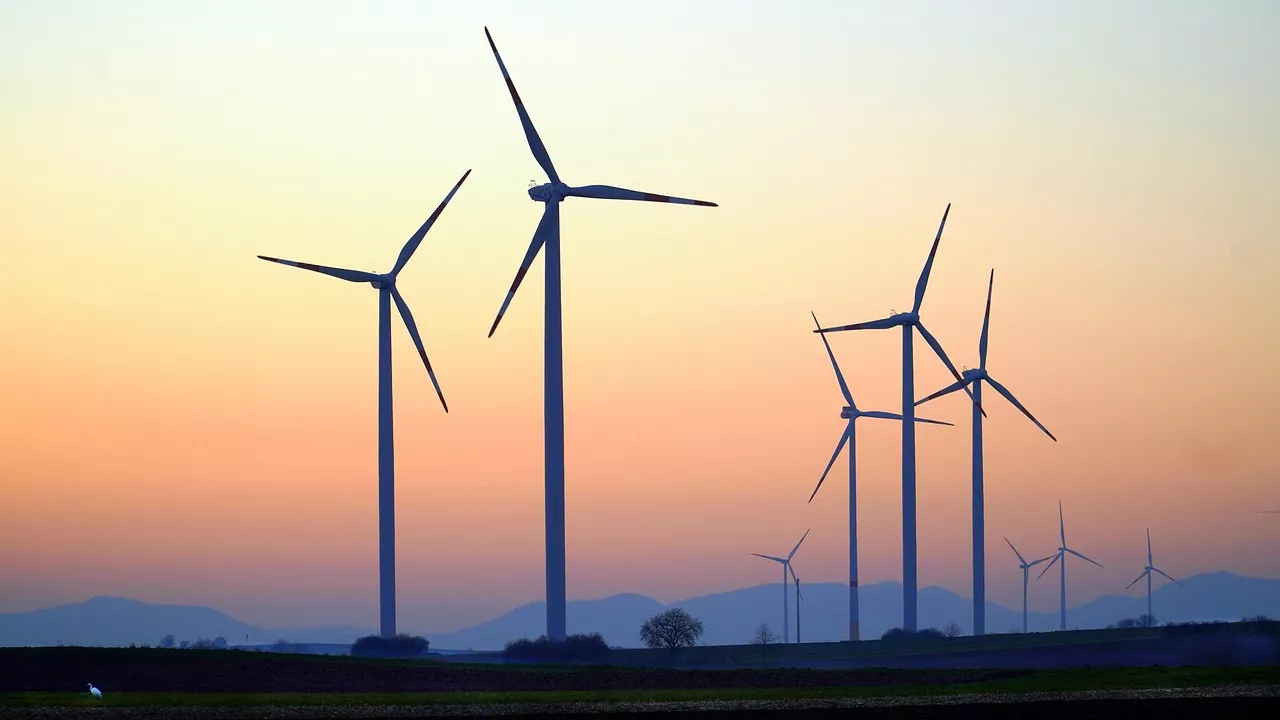
The 96 MW wind farm will consist of 16 turbines, each with a rated capacity of 6.1 MW and a 158-meter rotor. The combination is designed to provide strong energy production while addressing the practical challenges associated with developing wind projects in remote and difficult-to-access locations.
A key feature of the project will be GE Vernova’s split-blade technology. The technology has been developed to help developers overcome transportation and logistics challenges associated with moving increasingly large wind turbine components to remote sites. As turbine rotor sizes continue to grow, transporting complete blades can become difficult, particularly in areas characterized by narrow roads, steep terrain, bridges, tight turns or other infrastructure constraints.
The split-blade design allows larger blades to be transported in sections before being assembled at or close to the project site. This approach can make it possible to deploy larger rotor technology at locations where conventional transportation methods could create significant logistical barriers. For Chleansaid, the technology is expected to help ESB take advantage of a larger rotor and maximize energy capture while managing the challenges associated with construction in the Scottish Highlands.
GE Vernova said its 6 MW product portfolio has accumulated more than 1,800 turbines across a broad range of applications and more than 38 million operating hours. The company describes the platform as a versatile and dependable solution designed to provide reliable performance throughout its operating life.
The company’s wider onshore wind strategy is focused on standardized and industrialized turbine platforms designed for repeatable deployment and long-term reliability. GE Vernova’s Wind segment has more than 59,000 turbines operating globally, providing the company with an extensive installed base and operational experience across different wind conditions and project environments.
The Chleansaid agreement builds on a longstanding relationship between GE Vernova and ESB. The companies have previously worked together through GE Vernova’s Power and Electrification businesses, while the new agreement expands their cooperation into onshore wind generation.
The partnership also comes as Scotland continues to pursue significant growth in renewable energy capacity. Scotland has substantial onshore wind resources, supported by favorable wind conditions and an established renewable energy industry. Increasing onshore generation is expected to play an important role in strengthening the UK’s electricity supply while reducing dependence on higher-carbon sources of power.
For ESB, Chleansaid is part of its wider renewable energy ambitions. The company has been expanding its renewable portfolio as utilities and energy developers respond to increasing electricity demand, decarbonization targets and the need for new generation capacity. Developing projects in Scotland provides ESB with an opportunity to contribute to the country’s renewable energy objectives while establishing a stronger long-term operating footprint.
Gilan Sabatier, GE Vernova’s Chief Commercial Officer for Onshore Wind in international markets, said the company was pleased to continue supporting ESB through the Chleansaid project. He highlighted the importance of deploying GE Vernova’s 6 MW platform and split-blade technology to maximize production at the site.
“We are delighted to extend our support for ESB by supplying turbines for the Chleansaid Wind Farm,” Sabatier said. “This will be the first use of our workhorse 6MW turbine in the UK, building on our existing UK footprint and installed base. By delivering our 6 MW workhorse platform with our proven split-blade technology, we are enabling ESB to maximize the production at this site.”
The selection of the turbine platform reflects the importance of balancing energy output with project-specific construction and transportation requirements. Larger turbines can increase generation from individual units, potentially reducing the number of machines required for a project and improving energy production from available wind resources. However, larger components can also create transportation challenges. GE Vernova’s split-blade technology is intended to address this issue by allowing developers to deploy larger rotor designs in locations where transporting conventional full-length blades could be challenging.
Paul Lennon, Head of Renewables and Scottish Renewables Board Member at ESB, described Chleansaid as a significant step in the company’s Scottish renewable energy strategy.
“Chleansaid marks a significant milestone for ESB as our first wholly developed onshore wind project in Scotland and is a significant step in delivering our renewable energy ambitions,” Lennon said. “Working with GE Vernova, we are proud to move the project into construction and support the transition to a secure energy future.”
The long-term services agreement is another important component of the project. A 20-year service commitment can provide project owners with long-term technical support, maintenance capabilities and operational expertise, helping ensure that the turbines continue to perform effectively over their expected operating life.
As the UK continues to increase renewable generation and modernize its electricity system, projects such as Chleansaid demonstrate the importance of combining proven turbine platforms with technologies designed to address site-specific challenges. The project also highlights the growing role of advanced logistics solutions in enabling wind development in remote areas.
With the supply agreement now in place, GE Vernova and ESB are positioned to move forward with the next stages of the Chleansaid Wind Farm. Once operational, the 96 MW facility will add new renewable generation capacity to Scotland’s electricity system and further strengthen the relationship between two companies working to support the expansion of cleaner and more secure power generation.
Source Link: https://www.gevernova.com/