

ESS Launches Bridge™ Modular Sodium-Ion Battery Energy Storage System to Meet Growing Grid and AI Data Center Demand
ESS Tech, Inc. (NYSE: GWH), a U.S.-based developer of non-lithium energy storage technologies, has unveiled the ESS Bridge™, a new modular sodium-ion battery energy storage system (BESS) designed to serve utilities, AI-powered data centers, commercial and industrial facilities, and operators of critical infrastructure. The launch marks a major expansion of the company’s product portfolio and reinforces its strategy of delivering domestically manufactured alternatives to conventional lithium-ion battery systems.
The new platform has been engineered to address the rapidly growing demand for safe, scalable, and cost-effective energy storage solutions. As electricity consumption rises due to expanding renewable energy generation, increasing grid modernization efforts, and the rapid development of artificial intelligence infrastructure, ESS believes sodium-ion technology can provide a compelling solution for customers seeking long-lasting energy storage without the challenges associated with lithium-based batteries.
The introduction of Bridge represents an important milestone in ESS’s long-term business strategy. The company is positioning itself as a leading provider of non-lithium battery technologies capable of supporting short-duration, medium-duration, and long-duration energy storage applications across multiple market segments. By expanding beyond its existing technologies, ESS aims to address a broader range of customer requirements while strengthening domestic manufacturing and supply chain resilience.
According to the company, the name “Bridge” symbolizes the platform’s ability to connect electricity generation with energy consumption while helping bridge the transition toward a more secure, resilient, and sustainable power system. The product has been designed to integrate renewable energy resources, improve grid flexibility, and support the increasing electricity demands created by emerging technologies.
The product launch follows strong commercial momentum for ESS’s sodium-ion battery initiative. Earlier this year, the company reported generating more than $1 billion in early-stage customer opportunities after announcing its entry into the sodium-ion battery market. That response reflects increasing interest from utilities, infrastructure developers, and commercial customers searching for safer battery technologies capable of supporting demanding applications, particularly AI-driven data centers that require continuous, reliable, and high-performance power.
Artificial intelligence is rapidly becoming one of the largest drivers of electricity demand worldwide. Large-scale AI data centers require enormous computing capacity, creating significant challenges for power availability, reliability, and energy management. As organizations continue investing heavily in AI infrastructure, operators are increasingly looking for battery storage technologies capable of delivering dependable performance while minimizing operational risks.
ESS Chief Executive Officer Drew Buckley said customer interest has exceeded expectations since the company entered the sodium-ion market. He explained that growing AI workloads are fundamentally changing the energy storage requirements of modern data centers, making conventional technologies less attractive for certain applications.
According to Buckley, the new Bridge platform has been specifically developed to address these evolving requirements. He noted that the company has already generated nearly one billion dollars in early-stage business opportunities, demonstrating strong market demand for sodium-ion battery systems capable of supporting next-generation power infrastructure.
At the heart of the new solution is a modular 1.2-megawatt-hour AC battery system that combines sodium-ion battery technology with ESS’s expertise in system integration, controls, software, energy management, and project execution. Rather than supplying battery cells alone, ESS delivers a fully integrated energy storage solution designed to simplify deployment and operation.
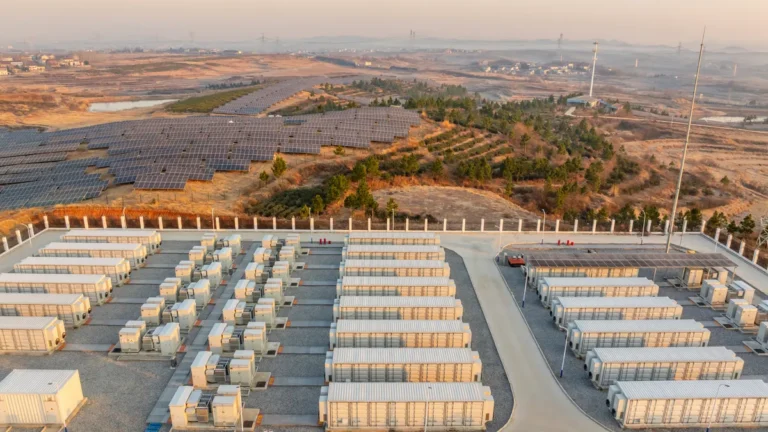
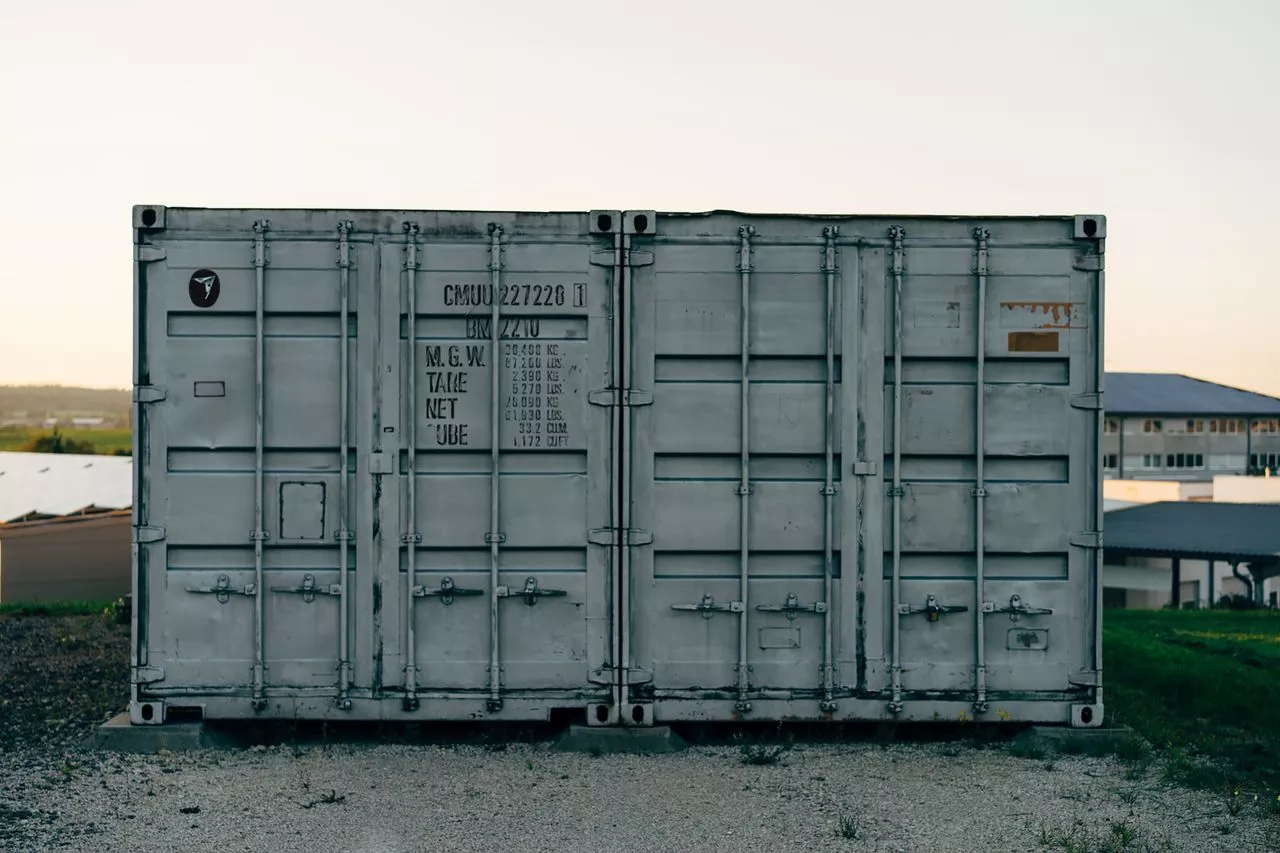
Each Bridge unit is packaged inside a compact 10-foot container that includes battery cells, battery modules, structural racking, power conversion equipment, electrical cabling, and a comprehensive battery management system. The integrated approach reduces engineering complexity for project developers while providing customers with a ready-to-deploy storage platform.
In addition to the battery hardware, ESS includes its proprietary energy management system (EMS), which enables centralized monitoring, optimization, operational control, and performance management across the entire energy storage installation. The EMS allows operators to maximize system efficiency while integrating battery assets into larger energy networks.
A major design priority for Bridge has been ease of installation. The modular system is delivered as a plug-and-play solution that simplifies transportation, site preparation, and deployment. Unlike larger battery installations that often require extensive construction activities, Bridge units can be installed using a heavy-duty forklift, significantly reducing installation time and associated labor costs.
The battery system is also designed with scalability in mind. Individual modules can be stacked together, allowing customers to expand storage capacity as project requirements grow. Four Bridge modules can collectively provide up to 4.8 megawatt-hours of energy storage while occupying approximately the same footprint as a conventional 20-foot battery container. This higher energy density enables customers to maximize available site space without requiring significant additional infrastructure.
The modular architecture also allows the technology to serve a wide variety of market segments. Smaller installations can support commercial and industrial energy management projects, while larger deployments can be configured for utility-scale renewable energy integration, grid balancing, capacity support, and critical infrastructure applications.
Safety represents one of the key differentiators highlighted by ESS. Traditional lithium-ion battery systems have attracted industry attention because of the potential for thermal runaway, a condition in which overheating cells can trigger fires or explosions under certain circumstances. Preventing such incidents often requires sophisticated cooling systems, specialized fire suppression equipment, and extensive safety measures.
Bridge has been designed to eliminate the risk of thermal runaway associated with conventional lithium-ion chemistries. Because of the inherent characteristics of sodium-ion batteries, the system does not require complex liquid cooling systems or extensive HVAC infrastructure to maintain safe operation. Instead, simple air cooling is sufficient across a wide range of operating conditions.
Reducing cooling requirements offers several additional benefits beyond improved safety. Simpler thermal management systems reduce installation complexity, lower maintenance requirements, decrease operating expenses, and improve overall system reliability. Customers may also benefit from a lower total cost of ownership over the life of the project due to fewer mechanical components requiring service or replacement.
Operational flexibility is another major feature of the new platform. Bridge supports a broad range of charging and discharging profiles, allowing customers to configure systems for applications ranging from one-hour storage to sixteen-hour or even longer-duration storage depending on project requirements. This flexibility enables utilities and commercial operators to optimize battery performance for renewable integration, peak shaving, backup power, demand response, or grid stabilization.
ESS has also designed the system for deployment in demanding environmental conditions. Bridge is engineered to operate reliably in temperatures ranging from minus 40 degrees Celsius to 50 degrees Celsius, making it suitable for installations in extremely cold northern climates as well as hot desert regions.
Longevity is another important consideration for asset owners investing in utility-scale battery infrastructure. ESS states that Bridge has been designed with an operating life of approximately 20 years. A longer design life can reduce lifecycle costs by minimizing the need for battery replacement or augmentation projects that are commonly associated with some energy storage technologies.
Supply chain resilience is increasingly becoming a strategic concern for governments, utilities, and infrastructure developers. Conventional lithium-ion batteries often rely on critical minerals that face supply constraints, price volatility, and geopolitical sourcing challenges. ESS believes sodium-ion technology provides an attractive alternative by utilizing abundant and widely available raw materials.
The company says the Bridge platform has been developed to support the emergence of a domestic energy storage manufacturing ecosystem while reducing dependence on constrained global mineral supplies. By leveraging alternative materials and localized production, the technology can help customers reduce exposure to supply chain disruptions and evolving geopolitical risks.
The platform is also intended to help organizations address concerns related to Foreign Entities of Concern (FEOC), an increasingly important consideration in government procurement, critical infrastructure development, and energy security planning. As countries continue emphasizing domestic manufacturing and resilient supply chains, battery technologies that reduce reliance on overseas suppliers may become increasingly attractive.
Randall Selesky, Chief Commercial Officer at ESS, said today’s battery buyers are seeking technologies that move beyond the traditional lithium-ion model. According to Selesky, customers increasingly prioritize operational safety, simplified maintenance, long-term reliability, flexible deployment, and improved energy security alongside economic performance.
He noted that the Bridge platform has been designed to combine these priorities into a single integrated energy storage solution capable of meeting the evolving requirements of utilities, commercial enterprises, infrastructure operators, and data center developers.
With electricity demand expected to continue rising alongside renewable energy expansion and AI-driven digital infrastructure, ESS believes sodium-ion battery technology can play an increasingly important role in the future energy landscape. Through the launch of Bridge, the company aims to provide customers with a scalable, safe, and domestically manufactured energy storage platform that supports grid modernization while reducing operational complexity and strengthening long-term energy resilience.
Source Link: https://www.businesswire.com/