


Rune Launches RELIC to Convert Stranded Solar Power Into AI Compute Capacity
Rune has introduced RELIC (Renewable Energy Linked Intelligent Compute), a modular computing system designed to operate directly at solar generation sites and convert underutilized renewable electricity into high-performance computing capacity. The company says the system is designed to address two growing challenges in the energy and technology sectors: wasted renewable generation and the limited availability of power infrastructure needed to support expanding artificial intelligence workloads.
Alongside the RELIC launch, Rune announced a $40 million Series A funding round led by Spark Capital. The financing includes participation from Union Square Ventures, Lowercarbon Capital, Activate Capital, Committed Capital, Timeless Partners, and Logos Fund. The latest investment brings Rune’s total funding to $53.5 million.
The company is positioning RELIC as an alternative approach to conventional data center development. Rather than building new facilities that depend on grid connections, extensive electrical infrastructure, and lengthy permitting processes, the system is designed to locate computing capacity at existing solar generation facilities where electricity may otherwise go unused.
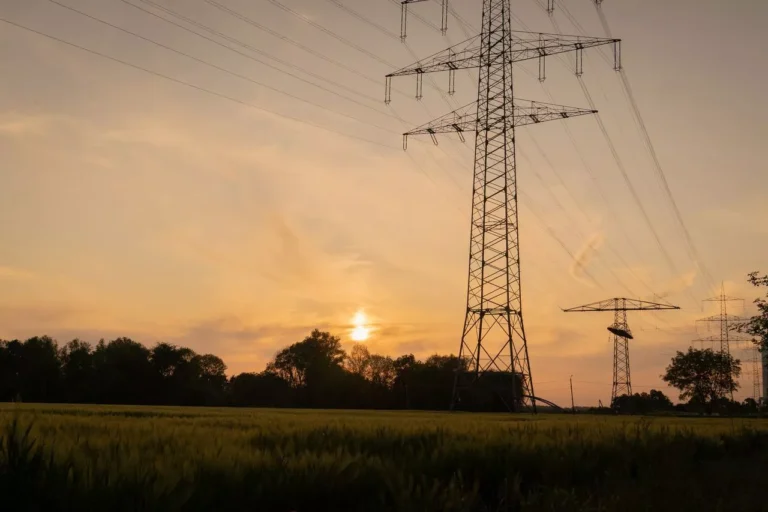
According to Rune, solar plants can waste as much as 20% of the energy they generate because some electricity is produced at times when it cannot be sold or delivered to the grid. The company estimates that more than 50 terawatt hours of electricity are stranded in this way annually in the United States.
RELIC is designed to capture that unused electricity at the point of generation. By operating directly with available solar power, Rune says the system can avoid some of the costs and infrastructure requirements associated with conventional grid-connected data centers.
“Every solar plant is a latent data center. The power is already there, sitting idle while AI labs wait years for grid connections that may never come,” said William Layden, Co-Founder and CEO of Rune. “We built RELIC to close that gap with compute that’s online in days, powered by energy the grid was throwing away.”
Modular Approach to AI Infrastructure
Rune says RELIC is designed around speed, cost reduction, and direct integration with renewable generation. The modular system can reportedly be installed in approximately 60 minutes, while computing customers can be energized in as little as six weeks following a contract. This compares with the significantly longer development timelines associated with conventional data center projects.
The company also claims RELIC can reduce non-compute infrastructure costs by 85% compared with traditional AI data centers. Rune estimates that the savings could reach approximately $620 million for a 100-megawatt deployment.
Another feature of the system is its ability to operate without disrupting the underlying solar facility. RELIC can capture several sources of underutilized electricity, including curtailed and clipped power, while allowing the solar plant to continue its primary operations.
Rune says the system requires no heavy site preparation and does not create a conventional data center footprint. It also uses no water, an issue that has become increasingly relevant as data centers expand their computing capacity and cooling requirements.
The system is also designed to operate off-grid. RELIC runs natively on direct current, matching the native electrical output of solar generation and eliminating the need for some AC conversion processes. Rune says this architecture removes requirements for a grid connection, transformers, utility approvals, and other infrastructure typically needed to connect a new data center to the electricity network.
Texas Deployment Demonstrates the Model
As part of the launch, Rune disclosed a new RELIC deployment at a 200-megawatt solar facility in Texas. The installation is operating on an existing renewable energy asset without modifications to the site, grid work, or conventional construction, according to the company.
The deployment is intended to demonstrate how computing infrastructure can be placed alongside operating renewable generation facilities rather than requiring a new standalone data center campus.
Santo Politi, Founder and General Partner of Spark Capital, said the expansion of AI is creating demand for computing infrastructure faster than conventional projects can be delivered.
“Demand for AI infrastructure is growing faster than it can be delivered. Rune deploys compute directly behind the meter at operating solar farms, converting clean power into rapidly scalable AI capacity,” Politi said. “Every renewable asset in operation becomes a potential deployment site. Rune is the fastest path to new capacity we have seen.”
Leadership Combining Energy and Computing Experience
Rune’s leadership team brings experience from both energy infrastructure and high-performance computing.
Co-Founder and CEO William Layden previously led a division of Cube Hydro focused on using unused electricity from hydroelectric facilities to support clean bitcoin mining. He later evaluated technology across SoftBank Energy’s 1.7-gigawatt solar portfolio. Layden also served in the Obama White House. He holds an MBA from Harvard University and a bachelor’s degree from New York University, where he graduated summa cum laude and served as class valedictorian.
Co-Founder and CTO Varun Palivela brings more than a decade of experience in chip architecture and high-performance computing. At NUVIA, he worked on the development of a high-performance microprocessor core. NUVIA was acquired by Qualcomm for $1.4 billion, and technology from the company is now incorporated into Qualcomm’s Snapdragon X Elite platform.
Palivela has also held engineering and design positions at Qualcomm, Arm, and Marvell. He holds multiple U.S. patents and has worked across areas including semiconductor design, power electronics, and system integration.
“AI’s power constraint isn’t generation, it’s resource allocation,” said Palivela, Co-Founder and CTO of Rune. “The industry is retrofitting data centers designed for a different era rather than rethinking the architecture itself. We built an entirely new technology stack from the ground up, coupling compute directly to clean generation so AI can scale here on Earth.”
With RELIC, Rune is seeking to establish a model in which existing renewable generation assets can serve a dual purpose: supplying electricity to the grid when demand and infrastructure allow, while also providing computing capacity for electricity that would otherwise remain unused. The company’s latest funding will support the development and deployment of this approach as demand for AI infrastructure continues to expand.
Source Link: https://www.businesswire.com/