

PTTEP Achieves Thailand’s First Total Wellhead Platform Reuse, Advancing Circular Economy and Sustainable Offshore Operations
PTT Exploration and Production Public Company Limited (PTTEP) has reached a significant milestone in Thailand’s offshore energy industry by successfully completing the country’s first Total Wellhead Platform Reuse project. Rather than dismantling and replacing an aging offshore petroleum platform, the company redeployed an entire decommissioned wellhead platform as a complete structure, demonstrating an innovative approach to asset management that delivers operational, economic, and environmental benefits.
The achievement represents a major advancement in the application of circular economy principles within offshore petroleum exploration and production. By extending the operational life of existing infrastructure instead of constructing entirely new facilities, PTTEP has shown how engineering innovation can maximize the value of existing assets while reducing project timelines, lowering capital expenditure, and minimizing greenhouse gas emissions.
The pioneering project reflects the company’s broader sustainability strategy, which focuses on balancing energy production with responsible environmental stewardship while maintaining reliable energy supplies for Thailand.
Extending the Life of Offshore Infrastructure
According to PTTEP Chief Executive Officer Montri Rawanchaikul, offshore petroleum production inevitably reaches a stage where reservoirs become depleted and production facilities are no longer required in their original locations. However, many of these offshore structures remain in excellent structural condition and continue to meet stringent engineering and safety standards.
Instead of treating these installations as waste, PTTEP has adopted a strategy that identifies opportunities to redeploy suitable infrastructure to new production sites. This approach allows valuable engineering assets to continue serving productive purposes while reducing the need for new construction materials and manufacturing activities.
The company’s latest achievement demonstrates how engineering expertise, digital planning, and advanced offshore installation technologies can be integrated with circular economy concepts to transform traditional offshore asset management.
By relocating an entire platform rather than dismantling it and constructing a replacement, PTTEP has introduced a practical model for sustainable infrastructure utilization within Thailand’s upstream petroleum sector.
Thailand’s First Total Wellhead Platform Reuse
The landmark project involved the Jakrawan K wellhead platform (JKWK), located within the Funan field under the G1/61 Project.
Rather than removing individual components for recycling or partial reuse, PTTEP relocated nearly the entire offshore installation as one integrated asset.
The project included the successful reuse of:
- The platform topside
- The supporting jacket structure
- Selected pile sections
These major structural elements were transferred and reinstalled within the same offshore field, allowing the facility to continue supporting petroleum production without the need for a completely new platform.
This marks the first time in Thailand that a complete wellhead platform has been redeployed in its entirety, setting a new benchmark for offshore asset reuse in the country.
The accomplishment demonstrates that with careful engineering assessment and comprehensive safety evaluations, offshore production infrastructure can continue delivering value well beyond its initial deployment.
Dramatic Reduction in Project Timeline
One of the most notable benefits of the Total Wellhead Platform Reuse initiative is the substantial reduction in project execution time.
Constructing a new offshore wellhead platform typically requires approximately 20 months from engineering design through fabrication, transportation, installation, and commissioning.
Through platform reuse, PTTEP reduced this timeline to only six months.
The shortened schedule represents roughly a 70 percent reduction in project duration, enabling production facilities to become operational significantly sooner than traditional development methods.
Accelerated project execution offers multiple advantages, including:
- Faster field development
- Earlier production commencement
- Reduced project risks
- Lower offshore installation costs
- Improved utilization of engineering resources
For offshore operators, where project schedules directly influence production revenues and capital efficiency, such time savings can generate substantial long-term value.
Significant Construction Cost Savings
In addition to reducing project timelines, the platform reuse strategy also delivered considerable financial benefits.
PTTEP estimates that redeploying the existing platform reduced construction costs by approximately 35 to 50 percent compared with building an entirely new offshore wellhead platform.
Several factors contributed to these savings, including reduced steel procurement, lower fabrication requirements, minimized manufacturing activities, shorter engineering schedules, and fewer offshore installation operations.
Because the majority of the platform structure already existed, resources that would otherwise have been dedicated to manufacturing new equipment could instead be focused on inspection, refurbishment, transportation, and reinstallation.
The result is a more efficient allocation of capital while maintaining operational reliability and safety.
The project illustrates how sustainability initiatives can also improve financial performance by optimizing resource utilization throughout the asset lifecycle.
Lower Carbon Emissions Through Infrastructure Reuse
Environmental performance formed another major objective of the project.
PTTEP estimates that each reused platform can reduce greenhouse gas emissions by approximately 3,270 tonnes of carbon dioxide equivalent compared with constructing an entirely new platform.
The emissions reduction primarily results from avoiding the production of large quantities of new steel and associated construction materials.
Steel manufacturing is among the world’s most carbon-intensive industrial processes. By extending the operational life of existing offshore structures, PTTEP significantly reduces emissions associated with raw material extraction, manufacturing, transportation, fabrication, and installation.
The project therefore supports both Thailand’s climate objectives and PTTEP’s own corporate sustainability commitments by lowering the carbon footprint of offshore development activities.
The initiative demonstrates that circular economy strategies can generate measurable environmental benefits while maintaining operational efficiency and supporting energy production.
Innovative Offshore Relocation Technique
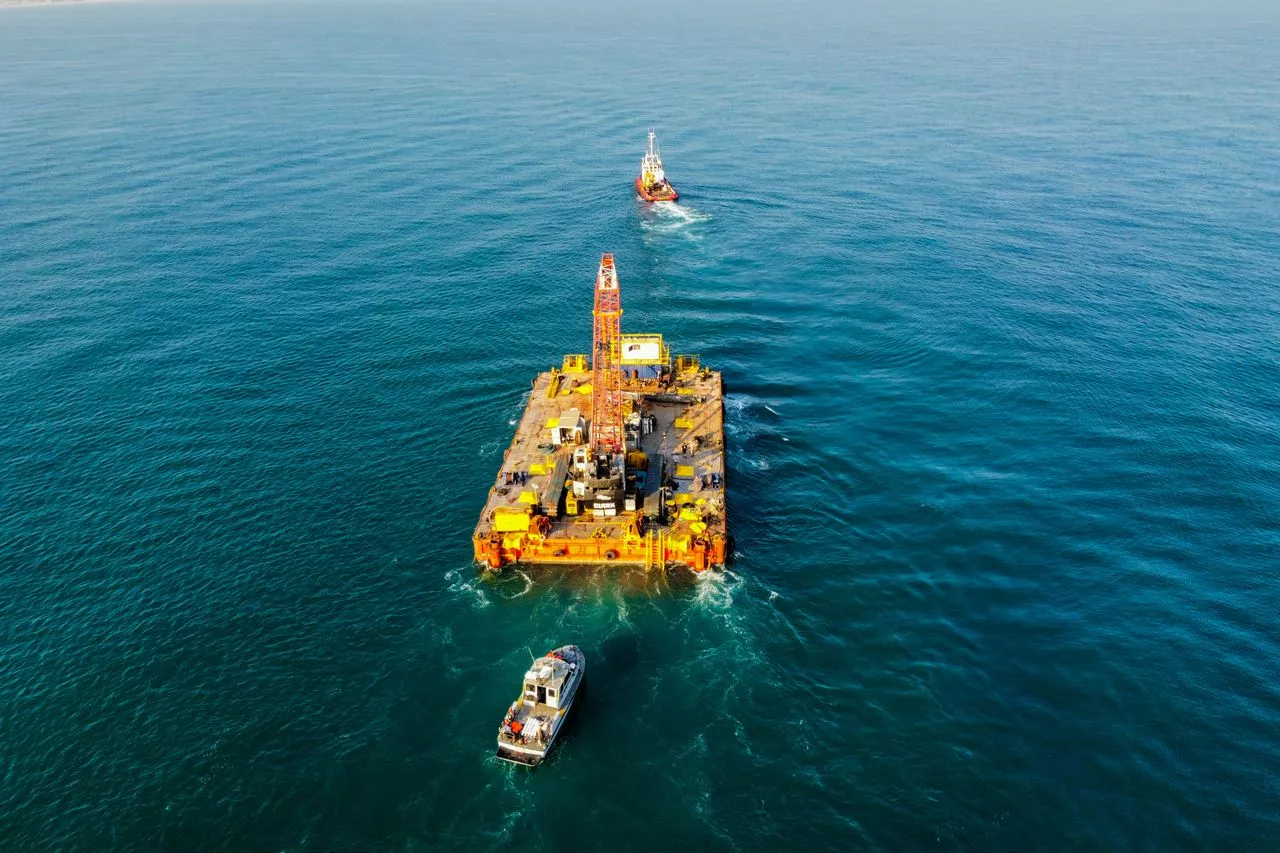
A key component of the project involved the adoption of the Wet Tow method for relocating the platform jacket.
Unlike traditional removal techniques that may require extensive dismantling or heavy lifting operations, the Wet Tow approach enables the offshore jacket to be transported while remaining partially submerged.
This technique offers several important operational and environmental advantages.
By reducing lifting requirements and minimizing complex offshore construction activities, the method helps decrease fuel consumption and overall energy use during transportation.
It also reduces disturbance to marine ecosystems by preserving much of the marine life that naturally colonizes offshore structures over time.
Marine organisms attached to the platform experience less disruption compared with conventional removal techniques, helping maintain ecological balance while offshore infrastructure is relocated.
The adoption of Wet Tow technology reflects PTTEP’s commitment to incorporating environmentally responsible engineering practices into its offshore operations.
Circular Economy in Action
The Total Wellhead Platform Reuse project represents a practical example of circular economy implementation within the upstream energy industry.
Traditional industrial models typically follow a linear pattern in which assets are manufactured, used, decommissioned, and discarded.
PTTEP’s approach instead emphasizes extending asset life, maximizing existing resources, minimizing waste generation, and reducing the consumption of new raw materials.
Rather than viewing decommissioned infrastructure as obsolete, the company evaluates whether existing facilities remain structurally suitable for continued service.
When engineering assessments confirm safety and integrity, these assets can be redeployed to support future production.
This strategy creates value across multiple dimensions by reducing environmental impacts while improving operational efficiency and lowering overall project costs.
The initiative demonstrates that circular economy principles are increasingly becoming practical solutions within heavy industrial sectors traditionally associated with significant material consumption.
Supporting Sustainable Energy Development
According to PTTEP, the successful implementation of Total Wellhead Platform Reuse delivers benefits that extend beyond operational improvements.
The initiative contributes to Thailand’s broader energy security by enabling faster deployment of production infrastructure while reducing dependence on newly manufactured equipment.
At the same time, it supports national sustainability objectives by lowering emissions, conserving materials, and promoting responsible resource management.
The project highlights how innovation can simultaneously advance economic performance, environmental responsibility, and long-term energy resilience.
For the offshore petroleum industry, which faces increasing pressure to reduce carbon emissions while maintaining reliable energy supplies, projects such as this illustrate how engineering innovation can support both objectives.
Expansion Planned Through 2029
Following the success of the first project, PTTEP plans to expand the reuse initiative across its offshore operations.
Between 2027 and 2029, the company expects to redeploy approximately ten additional wellhead platforms that continue to meet structural integrity and safety requirements.
Each candidate platform will undergo comprehensive engineering assessments before being approved for reuse to ensure continued operational safety and reliability.
The planned expansion is expected to further improve resource efficiency, generate additional cost savings, reduce greenhouse gas emissions, and broaden the adoption of circular economy practices throughout PTTEP’s offshore portfolio.
As more platforms become eligible for redeployment, the company aims to establish infrastructure reuse as a standard component of future offshore development planning.
By integrating engineering innovation with sustainability principles, PTTEP is positioning itself to reduce environmental impacts while supporting Thailand’s long-term energy needs.
The successful completion of Thailand’s first Total Wellhead Platform Reuse project represents an important milestone for the country’s offshore energy sector. It demonstrates that existing infrastructure can continue delivering value through thoughtful engineering, rigorous safety management, and innovative asset reuse strategies. As PTTEP expands the program in the coming years, the initiative is expected to strengthen operational efficiency, reinforce energy security, and contribute meaningfully to the transition toward more sustainable offshore petroleum production.
Source Link: https://www.pttep.com/