

National Grid Launches Trial to Capture SF6 Emissions from Electricity Network Assets
National Grid has launched an innovative trial with climate technology start-up Climate-i to test a new solution for capturing sulphur hexafluoride (SF6) emissions from high-voltage electricity network equipment. The initiative aims to reduce the release of this potent greenhouse gas into the atmosphere and support the company’s broader efforts to achieve its emissions reduction targets.
The trial represents the first live deployment of Climate-i’s SF6 emissions capture technology. The system uses a flexible temporary covering to encapsulate leaks from transmission assets and direct escaping gas into a dedicated capture unit. By collecting the gas before it reaches the atmosphere, the technology offers a potential additional tool for electricity network operators seeking to manage emissions from existing infrastructure.
The project is taking place at a National Grid substation in the North West of England, where the technology has been installed to address two identified leaks. The trial will allow both companies to assess the system’s performance under real operational conditions and determine how it could complement existing approaches to SF6 leak management.
Addressing the Environmental Impact of SF6
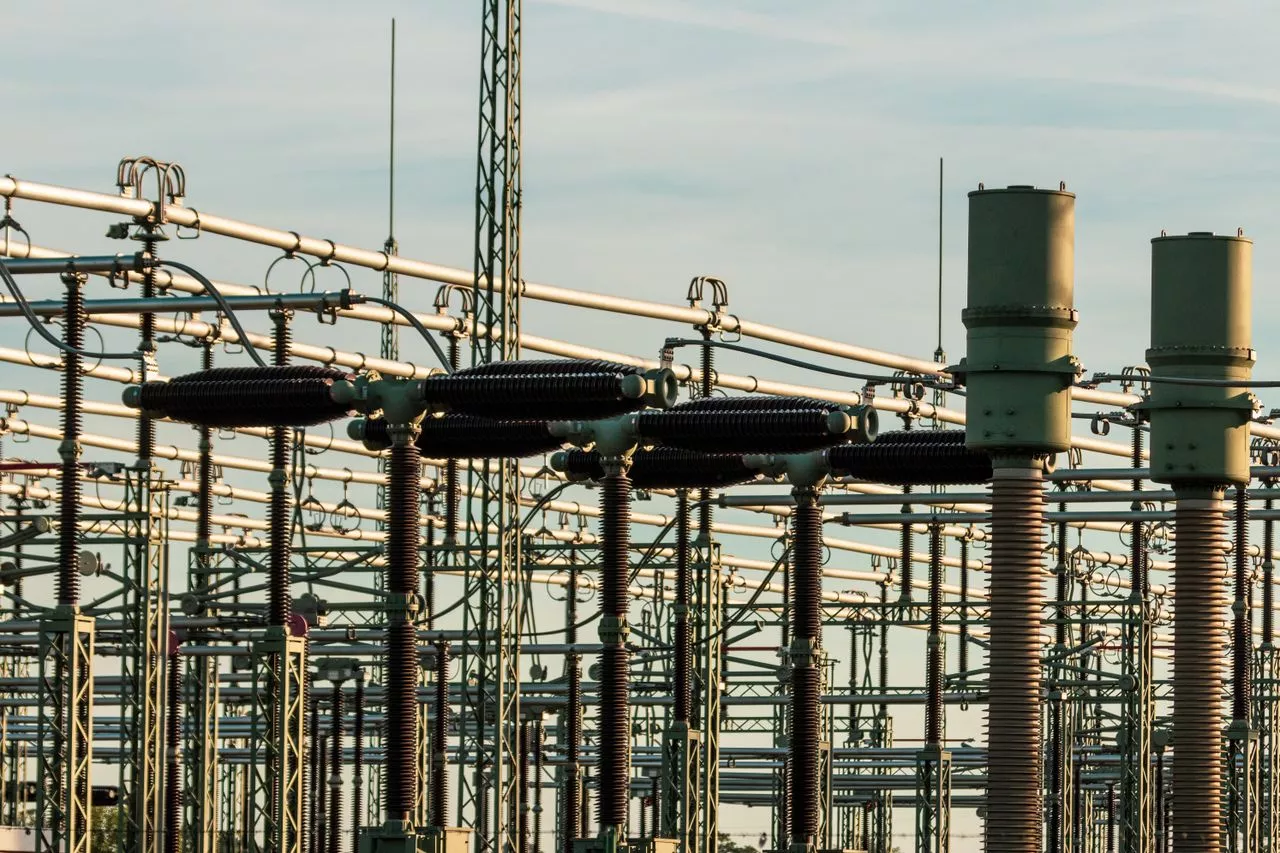
Sulphur hexafluoride is widely used in the electricity industry because of its effective electrical insulation properties and its ability to interrupt electrical arcs. These characteristics make it an important component in high-voltage switchgear and other electrical equipment used to maintain the safety and reliability of transmission networks.
Despite its technical benefits, SF6 presents a significant environmental challenge. It is an extremely potent greenhouse gas, with a global warming potential approximately 24,300 times greater than carbon dioxide over a 100-year period. When released into the atmosphere, the gas can contribute substantially to climate change because of its high warming potential and long atmospheric lifetime.
Electricity transmission and distribution companies are therefore exploring ways to reduce SF6 emissions from their existing assets while transitioning towards alternative technologies. Although replacing older equipment with SF6-free alternatives can help prevent future emissions, existing installations may continue operating for years and can develop leaks during their service life.
For network operators, managing these leaks is an important part of reducing greenhouse gas emissions while maintaining the reliability and availability of electricity infrastructure.
National Grid has committed to reducing SF6 emissions from its operations by 50% between the 2018/19 and 2030/31 financial years. The company is pursuing this objective through several measures, including installing SF6-free switchgear at new substations, repairing leaks and implementing mitigation programmes for older equipment containing the gas.
The collaboration with Climate-i adds another potential solution to these ongoing efforts.
How Climate-i’s Capture Technology Works
Climate-i’s system is designed to capture SF6 escaping from leaking electrical equipment. It uses a flexible adhesive rubber patch that can be positioned over a leak to create a temporary covering. The patch directs escaping gas towards a capture rig, which measures the quantity collected before transferring it into a storage tank.
The captured SF6 is subsequently collected and safely disposed of by specialist recycling company Celtic Recycling, which is also supporting the trial.
The technology’s flexible design is intended to accommodate different equipment shapes and leak locations. This adaptability could make it suitable for applications where conventional leak management approaches may be difficult to implement or where other solutions are not appropriate.
According to the companies, the system is the first operationally oriented SF6 leak capture solution to be used by National Grid. Its deployment provides an opportunity to examine whether temporary containment can help reduce emissions from existing transmission equipment while permanent repairs or replacement options are being arranged.
Another feature of the technology is its potential to be installed without shutting down the affected equipment in many cases. Avoiding an unnecessary shutdown could help operators manage emissions while maintaining the availability of critical electricity network assets.
The system is designed primarily as a short- to medium-term intervention. It can be used during the period between identifying an SF6 leak and completing a permanent repair or replacing the affected equipment.
This approach could be particularly valuable where immediate repairs are not practical or where equipment replacement requires additional planning, resources or operational coordination.
Remote Monitoring Provides Additional Operational Insights
In addition to capturing escaping gas, Climate-i’s system incorporates remote monitoring capabilities. These features are intended to provide National Grid with additional information about leak behaviour and the performance of the affected assets.
Monitoring data could help engineers better understand how leaks develop, assess the effectiveness of temporary containment and identify opportunities to improve maintenance planning. Such insights may also support decisions about when equipment requires permanent repair or replacement.
For electricity network operators, combining emissions capture with monitoring could provide a more comprehensive approach to managing SF6 leakage. Rather than relying exclusively on conventional inspection and repair processes, operators could gain additional information about emissions while mitigation measures remain in place.
However, the effectiveness of the system will need to be evaluated through operational testing. The current trial will help establish how the technology performs under real-world conditions and whether it can deliver benefits across different types of transmission assets.
The companies will assess the results to understand the technology’s potential role in wider SF6 emissions reduction programmes.
National Grid Explores Additional Emissions Reduction Options
Mark Waldron, Substation Technical Leader at National Grid, said the company already uses several solutions to manage SF6 leaks across its electricity network but continues to explore new technologies that could strengthen its existing approach.
He explained that the collaboration with Climate-i provides an opportunity to test a flexible solution and assess how it might contribute to reducing emissions from transmission assets in the future.
Waldron also noted that although the trial remains in its early stages, the technology is already contributing to emissions reductions.
His comments highlight the importance of evaluating additional mitigation technologies alongside established practices, particularly as electricity network operators work towards increasingly ambitious environmental objectives.
The trial reflects National Grid’s wider approach of combining equipment upgrades, leak repairs and innovative technologies to reduce the environmental impact of its operations.
While installing SF6-free switchgear can reduce dependence on the gas in new infrastructure, solutions designed for existing equipment may also play an important role in addressing emissions from assets that remain in service.
Climate-i Highlights Potential Benefits for Electricity Companies
Elinor Wakefield OBE, Co-founder and Chief Executive Officer of Climate-i, said the company’s solution was developed to capture SF6 emissions during the period between identifying a leak and completing a permanent repair.
She explained that the technology is intended to help electricity companies meet, and potentially exceed, their SF6 leak reduction targets.
Wakefield described the National Grid project as an important milestone for Climate-i, providing an opportunity to demonstrate the technology in a live operational setting. She said the system was already successfully reducing emissions and generating valuable insights that would support further development and demonstrate its potential benefits across the electricity industry.
The trial provides Climate-i with an opportunity to evaluate the technology beyond development and initial testing, while National Grid can assess whether it offers a practical addition to its existing emissions management measures.
Supporting the Electricity Industry’s Decarbonisation Efforts
As electricity networks evolve to support the energy transition, reducing emissions from existing infrastructure remains an important challenge for utilities and transmission operators. Technologies that capture leaking SF6 could offer an additional way to address emissions while equipment remains operational.
The National Grid and Climate-i trial will help determine how effectively temporary containment, gas collection and remote monitoring can work together to manage leaks from high-voltage assets.
The participation of Celtic Recycling also provides a collection and disposal pathway for the captured gas, supporting the handling of SF6 after it has been removed from the affected equipment.
The results could inform future decisions about deploying similar systems across other assets and operational environments. Any broader application will depend on the technology’s demonstrated performance, suitability for different equipment configurations and contribution to emissions reduction objectives.
For now, the project represents a practical test of an alternative approach to SF6 leak mitigation. By exploring technologies that can complement equipment replacement and conventional repairs, National Grid is seeking additional ways to reduce greenhouse gas emissions while maintaining the performance of its electricity transmission network.
The trial’s findings will help both companies better understand the potential role of Climate-i’s technology in supporting long-term SF6 management and the electricity industry’s wider decarbonisation goals.
Source Link: https://www.nationalgrid.com/