

Energy Dome and Google Advance Long-Duration Energy Storage with First Irish CO₂ Battery Project
Energy Dome, a global developer of long-duration energy storage solutions, and Google have announced their first bilateral commercial agreement for the deployment of a 23 MW / 200 MWh CO₂ Battery project in County Offaly, Ireland. The initiative marks a significant milestone in the strategic partnership established between the two companies to accelerate the large-scale deployment of long-duration energy storage technologies and support the transition toward reliable, affordable, and round-the-clock clean energy systems.
The Irish project represents the first commercial bilateral deployment under the partnership that Google and Energy Dome unveiled last year. It follows another major announcement earlier this month involving a 19 MW / 200 MWh CO₂ Battery project in Arizona, developed in collaboration with local utility Salt River Project (SRP). Together, these projects demonstrate the growing momentum behind long-duration energy storage as a critical component of modern electricity systems increasingly powered by renewable energy.
Advancing Long-Duration Energy Storage
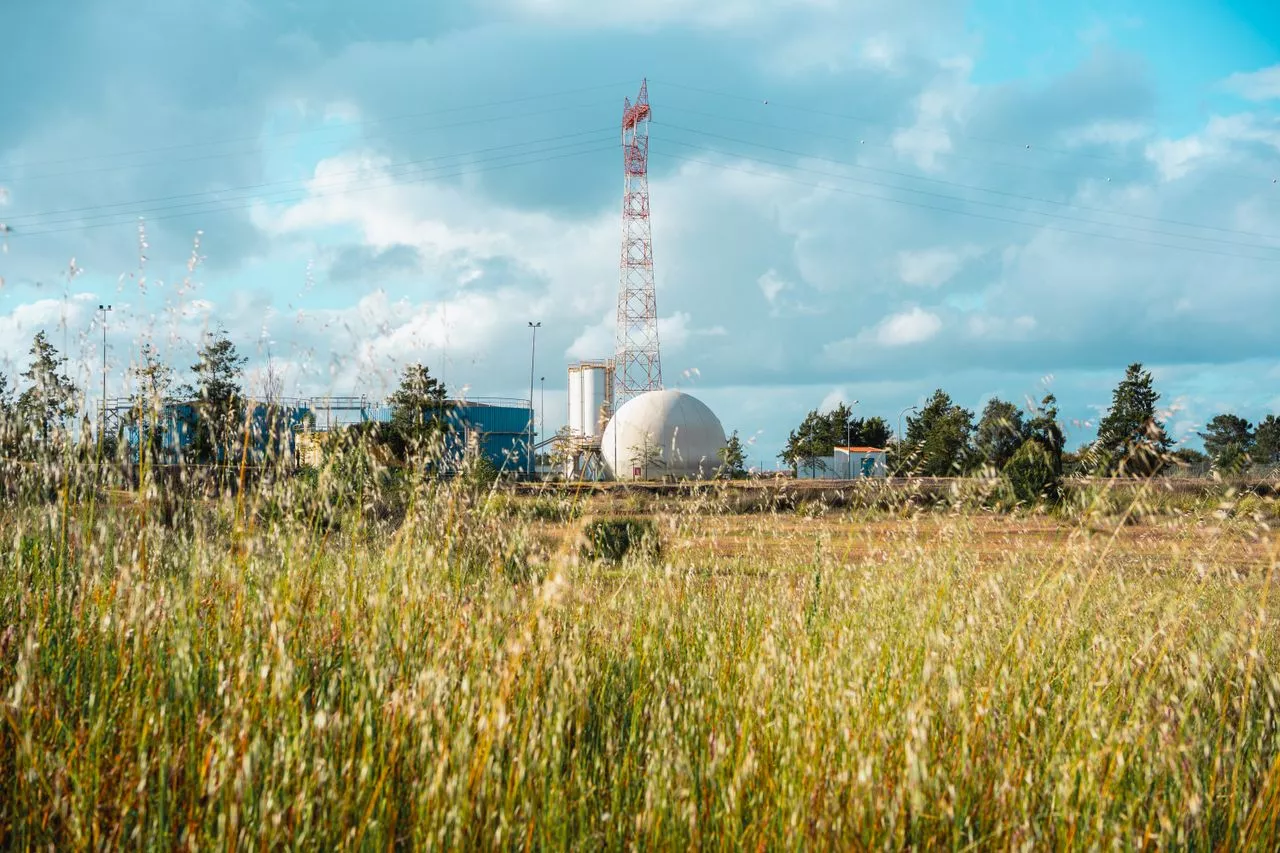
The County Offaly facility will be developed, owned, and operated by Energy Dome using its proprietary CO₂ Battery technology. Unlike conventional lithium-ion battery systems, the CO₂ Battery relies on carbon dioxide stored in a closed-loop system to provide large-scale energy storage over extended periods.
The technology operates by using excess electricity from the grid to compress and liquefy carbon dioxide, storing it under pressure. When electricity demand rises or renewable generation decreases, the stored CO₂ is expanded through a turbine, generating electricity that is fed back into the grid. Because the process uses carbon dioxide in a sealed system and relies largely on commercially available industrial equipment, the technology offers an alternative pathway to long-duration storage that avoids dependence on many critical minerals commonly required for traditional battery systems.
As renewable energy penetration continues to increase globally, long-duration storage technologies are becoming increasingly important for balancing electricity supply and demand. By storing energy generated during periods of surplus and delivering it when renewable generation is low, these systems can help ensure a stable and resilient electricity grid.
Supporting Ireland’s Renewable Energy Ambitions
Ireland has established ambitious climate and energy goals, including a target of generating 80% of its electricity from renewable sources by 2030. Achieving this objective requires significant investments not only in renewable generation capacity but also in technologies capable of maintaining grid reliability as intermittent resources such as wind and solar account for a growing share of power production.
Recognizing this challenge, the Irish government has identified long-duration energy storage as a key enabling technology for enhancing security of electricity supply, reducing system costs, and supporting the integration of renewable energy resources.
The Energy Dome project in County Offaly is designed to contribute directly to these objectives. By absorbing excess renewable electricity during periods of oversupply and dispatching stored energy when demand increases or renewable output declines, the facility will help balance the grid while reducing curtailment of renewable generation.
The project also aims to serve as a model for how advanced storage technologies can facilitate the development of a cleaner and more resilient electricity system. Google and Energy Dome view the installation as a blueprint for future deployments that could support similar energy transitions in other regions around the world.
Strategic Location in the Irish Midlands
The project will be located near the town of Rhode in County Offaly, situated within Ireland’s Midlands region. This location offers several strategic advantages due to its position on a critical section of the national electricity network.
The site is connected to high-voltage transmission infrastructure that serves the Greater Dublin metropolitan area, one of Ireland’s most significant centers of economic activity and electricity demand. Expanding energy resources in this region is considered essential to supporting future economic growth and accommodating increasing electricity consumption.
The surrounding area also hosts substantial renewable energy resources, particularly wind and solar generation. However, grid congestion has at times limited the ability of these resources to deliver their full output to consumers. Renewable energy curtailment remains a challenge in parts of Ireland where transmission infrastructure constraints restrict power flows.
By storing excess renewable generation and releasing it when grid capacity becomes available, the CO₂ Battery project can help alleviate congestion and improve utilization of existing renewable assets. This capability reduces the need for costly transmission network expansions while maximizing the value of renewable electricity already being produced.
Revitalizing Former Industrial Land
A notable aspect of the development is its location on the site of a former peat-fired thermal power plant. Historically, peat generation played an important role in Ireland’s electricity system, particularly in the Midlands region. However, as the country moves toward cleaner energy sources, many peat-fired facilities have been retired.
The transformation of this brownfield industrial site into a modern energy storage facility symbolizes Ireland’s broader energy transition. Rather than leaving former industrial land underutilized, the project provides a new purpose aligned with national climate and sustainability goals.
Energy Dome is developing the project in partnership with Lumcloon Energy, a leading renewable energy developer based in the Midlands. The collaboration is expected to create employment opportunities during both construction and operation while delivering long-term economic benefits to local communities.
The site’s proximity to the Rhode Green Energy Park further enhances its strategic value. With significant renewable generation resources nearby, the energy storage facility can play an important role in improving the efficiency and flexibility of the regional power system.
Industry Leaders Highlight Strategic Importance
Commenting on the announcement, Energy Dome Founder and Chief Executive Officer Claudio Spadacini emphasized the significance of the project for both companies and the broader energy transition.
He noted that the partnership with Google is helping strengthen grid resilience while advancing the pathway toward continuous carbon-free energy in Ireland. According to Spadacini, the County Offaly project represents the first commercial bilateral deployment under a wider collaboration intended to develop CO₂ Battery projects across Europe, North America, and the Asia-Pacific region.
The project also highlights Energy Dome’s belief that long-duration energy storage can address growing electricity demand while enhancing energy security and system reliability. By relying on readily available industrial components rather than extensive supplies of lithium or other critical minerals, the company argues that its technology can offer a scalable and cost-effective alternative for energy storage deployment worldwide.
Google likewise views the initiative as an important step toward accelerating next-generation energy technologies.
Vanessa Hartley, Head of Google Ireland, stated that the company remains committed to supporting innovations that strengthen grid resilience and provide critical storage capacity. She described the project as an important milestone within Google’s long-term partnership with Energy Dome and noted that it will help advance the commercialization and scaling of long-duration energy storage solutions.
Google has increasingly focused on achieving 24/7 carbon-free energy across its global operations, seeking to match electricity consumption with clean energy generation every hour of every day. Long-duration storage technologies are expected to play a vital role in achieving that vision by ensuring renewable energy remains available even when weather conditions limit generation.
Project Progress and Future Expansion
The County Offaly project has already reached several key development milestones. Energy Dome has secured the necessary land rights, obtained planning consent, and finalized a grid connection agreement.
Additionally, the project has been awarded a 10-year capacity contract by EirGrid, Ireland’s state-owned transmission system operator. The contract provides a valuable revenue stream while recognizing the facility’s contribution to maintaining system reliability.
Construction and commissioning activities are expected to progress over the coming years, with commercial operations anticipated to begin in 2028.
Looking beyond the initial deployment, Energy Dome has indicated plans to develop a second 200 MWh storage unit at the same location. The addition would transform the site into a major long-duration energy storage hub for the Irish Midlands, further enhancing grid flexibility and supporting renewable energy integration.
As countries around the world seek practical solutions for balancing increasingly renewable electricity systems, projects such as the County Offaly CO₂ Battery installation demonstrate the growing role that long-duration storage technologies are expected to play. Through their partnership, Energy Dome and Google are positioning Ireland as an important example of how innovative storage infrastructure can strengthen energy security, improve grid reliability, and accelerate the transition to a cleaner energy future.
Source Link: https://www.businesswire.com/