

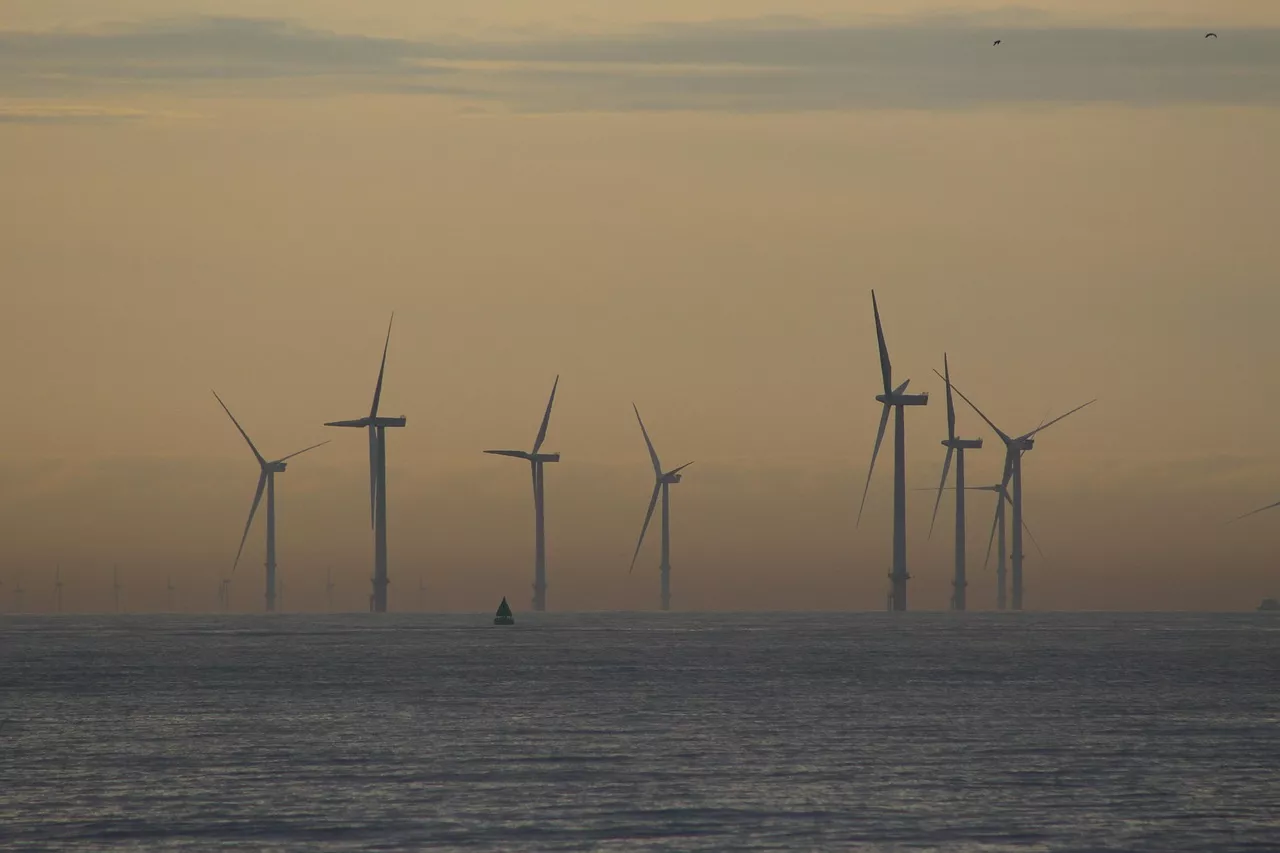
Iberdrola Completes Monopile Installation at Windanker Offshore Wind Farm in Germany
Iberdrola Deutschland, the German branch of global energy giant Iberdrola, has achieved a significant milestone in the development of the Windanker offshore wind farm, with the successful installation of all 21 monopile foundations. This achievement marks the beginning of the next phase of the project, bringing the wind farm closer to its operational target and reinforcing Iberdrola’s commitment to expanding renewable energy infrastructure in the Baltic Sea region.
The 21 monopile foundations, which form the structural backbone of the wind turbines, were manufactured at a specialized production facility in Spain. This plant is equipped with advanced technology specifically designed for large monopile foundations. The production of these critical components was made possible through a strategic partnership between Navantia Seanergies, a major player in naval engineering, and Windar Renovables, a leading company in renewable energy structures. The collaboration leverages their combined expertise to deliver robust and high-quality foundations capable of withstanding the challenging conditions of the Baltic Sea.
The installation process was carried out by the Dutch marine contractor Van Oord, utilizing the heavy-lift installation vessel Svanen. This vessel is specifically designed for offshore construction projects of this magnitude, enabling precise placement of the monopiles at the designated positions in the seabed. The successful installation of all foundations is a testament to the meticulous planning and coordination between Iberdrola, its partners, and the marine contractors, ensuring that the project progresses according to its construction timeline.
The Windanker offshore wind farm is expected to become operational by the end of 2026, as scheduled. Once fully commissioned, the project will play a crucial role in providing clean and renewable energy to Germany, contributing to the country’s transition away from fossil fuels and toward a more sustainable energy system. The wind farm’s location in the Baltic Sea allows it to harness consistent and strong wind resources, making it a highly efficient source of renewable electricity.
Windanker is part of the larger Baltic Hub initiative, which also includes the existing Wikinger and Baltic Eagle offshore wind farms. Together, these three projects will increase Iberdrola’s installed offshore capacity in the Baltic Sea to over 1,100 megawatts (MW). This expansion represents a substantial step toward achieving regional energy security while supporting Germany’s climate and renewable energy targets. The combined output of the Baltic Hub will be sufficient to power more than 1.1 million households annually, highlighting the project’s significant contribution to decarbonizing the power sector.
The development of Windanker also reflects Iberdrola’s commitment to international collaboration in the renewable energy sector. Since December 2024, Japanese energy company Kansai has held a 49% stake in the Windanker project, with Iberdrola retaining a majority 51% stake. This partnership exemplifies the growing trend of cross-border cooperation in large-scale renewable energy projects, where expertise, technology, and investment are shared to accelerate the deployment of clean energy solutions globally.
In addition to its technical achievements, Windanker is expected to generate substantial economic benefits for the surrounding regions. The project involves a complex supply chain spanning multiple countries, including the fabrication of monopiles in Spain and installation activities in Germany. This creates employment opportunities across various sectors, from manufacturing and engineering to logistics and maritime services, supporting local economies while driving technological innovation in offshore wind construction.
The environmental benefits of the project are equally noteworthy. By producing renewable energy at a large scale, Windanker will significantly reduce carbon emissions compared to conventional fossil fuel generation. The offshore location and modern turbine technology ensure high efficiency and reliability, contributing to a more resilient and sustainable energy grid. Furthermore, Iberdrola is committed to implementing measures to minimize the environmental impact during construction, including careful planning of seabed activities and monitoring of marine ecosystems.
Iberdrola’s strategic vision for the Baltic Hub reflects a broader ambition to expand its global offshore wind portfolio. The company is already a leading developer of offshore wind projects worldwide, with a focus on integrating cutting-edge technology, sustainable practices, and strong partnerships. Windanker, alongside Wikinger and Baltic Eagle, reinforces Iberdrola’s position as a key player in Germany’s energy transition while demonstrating the company’s capability to deliver complex, large-scale offshore projects efficiently and safely.
Looking ahead, the successful completion of the monopile installation sets the stage for the next construction activities, including the assembly and commissioning of the wind turbines. Each turbine will be mounted onto the installed monopiles and connected to the offshore substation, which will transmit the generated electricity to the onshore grid. The project team is working diligently to maintain progress, ensuring that the wind farm meets its operational goals on schedule.
Source Link: https://www.iberdrola.com/