

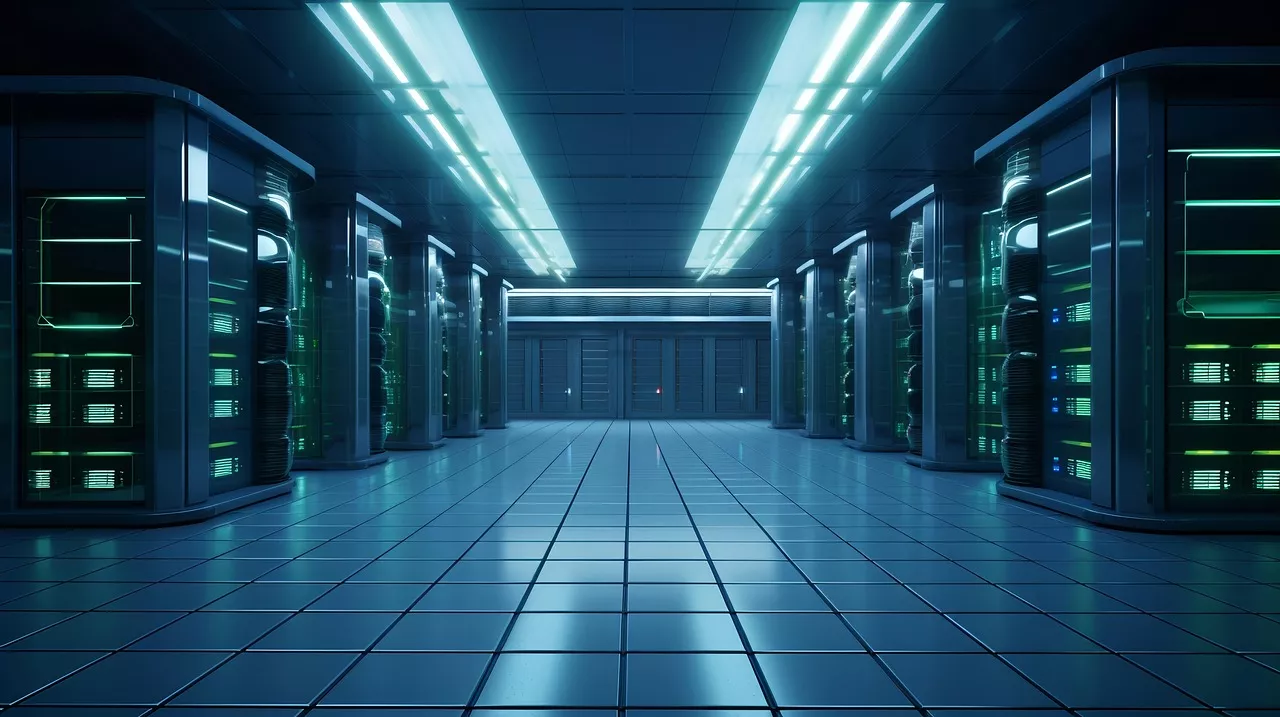
Amentum Selected to Develop Major AI Data Center and Energy Infrastructure Project at Savannah River Site
Amentum (NYSE: AMTM) has been selected by the U.S. Department of Energy’s National Nuclear Security Administration (NNSA) to enter negotiations for a phased lease agreement that could lead to the development of one of the largest integrated artificial intelligence and energy infrastructure projects in the United States. The proposed initiative, located at the Savannah River Site (SRS) in South Carolina, aims to combine advanced computing capabilities with large-scale energy generation to support the rapidly expanding demands of artificial intelligence technologies.
If finalized, the project would establish a 1-gigawatt artificial intelligence data center at the Savannah River Site. To ensure reliable and resilient power supplies, the facility would be supported by approximately 2 gigawatts of on-site energy generation capacity. Initial power generation is expected to rely on natural gas infrastructure, with long-term plans to transition toward advanced nuclear energy technologies as they become commercially available.
The initiative reflects the growing convergence of artificial intelligence, energy security, and national defense priorities. Increasingly, governments and industries recognize that the advancement of AI technologies depends heavily on access to secure, dependable, and scalable energy resources. Large AI models and next-generation computing systems require enormous amounts of electricity, making energy infrastructure a critical component of future technological competitiveness.
John Heller, Chief Executive Officer of Amentum, emphasized the strategic significance of the project and the company’s role in supporting national priorities.
“Artificial intelligence, energy resilience, and national security are becoming increasingly interconnected, creating new opportunities to strengthen America’s strategic advantage,” Heller said. “Amentum is uniquely positioned at that intersection, combining deep engineering expertise, trusted mission execution, and decades of partnership with the U.S. government. This agreement gives us the opportunity to partner with the NNSA to deliver infrastructure that will help power the technologies shaping our nation’s future.”
The Savannah River Site has long played an important role in America’s nuclear and national security programs. Originally established during the Cold War to produce materials for the nation’s nuclear defense programs, the site has evolved into a major center for environmental management, nuclear research, and advanced energy initiatives. The proposed AI and energy project represents another chapter in the site’s transformation, positioning it as a key location for next-generation technology infrastructure.
Artificial intelligence is rapidly reshaping economies and industries worldwide. Governments, technology companies, and research institutions are investing heavily in AI capabilities to support innovation in sectors ranging from defense and healthcare to manufacturing, transportation, and scientific research. However, the increasing computational requirements associated with advanced AI systems are placing unprecedented demands on power grids and energy infrastructure.
The proposed SRS project seeks to address these challenges by creating an integrated model where large-scale computing resources and dedicated energy generation facilities are developed together. Such an approach could provide enhanced reliability, reduce dependence on external power sources, and improve energy security for mission-critical applications.
Amentum believes that its extensive experience in engineering, nuclear operations, and complex program management positions the company well to execute the ambitious initiative. The company has supported numerous federal government missions involving energy, defense, environmental remediation, and national security infrastructure over several decades.
Mark Whitney, president of Amentum’s Energy & Environment business, highlighted the company’s long-standing relationship with the Savannah River Site and its experience handling large-scale nuclear and engineering programs.
“For generations, Amentum has helped solve some of the nation’s most complex engineering and nuclear challenges, including at the Savannah River Site,” Whitney said. “This opportunity builds on that legacy by bringing together our expertise in nuclear operations, infrastructure development, and program delivery to help our customer safely and securely accelerate the next generation of AI and energy infrastructure.”
The project also underscores the increasing role of public-private partnerships in advancing critical infrastructure initiatives. By leveraging private sector expertise and investment alongside government resources and strategic objectives, such collaborations can accelerate the deployment of emerging technologies while supporting national economic and security goals.
The planned 2-gigawatt energy generation component represents a particularly significant aspect of the proposal. Initially powered by natural gas facilities, the project is designed with a future transition to advanced nuclear technologies in mind. Advanced reactors are increasingly viewed as an attractive long-term solution for powering energy-intensive facilities because of their ability to provide reliable, carbon-free baseload electricity.
The integration of advanced nuclear energy with AI infrastructure could establish a model for future developments across the United States. As artificial intelligence applications continue to expand, demand for dedicated power resources is expected to increase substantially. Industry analysts have warned that existing electrical infrastructure may face growing challenges in supporting the energy requirements of large-scale AI computing facilities.
By planning for future nuclear integration, the Savannah River Site project may serve as a demonstration of how emerging energy technologies can support the next generation of digital infrastructure. It also aligns with broader federal objectives to strengthen domestic manufacturing, improve energy resilience, and maintain U.S. leadership in advanced technologies.
The proposed development is expected to contribute to economic growth in South Carolina and the surrounding region by creating opportunities for engineering, construction, operations, and technology-related employment. Large infrastructure projects of this scale often generate significant secondary economic benefits through supply chain activity, workforce development, and increased regional investment.
Additionally, the project could help reinforce America’s competitive position in the global race for artificial intelligence leadership. Nations around the world are investing heavily in AI capabilities, recognizing the technology’s potential to influence economic productivity, scientific advancement, and national security outcomes. Reliable and scalable energy infrastructure is increasingly being viewed as a strategic requirement for sustaining these ambitions.
Amentum stated that it remains committed to delivering engineering excellence, mission-focused innovation, and trusted partnerships that support critical government objectives. The company sees the Savannah River Site initiative as an opportunity to combine its expertise in infrastructure development, nuclear operations, and program execution to help establish a secure and resilient foundation for future AI growth.
If negotiations with the NNSA are successfully completed, the Savannah River Site project could become one of the largest integrated AI and energy developments in the country, serving as a blueprint for future infrastructure projects that combine advanced computing, reliable power generation, and national security priorities.
As artificial intelligence continues to evolve and energy demands accelerate, initiatives such as the proposed SRS development highlight the growing importance of integrated infrastructure strategies capable of supporting both technological innovation and long-term energy resilience in the United States.
Source Link: https://www.businesswire.com/