

Kyoto Fusioneering Supplies Gyrotron System to Quaise Energy
Kyoto Fusioneering (KF) has received an order from Quaise Energy, Inc. for a gyrotron system that will support Quaise’s millimeter-wave drilling technology for superhot geothermal development. The agreement was signed on August 17, 2026, marking a significant step in the commercial application of technology originally developed for fusion research.
The order represents the first customer outside the fusion sector for KF’s plasma heating business. While gyrotrons have traditionally been associated with heating plasma in experimental and developing fusion systems, the Quaise project demonstrates how the same high-power technology can be adapted for another demanding energy application.
Quaise is developing a drilling approach designed to reach extremely deep, high-temperature geothermal resources that conventional mechanical drilling methods can struggle to access economically. Its technology uses millimeter waves generated by a gyrotron to ablate rock, potentially enabling drilling at depths and temperatures associated with superhot geothermal resources.
Millimeter Waves for Advanced Geothermal Drilling
Conventional drilling relies heavily on mechanical equipment to break and remove rock. As wells become deeper and temperatures rise, however, mechanical drilling systems face increasing technical and economic challenges. High temperatures can affect downhole equipment, while hard rock formations can increase drilling time, equipment wear and operational costs.
Quaise’s approach takes a different route. Instead of relying on conventional mechanical cutting at the deepest sections of a well, its system uses high-frequency electromagnetic energy to interact with and break down rock. The millimeter waves are generated by a gyrotron, making the high-power source a central component of the drilling system.
The technology traces its origins to more than a decade of research at the Massachusetts Institute of Technology. Quaise has sought to apply advances in high-power millimeter-wave technology to geothermal drilling, with the objective of unlocking geothermal resources that conventional drilling technologies cannot economically reach.
The potential significance extends beyond conventional geothermal development. Superhot geothermal resources could provide access to very high-temperature energy stored deep within the Earth’s crust. If these resources can be accessed commercially, they could expand the geographic and technical potential of geothermal power.
KF’s Gyrotron Experience
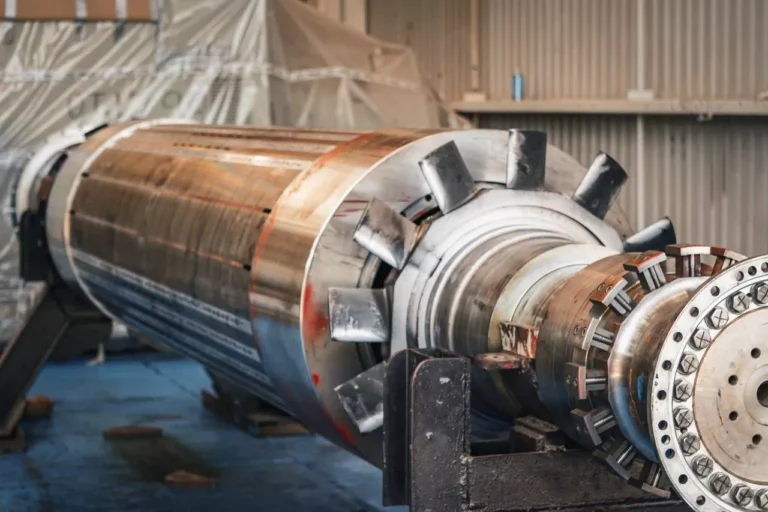
Kyoto Fusioneering brings extensive experience in the development and manufacture of gyrotron systems. The company designs and builds gyrotrons operating across frequencies ranging from 28 GHz to 236 GHz, including systems capable of operating at multiple frequencies.
Its technology has already been deployed in major fusion research facilities. KF has delivered two dual-frequency gyrotrons for the United Kingdom Atomic Energy Authority’s MAST Upgrade program, as well as a 1 MW system for Tokamak Energy’s ST40 fusion device.
The company has also supplied the first of two gyrotron units for the U.S. Department of Energy’s DIII-D National Fusion Facility. In addition, KF has completed the design of a 1.5 MW to 2 MW-class gyrotron intended for the Wendelstein 7-X stellarator and ASDEX Upgrade at the Max Planck Institute for Plasma Physics.
These projects have helped KF establish capabilities in high-power millimeter-wave generation, engineering and system integration. Those capabilities are now being extended into geothermal drilling through the Quaise order.
Continuous Operation Brings a New Requirement
One of the most important distinctions between the geothermal application and many current fusion experiments is operating duration.
Many existing experimental fusion facilities operate plasma heating systems in pulses that may last only seconds. A drilling system, by contrast, must operate continuously while the well is being advanced. The millimeter-wave source therefore needs to support sustained operation for extended periods.
The gyrotron KF is supplying to Quaise has been specified and designed around continuous operation. This requirement creates engineering challenges that differ from those encountered in pulsed fusion experiments, while also providing experience that could ultimately be valuable to future commercial fusion power plants.
Future fusion power stations will require heating and supporting systems capable of substantially longer operating periods than many present-day experimental facilities. Consequently, developing hardware for continuous operation in another commercial energy application can provide relevant experience for the eventual deployment of fusion systems.
Support From Japan’s Deep-Tech Programs
KF’s work on continuous-operation gyrotrons for geothermal applications has also received support through Japan’s energy technology development programs.
In September 2024, KF was selected for the New Energy and Industrial Technology Development Organization’s Deep-Tech Startups Support Program in the Green Transformation field. NEDO is Japan’s national agency responsible for supporting research and development in energy, industrial technology and related areas.
Under the program, KF has been developing high-power, continuous-operation gyrotrons and associated power supplies for superhot geothermal applications. The Quaise order represents the first commercial outcome of that development work.
The project therefore provides KF with an opportunity to apply its fusion-derived technology in an operating environment outside the fusion sector while continuing to advance equipment that could have applications in both industries.
Expanding the Gyrotron Supply Chain
The commercial development of gyrotrons is also relevant to the broader fusion industry. As fusion projects move from experimental research toward commercial power generation, demand for specialized plasma-heating equipment is expected to increase.
“The gyrotron supply chain has to grow well beyond its current size to meet what fusion will need, and it has to grow before that demand arrives, not after,” said Takashi Imai, Group CEO of the Plasma Heating Group at Kyoto Fusioneering. “KF is investing in that capability now and taking commercial work that builds it. This work with Quaise is an important part of that.”
Orders from non-fusion customers can help suppliers develop manufacturing capacity, engineering expertise and quality systems while commercial fusion projects are still progressing. For companies operating in specialized technology markets, expanding into adjacent applications can also provide opportunities to validate equipment under different operating conditions.
Potential for Japan’s Geothermal Resources
Japan has one of the world’s largest geothermal resource bases, although a significant portion remains undeveloped. Deep, high-temperature resources present particular technical challenges because reaching them economically requires drilling technologies capable of operating under demanding conditions.
Japan’s Ministry of Economy, Trade and Industry and NEDO are supporting research into superhot geothermal resources, Enhanced Geothermal Systems and closed-loop geothermal technologies through initiatives including the Green Innovation Fund.
For Kyoto Fusioneering, the Quaise project creates a pathway to apply its experience in fusion technology to the geothermal sector while contributing to the development of advanced drilling equipment. Lessons from the project could also support future geothermal deployments in Japan and other markets where deep geothermal resources remain difficult to access.
The order illustrates how technology developed to address the extreme requirements of fusion can find applications in other energy sectors. By combining KF’s gyrotron expertise with Quaise’s millimeter-wave drilling technology, the companies are pursuing a method designed to overcome some of the limitations associated with conventional deep geothermal drilling and potentially expand access to high-temperature geothermal energy.
Source Link: https://www.businesswire.com/