


Ampowr, Indonesia Ministry Sign Rural Electrification Agreement
Ampowr has signed a landmark Memorandum of Understanding (MoU) with Indonesia’s Ministry of Villages and Development of Disadvantaged Regions (Kemendes PDT), marking the beginning of a long-term collaboration to deliver reliable, clean, and sustainable electricity to rural communities that currently have limited or no access to power. The partnership represents a significant step toward improving the quality of life for thousands of villages across Indonesia while supporting the country’s broader rural development and clean energy ambitions.
The agreement was formally signed in Jakarta by Kemendes PDT Secretary General Taufik Madjid and representatives from PT Ampowr IES Indonesia, Ampowr’s Indonesian entity. The signing builds upon Ampowr’s growing presence in Indonesia, where the company has already established commercial operations in Jakarta and has been expanding its footprint in the country’s rapidly evolving renewable energy sector.
Indonesia, one of the world’s largest archipelagic nations, is home to more than 75,000 villages spread across thousands of islands. According to the Ministry of Villages and Development of Disadvantaged Regions, the country has 75,266 villages. While Indonesia has made remarkable progress in expanding electricity access over the past decade, many rural and remote communities continue to face significant energy challenges. Thousands of villages remain without electricity altogether, while many others receive power for only a limited number of hours each day. In certain remote areas, electricity is available for as little as eight hours daily, restricting access to essential services and limiting opportunities for economic development.
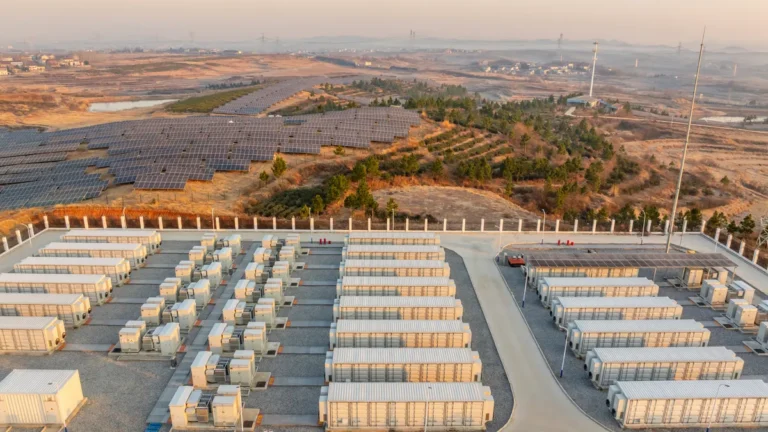
The newly signed Memorandum of Understanding is designed to address these challenges by demonstrating the effectiveness of an integrated renewable energy solution that combines solar photovoltaic (PV) generation, battery energy storage systems (BESS), and advanced energy management software. Rather than relying on traditional diesel-powered generation or extending costly transmission infrastructure into remote regions, the initiative aims to create self-sufficient village energy systems capable of delivering dependable electricity throughout the day and night.
As part of the first phase of the partnership, Ampowr and Kemendes PDT will launch pilot projects in four selected villages. These demonstration sites will serve as proof of concept for the company’s integrated clean energy model, allowing both organizations to evaluate technical performance, operational reliability, and community impact under real-world conditions.
If the pilot program delivers the expected results, the initiative is designed to scale significantly. The second phase envisions expanding deployment to as many as 300 villages, creating one of Indonesia’s largest rural renewable energy initiatives. Ultimately, the partnership establishes a long-term roadmap that could extend electricity access to every unelectrified village across Indonesia, helping transform rural infrastructure on a national scale.
The phased implementation strategy reflects a practical and scalable approach. Rather than attempting immediate nationwide deployment, the partners will first validate the technology and operational model in four villages. Lessons learned during the pilot phase will help optimize system design, financing, maintenance, and community engagement before expanding to hundreds of additional communities. This measured approach is intended to reduce implementation risks while ensuring that each stage builds upon demonstrated success.
At the heart of the solution is Ampowr’s proprietary energy management software, Cosmos. The software serves as the intelligence layer that coordinates solar generation, battery storage, and any available backup energy sources to provide a stable and uninterrupted electricity supply. By continuously monitoring energy production, consumption patterns, battery charge levels, and system performance, Cosmos optimizes how electricity is generated, stored, and distributed throughout the village.
This advanced energy management capability is particularly valuable in remote locations where weather conditions and electricity demand fluctuate throughout the day. During periods of high solar production, excess electricity can be stored in batteries rather than wasted. When sunlight decreases or demand rises during the evening, stored energy can be automatically dispatched to maintain reliable service. If necessary, backup generation can also be integrated seamlessly into the system, ensuring continuous electricity availability.
Ampowr’s approach goes beyond simply supplying renewable energy equipment. The company delivers a complete end-to-end solution that integrates hardware, software, installation, operations, and long-term maintenance under a single contract. This full-stack model simplifies project management for customers while ensuring that all system components operate together efficiently.
The company has already demonstrated this integrated operating model through its projects in the Netherlands, where it manages renewable energy assets using the same combination of solar generation, battery storage, and intelligent energy management software. By bringing this experience to Indonesia, Ampowr aims to adapt proven technologies to meet the unique needs of remote villages spread across the country’s diverse geography.
Reliable electricity has far-reaching implications for rural development that extend well beyond basic lighting. Stable power enables healthcare facilities to refrigerate medicines and vaccines, operate essential medical equipment, and provide emergency services after dark. Schools can extend learning hours into the evening, improving educational opportunities for students. Farmers can use refrigeration and processing equipment to reduce food waste, preserve harvests, and increase the value of agricultural products. Small businesses gain access to modern equipment and digital technologies, creating new sources of employment and income within local communities.
Eric van Honk, Co-Chief Executive Officer of Ampowr, emphasized the broader importance of electricity access in supporting sustainable village development.
“Accessible electricity is the foundation for everything a village needs to grow: a clinic that can keep medical supplies cold, a school that stays open after sunset, a farmer who can protect a harvest,” said van Honk. “We will begin with four villages and a clear path to 300 and beyond. That gives communities, the government, and long-term investors a model they can trust and repeat.”
His comments highlight the company’s focus not only on technology deployment but also on creating a scalable investment model capable of attracting long-term financial support for rural electrification projects.
In addition to improving electricity access, the partnership places significant emphasis on building local capacity. Training programs will help community members develop the technical knowledge required to operate and maintain the energy systems over time. By empowering local residents with new skills, the initiative seeks to create sustainable village energy businesses capable of supporting long-term economic growth while reducing dependence on outside technical assistance.
Community engagement is expected to play a central role throughout the project lifecycle. Local participation in planning, operation, and maintenance can improve system reliability while fostering a stronger sense of ownership among residents. This approach also helps ensure that energy solutions are tailored to each community’s specific needs and development priorities.
The collaboration aligns closely with several United Nations Sustainable Development Goals (SDGs). By expanding access to affordable and clean electricity, the initiative supports SDG 7 (Affordable and Clean Energy). Improved power availability strengthens education through SDG 4 (Quality Education), enhances healthcare services under SDG 3 (Good Health and Well-being), and contributes to food security through SDG 2 (Zero Hunger) by supporting agricultural productivity and food preservation.
The signing ceremony was attended by His Excellency Marc Gerritsen, Ambassador of the Kingdom of the Netherlands to Indonesia, Timor-Leste, and ASEAN, reflecting the growing cooperation between Dutch and Indonesian organizations in advancing sustainable energy solutions and climate-friendly infrastructure development.
Following the signing of the Memorandum of Understanding, Ampowr and Kemendes PDT will begin conducting a comprehensive feasibility study to identify suitable pilot locations, assess technical requirements, and develop detailed implementation plans. The study will evaluate local energy demand, solar resource availability, infrastructure requirements, community readiness, and long-term operational considerations.
Once the feasibility assessment has been completed, implementation will begin in the four pilot villages. The results from these initial deployments will help shape future expansion across hundreds of additional communities, laying the groundwork for a nationwide rural electrification program that combines renewable energy generation, battery storage, intelligent energy management, and community capacity building to provide reliable electricity for Indonesia’s underserved villages.
Source Link: https://www.businesswire.com/