TotalEnergies, TES, and Japanese Gas Leaders Advance Nebraska e-NG Project with Major Partnership Agreement
TotalEnergies (Paris:TTE) (LSE:TTE) (NYSE:TTE), together with TES, Osaka Gas, Toho Gas, and ITOCHU, has reached a significant milestone in the development of the Live Oak project — an ambitious U.S.-based facility designed to produce electric natural gas (e-NG), also widely known as e-methane. The companies have formally signed a Joint Development and Operating Agreement, solidifying a multinational partnership committed to accelerating the global transition toward carbon-neutral gas solutions.
Under the terms of the agreement, the three Japanese companies — Osaka Gas, Toho Gas, and ITOCHU — will collectively acquire a 33.3% ownership stake in the Live Oak initiative. TotalEnergies and TES will retain equal shares of 33.35% each, maintaining their roles as the original project initiators and core developers. This structure establishes a balanced consortium with shared strategic interests: enabling decarbonization in the natural gas sector while supporting Japan’s evolving clean-energy policy targets.
A Large-Scale e-NG Production Facility Positioned for Global Impact
Located in Nebraska, the Live Oak project is currently advancing toward the Front-End Engineering Design (FEED) phase — a key technical and financial evaluation step that will determine the final configuration of the plant. In its initial scope, the facility is expected to be designed around approximately 250 megawatts of electrolyzer capacity, enabling the production of renewable hydrogen that will serve as a foundation for synthetic methane generation. Once hydrogen is combined with captured CO₂, the site aims to reach an output of around 75,000 tonnes per annum (ktpa) of e-methane at full operations.
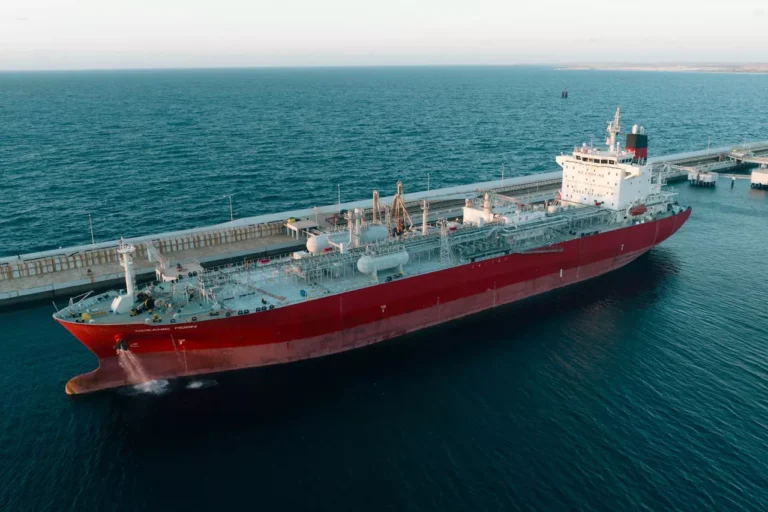
Pending a positive Final Investment Decision (FID) planned for 2027, the partners have set 2030 as the target year for commercial start-up. Once operational, the renewable gas produced at Live Oak will be liquefied, transported, and delivered to Japan using existing LNG networks. Osaka Gas and Toho Gas are expected to serve as the primary offtakers, using the carbon-neutral fuel to support decarbonization within Japanese homes and industries.
This direct integration into today’s widely established LNG value chain offers an important advantage: because e-NG is chemically identical to conventional natural gas, it can be distributed through current infrastructure — including pipelines, liquefaction terminals, LNG vessels, regasification facilities, and consumer systems — without costly modifications. That compatibility makes e-NG one of the most promising solutions to rapidly scale low-carbon gas across international markets.
Supporting Japan’s Clean-Energy Ambitions
Japan has committed to a national objective of decarbonizing its gas supply, including a target to ensure that 1% of the country’s natural gas system contains carbon-neutral molecules such as e-NG by 2030. Although this may seem incremental, the shift requires substantial transformation across upstream production, supply chains, and end-use integration — areas where strategic global partnerships are essential.
By securing long-term access to e-NG from the United States, Osaka Gas and Toho Gas are reinforcing their leadership roles in Japan’s energy transition. At the same time, ITOCHU — acting as a coordinator among Japanese buyers — brings extensive international experience in project development, commodity logistics, and supply portfolio diversification.
This collaboration also expands the presence of Japanese firms in renewable gas development overseas, solidifying a broader trend in which Japan is forging alliances to ensure stable and sustainable energy imports aligned with its national climate targets.
Harnessing U.S. Renewable Resources and Industrial Strength
Nebraska’s role in the Live Oak project is highly strategic. The state is one of the largest producers of corn-based bioethanol in the United States, which results in large volumes of biogenic CO₂ — a critical feedstock for synthetic methane production. By capturing CO₂ that would otherwise be released into the atmosphere and combining it with green hydrogen, the project creates a circular carbon system that significantly reduces lifecycle emissions.
Additionally, the U.S. energy landscape — with its rapid expansion of wind and solar generation, federal incentives supporting clean hydrogen, and extensive LNG infrastructure — provides a favorable environment for accelerating large-scale e-NG deployment. As such, the Live Oak project is designed to contribute both to U.S. clean-energy development and the global supply of carbon-neutral fuels.
Strengthening a Strategic Alliance for e-NG Leadership
The newly signed agreement further builds on the foundation established in 2023, when TotalEnergies and TES launched a strategic collaboration to drive industrial-scale e-NG production. With the addition of major Japanese stakeholders, the partnership brings together complementary strengths:
- TotalEnergies: renewable energy, LNG value-chain expertise, and project development capabilities
- TES: advanced e-NG production technologies and decarbonization strategies
- Osaka Gas & Toho Gas: large-scale market demand and operational infrastructure in Japan
- ITOCHU: commercial coordination and global trading leadership
By leveraging this diverse expertise, Live Oak is positioned as one of the world’s most advanced commercial initiatives for producing carbon-neutral synthetic gas.
e-NG: A Scalable Solution for Decarbonizing Gas Systems
Electric natural gas represents a promising pathway for achieving deep emissions reductions in hard-to-abate sectors — particularly where electrification is difficult. Because e-NG behaves exactly like conventional methane, it allows system-wide decarbonization without requiring new infrastructure or equipment upgrades.
Its scalability across power, industrial heating, residential distribution, and transportation makes e-NG a central component of decarbonizing global gas usage while maintaining energy security.
A Strong Step Toward a Low-Carbon Energy Future
The Live Oak project demonstrates how multinational partnerships can accelerate the transition to cleaner fuels — combining technological innovation with international supply-chain cooperation. As the consortium moves into the FEED stage, it is laying the groundwork for one of the largest and most strategically significant e-NG production sites worldwide.
If successfully executed, this project will not only support Japan’s climate commitments but also serve as a leading model for producing and transporting carbon-neutral gas at scale — helping reshape energy systems across continents and contributing to a more sustainable future.
Source Link: https://www.businesswire.com/