


HE Saeed Mohammed Al Tayer Reviews Progress at the Sixth Phase of the Mohammed bin Rashid Al Maktoum Solar Park
His Excellency Saeed Mohammed Al Tayer, Managing Director and Chief Executive Officer of Dubai Electricity and Water Authority (DEWA), recently carried out a comprehensive site visit to assess the progress of the sixth phase of the Mohammed bin Rashid Al Maktoum Solar Park. This latest phase of the iconic renewable energy project has a planned production capacity of 1,800 megawatts (MW) and represents one of the most significant milestones in Dubai’s journey toward clean energy and sustainability. Developed under the Independent Power Producer (IPP) model, the project carries an investment value of approximately AED 5.5 billion.
The Mohammed bin Rashid Al Maktoum Solar Park is the largest single-site solar park in the world, developed based on the IPP model. It is not only a flagship project for Dubai but also a global benchmark for large-scale renewable energy deployment. Through this massive solar development, DEWA is reinforcing Dubai’s role as a pioneer in clean energy, climate action, and sustainable development. More importantly, it serves as a cornerstone in achieving two critical policy frameworks: the Dubai Clean Energy Strategy 2050 and the Dubai Net Zero Carbon Emissions Strategy 2050. Both strategies share an ambitious target of enabling Dubai to generate 100% of its power production capacity from clean energy sources by the year 2050.
During the visit, Al Tayer was accompanied by Waleed bin Salman, Executive Vice President of Business Development and Excellence at DEWA, along with senior officials, engineers, and project managers. Together, they reviewed ongoing construction activities, technological installations, and the operational performance of the components already connected to the grid.
Progress of the Sixth Phase
Project officials from Shuaa Energy 4, the consortium responsible for developing this phase, provided a detailed briefing on construction updates and milestones achieved so far. The sixth phase is approximately 68.59% complete, marking substantial progress within the projected timeline. Out of the total 1,800 MW planned capacity, 1,000 MW is already operational and delivering clean electricity to Dubai’s power grid. This achievement underscores the efficiency of project execution and highlights the advanced planning and coordination between DEWA and its private sector partners.
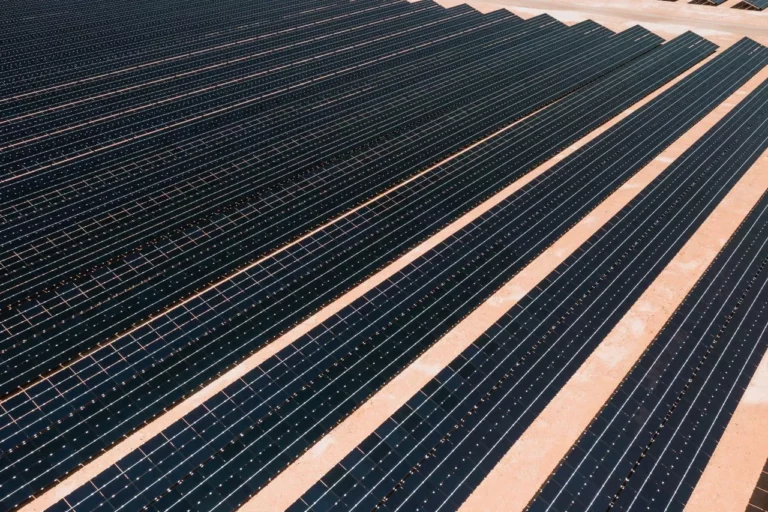
One of the most striking features of this phase is the sheer scale of photovoltaic (PV) panel deployment. To date, over 2.236 million solar panels have already been installed. Upon full completion next year, the project is expected to include nearly 3.959 million PV panels spread across a massive 20 square kilometres of desert landscape. This vast array of solar technology will make the sixth phase one of the largest single deployments of bifacial PV panels in the world.
Impact on Dubai’s Energy Mix
The Mohammed bin Rashid Al Maktoum Solar Park has already transformed Dubai’s energy landscape. Its current production capacity stands at 3,860 MW, with another 800 MW presently under construction. Once the sixth phase is fully operational and additional planned phases come online, the total capacity of the solar park is expected to reach 7,260 MW by 2030. This figure significantly surpasses the original plan of 5,000 MW, demonstrating Dubai’s decision to accelerate renewable energy deployment in line with global climate commitments and local energy security goals.
By 2030, clean energy is projected to make up around 34% of Dubai’s total energy mix. This would represent one of the highest shares of renewable energy within the Middle East, positioning Dubai as a leader in the transition to a low-carbon economy.
Advanced Technology and Environmental Benefits
The sixth phase of the solar park is distinguished by its use of advanced solar technology. It deploys bifacial photovoltaic panels that can capture sunlight on both sides of the module, thereby increasing energy generation efficiency. These panels are mounted on single-axis tracking systems that follow the movement of the sun throughout the day, maximizing solar exposure and overall energy yield.
The environmental benefits of this phase are equally impressive. When fully operational, it will generate enough clean electricity to power approximately 540,000 residences across Dubai. In addition, the project will help avoid around 2.36 million tonnes of carbon emissions annually. This carbon reduction impact is comparable to removing hundreds of thousands of cars from the roads each year, making it a key contributor to Dubai’s climate mitigation efforts.

The Strategic Importance of the Solar Park
The Mohammed bin Rashid Al Maktoum Solar Park is more than just an infrastructure project; it is a symbol of Dubai’s commitment to innovation, sustainability, and global climate action. The park aligns with the UAE’s broader efforts to meet its Nationally Determined Contributions (NDCs) under the Paris Agreement, while also supporting the nation’s role as a host of international climate platforms such as COP28.
Furthermore, the park strengthens Dubai’s energy security by reducing reliance on imported fossil fuels, diversifying the energy mix, and stabilizing electricity costs for consumers and industries. The use of the IPP model ensures significant private sector involvement, bringing in expertise, efficiency, and investment capital without burdening public finances.
Al Tayer’s Vision and Commitment
During his visit, Al Tayer reiterated DEWA’s commitment to advancing clean energy projects that align with Dubai’s strategic goals. He emphasized the importance of innovation, efficiency, and sustainability in every phase of the solar park’s development. According to Al Tayer, the sixth phase is not only a step toward expanding capacity but also an opportunity to showcase the latest renewable energy technologies that can be replicated across other regions of the world.
He also praised the collaborative efforts between DEWA, Shuaa Energy 4, and various contractors and engineers who are working tirelessly to deliver the project on schedule. Their combined expertise has been instrumental in achieving high levels of efficiency and quality in construction, installation, and commissioning.