Rio Tinto Expands Solar Power at Kennecott, Demonstrating Circular Critical-Mineral Supply Chain
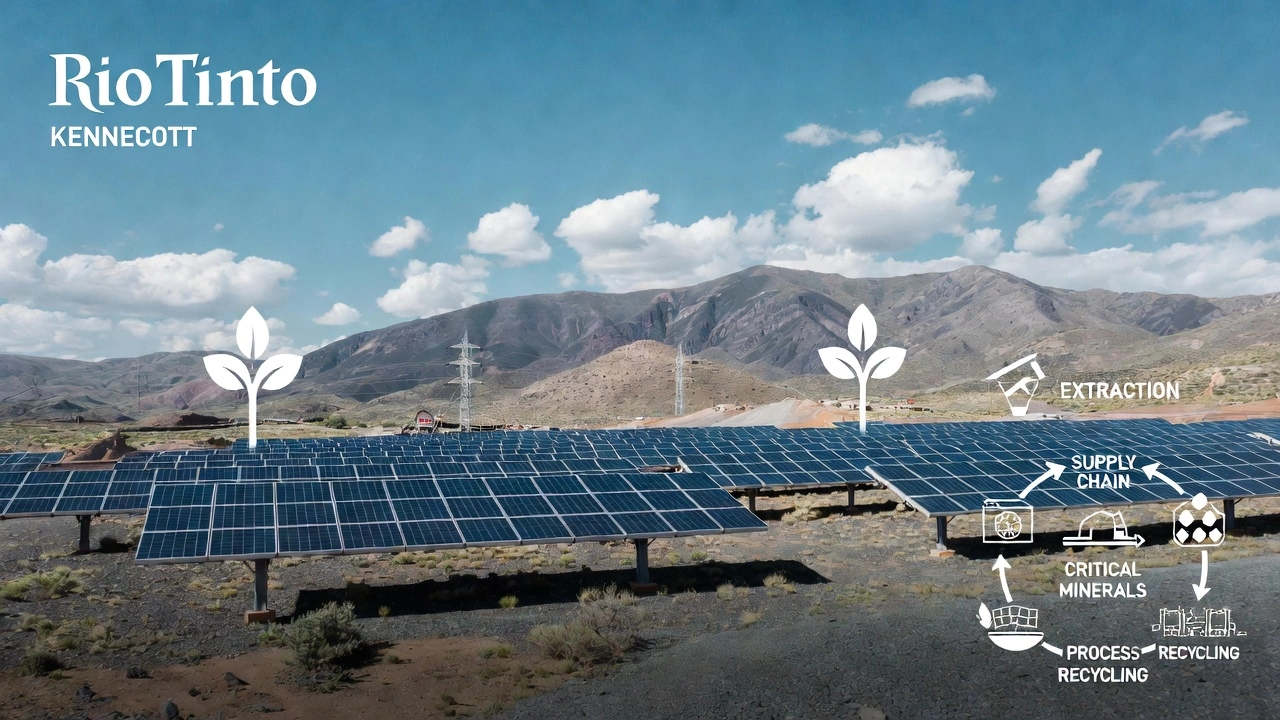
Rio Tinto has officially energized a new 25-megawatt (MW) solar power plant at its Kennecott copper operations in Utah, marking a significant milestone in the company’s commitment to renewable energy and sustainable operations. The expansion not only increases the mine’s clean energy capacity but also highlights a circular critical-minerals supply chain, in which tellurium produced at Kennecott is utilized to manufacture the very solar panels that now generate electricity for the site.
With this addition, Kennecott now has a total of 30 MW of solar capacity, including the 5 MW plant completed in 2023. The renewable energy generated by the combined solar arrays is sufficient to power approximately 1,026 average American homes each year. Furthermore, the project is expected to reduce Kennecott’s Scope 2 greenhouse gas emissions by around 20,000 tonnes of CO₂ equivalent annually—representing a 6% reduction in emissions and the environmental equivalent of removing roughly 4,400 passenger vehicles from the road.
Construction of the 25 MW facility began in October 2024 in partnership with Bechtel, one of the world’s leading engineering, procurement, and construction firms. Despite the scale of the project, the team successfully completed and commissioned the solar array by October of last year and energized it in December. The facility features over 71,000 solar panels, all of which incorporate tellurium—a critical mineral produced onsite at Kennecott and a key component in advanced thin-film photovoltaic technology.
Kennecott began producing tellurium in 2022 as a byproduct of its copper refining operations, making it one of only two U.S. producers of this essential mineral. Tellurium is highly valued in the solar industry for its role in thin-film cadmium telluride (CdTe) panels, which offer a cost-effective and efficient alternative to conventional silicon-based photovoltaic systems. At Kennecott, the tellurium extracted during copper processing is sent to 5N Plus Inc., a Canadian company specializing in advanced materials.
There, it is converted into high-purity semiconductor materials and supplied primarily to First Solar for manufacturing the photovoltaic panels now deployed at the Utah site. This arrangement creates a nearly complete North American supply chain for tellurium-based solar technology, reducing reliance on international sources and enhancing supply chain resilience.
Nate Foster, Managing Director of Rio Tinto Kennecott, emphasized the broader significance of the project: “This new solar plant is more than just a source of renewable energy for our operations; it is a demonstration of circularity and supply chain resilience. By mining both copper and tellurium—both classified as critical minerals in the United States—here at Kennecott and using that tellurium in the panels powering our site, we are proving how domestic critical minerals can directly support renewable energy manufacturing. This approach strengthens North America’s supply chain for essential resources, contributes to national energy security, and reinforces our commitment to a low-carbon future.”
Foster also highlighted that the Kennecott project serves as a model for integrating mining operations with renewable energy solutions. By leveraging minerals produced onsite in energy infrastructure, Rio Tinto is demonstrating how industrial operations can reduce their environmental footprint while simultaneously supporting local and national energy goals.
Scott Austin, General Manager of Renewables & Clean Power at Bechtel, praised the collaboration and its local economic impact: “Working closely with Rio Tinto, Bechtel is proud to have delivered this project two months ahead of schedule. In addition to advancing renewable energy at the mine, the project supported 200 local jobs during construction, contributing to the regional economy. We look forward to future collaborations that continue to bring clean energy solutions to industrial operations.”
Gervais Jacques, Chief Executive Officer of 5N Plus, reinforced the strategic importance of the project from a critical minerals perspective: “Our partnership with Rio Tinto helps deliver industry-leading products that support the clean energy transition and strengthen national energy security. At a time when the security of critical mineral supply chains is under intense scrutiny, we are pleased to demonstrate that North American resources can be efficiently and sustainably deployed to meet growing demand for renewable energy technology. Our collaboration ensures that these essential materials continue to reach the advanced sectors that rely on them.”
The Kennecott solar expansion is part of Rio Tinto’s broader sustainability strategy, which includes transitioning to low-carbon energy sources, improving operational efficiency, and reducing the environmental footprint of mining operations. By integrating solar power with its existing energy infrastructure, Rio Tinto is actively reducing greenhouse gas emissions, diversifying its energy mix, and promoting a more resilient and sustainable approach to industrial energy consumption.
In addition to its environmental benefits, the project exemplifies circular economy principles by linking mineral production directly to energy generation. This creates a closed-loop system in which raw materials mined and processed at the site are reinvested into technology that supports clean energy, reducing dependence on imported minerals and fostering a locally based manufacturing ecosystem.
With the 25 MW plant now operational, Kennecott joins a growing number of industrial sites worldwide that are leveraging on-site renewable energy to meet operational needs while mitigating climate impacts. The project underscores the role of mining companies not only as resource suppliers but also as active participants in the transition to a low-carbon, sustainable energy future.
By combining innovation, local economic benefits, and environmental responsibility, the Kennecott solar project highlights how strategic partnerships among mining operators, construction firms, and advanced materials manufacturers can deliver tangible results in renewable energy deployment. It sets a precedent for future initiatives where domestic critical minerals are used to power domestic energy infrastructure, strengthening supply chains, enhancing energy security, and accelerating the transition to clean energy.
Source Link: https://www.businesswire.com/