Regulators Approve Duke Energy’s New Natural Gas Plant to Power South Carolina’s Growth
The Public Service Commission of South Carolina has approved a proposal from Duke Energy to construct a new natural gas-fueled power generation facility in Anderson County, marking a significant milestone in the state’s efforts to expand electricity capacity and support continued economic and population growth.
The project, which will be located in the northwestern region of the state, is designed to deliver reliable and efficient electricity while strengthening the long-term energy infrastructure of South Carolina. With the approval now secured, Duke Energy is preparing to move forward with development plans that will ultimately provide more than 1,300 megawatts of new generating capacity to serve homes, businesses, and industries across the region.
State leaders and energy officials say the new facility will play a key role in maintaining energy reliability as South Carolina continues to attract new residents, manufacturing investments, and expanding commercial activity.
Public review and community engagement
The decision by the Public Service Commission of South Carolina follows a detailed regulatory review process that included public engagement and consultation with community members in Anderson County.
During the evaluation period, the commission hosted a public hearing in the city of Anderson to gather comments and feedback from residents, local officials, and stakeholders. The hearing allowed community members to voice support, raise questions, and learn more about the project’s potential economic and environmental impacts.
In addition to the official regulatory hearing, Duke Energy organized two open house events where engineers and project specialists shared technical details about the proposed plant. These sessions provided an opportunity for local residents to speak directly with company experts, ask questions about construction timelines and environmental safeguards, and provide feedback that was incorporated into the review process.
The public consultation process was designed to ensure transparency and community participation before final approval was granted.
Meeting the energy needs of a rapidly growing state
South Carolina has emerged as one of the fastest-growing states in the United States in recent years. Population growth, industrial expansion, and new business investments have significantly increased electricity demand across the region.
Energy planners say the new facility will help address this demand by providing dependable power generation capacity that can operate alongside renewable energy and other resources.
In response to rising energy needs, South Carolina lawmakers passed the Energy Security Act in 2025. The legislation established a long-term framework for expanding energy resources and ensuring that the state maintains reliable electricity supplies as its economy grows.
Under the law, utilities are encouraged to develop a diversified Duke Energy mix that includes natural gas, nuclear power, renewable generation, battery storage, and energy efficiency initiatives.
The new Anderson County project is considered an important component of that strategy, providing flexible generation that can support the grid during periods of high electricity demand or when renewable output varies.
Economic impact and job creation
Beyond energy reliability, the project is expected to deliver significant economic benefits during both the construction phase and long-term operation.
According to an economic analysis conducted by Ernst & Young, construction of the facility is projected to support more than 2,200 jobs annually over the course of the multi-year building period.
Of those positions, approximately 746 construction jobs are expected to be based directly in Anderson County, providing employment opportunities for skilled workers and contractors throughout the region.
Once the plant becomes operational, the facility is expected to continue generating economic activity statewide. The analysis estimates that the project will produce an annual economic impact of about $84 million across South Carolina.
Operations at the facility are projected to support roughly 125 permanent jobs and generate approximately $10 million in annual labor income. In addition, the plant is expected to contribute millions of dollars in local tax revenues that will support public services such as schools, infrastructure, and emergency services in Anderson County.
Local leaders say the combination of job creation and increased tax revenue will help strengthen the county’s economy and improve quality of life for residents.
Advanced technology and environmental design
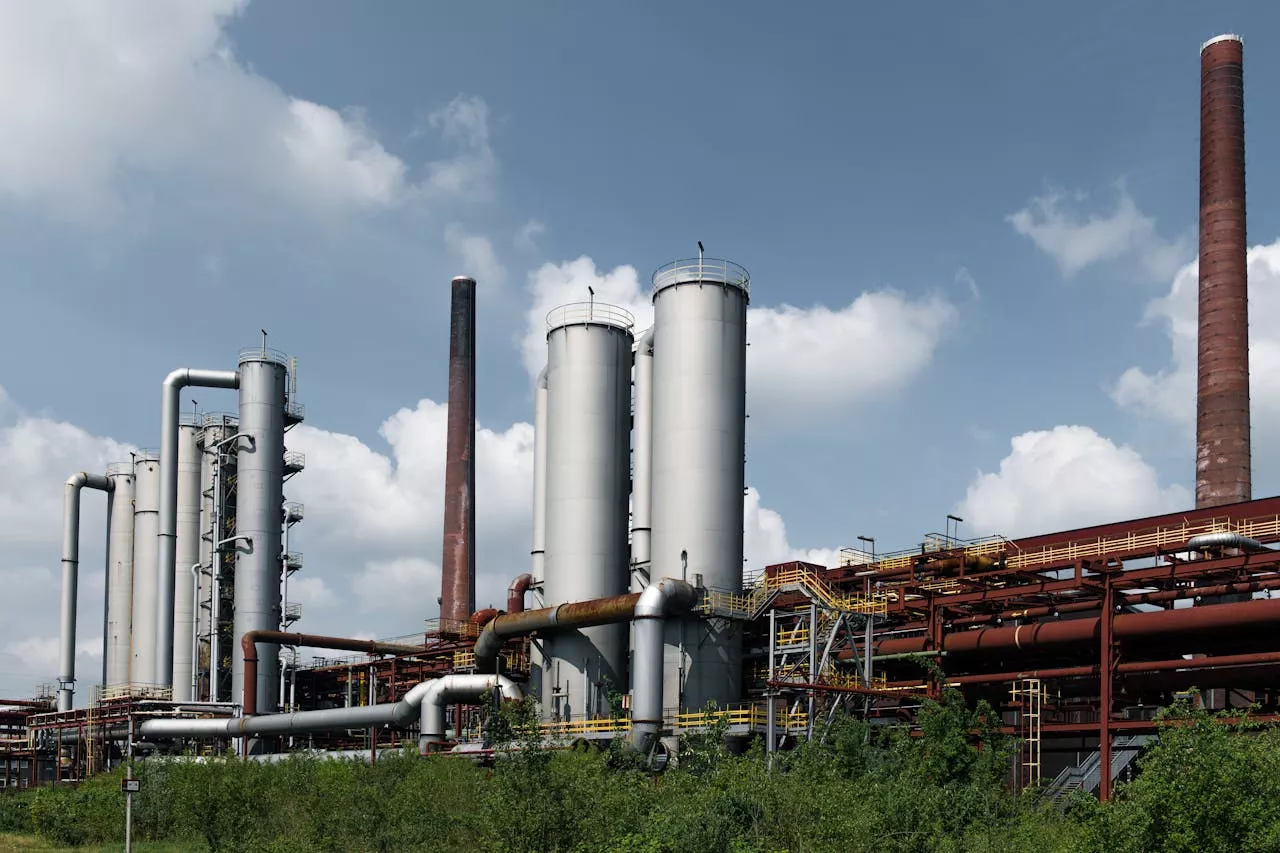
The Anderson County power station will use modern Duke Energy combined-cycle natural gas technology, which is significantly more efficient than earlier generations of gas-fired power plants.
Combined-cycle facilities generate electricity using both a gas turbine and a steam turbine. The process captures waste heat from the gas turbine and uses it to produce additional power, resulting in higher efficiency and lower fuel consumption.
According to Duke Energy, the plant will be among the most efficient natural gas facilities in the company’s fleet.
The project will also incorporate advanced environmental control technologies designed to reduce emissions and minimize environmental impacts.
Among the planned features are cooling systems that dramatically reduce water consumption compared Duke Energy with traditional wet-cooling methods. The facility is expected to use roughly 90 percent less water than older technologies.
In addition, the plant’s design will eliminate the visible vapor plume commonly associated with cooling towers and avoid the need for chemical water treatment processes. These improvements are intended to reduce the facility’s environmental footprint while improving operational efficiency.
The plant is also expected to have a longer operational lifespan than previous natural gas generation technologies, helping ensure a stable and dependable source of power for decades.
Partnership with regional cooperatives
The project also includes participation from regional electric cooperatives, further expanding its role in supporting the broader power grid.
Central Electric Power Cooperative is expected to own approximately 95 megawatts of capacity from the plant, while the North Carolina Electric Membership Corporation will hold an ownership stake of about 100 megawatts.
Together, these partnerships will provide cooperative members with access to reliable power while helping diversify supply sources across the Carolinas.
In total, the combined-cycle facility is expected to deliver approximately 1,365 megawatts of nominal generating capacity once fully operational.
Construction timeline
Project development will take place over several years before the plant begins delivering electricity to customers.
Construction is currently scheduled to begin in the summer of 2027, following final planning, engineering, and permitting processes.
Once construction starts, work will continue for several years as crews build generation units, transmission infrastructure, and supporting facilities.
If the project proceeds according to schedule, the plant is expected to begin supplying electricity to customers by early 2031.
Support from state leadership
State leaders have broadly supported the project, emphasizing its role in supporting economic development and ensuring energy reliability.
Henry McMaster, Governor of South Carolina, said the state’s rapid growth has made dependable electricity more critical than ever.
He noted that the new power plant represents forward-looking energy planning that will help the state meet the needs of new residents and businesses while maintaining reliable power supplies.
South Carolina House Speaker Murrell Smith also praised the project, stating that the development reflects the state’s commitment to building reliable and affordable energy infrastructure that supports job creation and economic expansion.
Similarly, Senate President Thomas Alexander said the commission’s approval represents an important step in ensuring that South Carolina remains competitive as it continues to attract new industries and investments.
Local lawmakers Mike Gambrell and Craig Gagnon highlighted the longstanding relationship between Anderson County and Duke Energy, noting that the new facility will provide long-term benefits for the local economy, schools, and community services.
Duke Energy’s perspective
Tim Pearson, president of Duke Energy South Carolina, said the approval confirms that the project represents the right resource at the right time.
He emphasized that the plant will help meet rapidly rising electricity demand while supporting a diverse and balanced energy portfolio.
According to Pearson, the new facility will complement other energy resources, including nuclear generation, renewable energy, battery storage systems, and energy efficiency programs.
By integrating these resources, the company aims to maintain reliable service while transitioning toward a modernized and resilient energy system.
Duke Energy Carolinas operations
Duke Energy Carolinas, a subsidiary of Duke Energy, operates an extensive electric system serving customers across both North Carolina and South Carolina.
The company owns approximately 20,800 megawatts of generation capacity and provides electricity to about 2.9 million residential, commercial, and industrial customers.
Its service territory covers roughly 24,000 square miles across the two states.
The new Anderson County plant will become an important addition to this network, strengthening the company’s ability to provide dependable electricity as demand continues to grow.
Source Link: https://news.duke-energy.com/