Title: ORLEN Expands LNG Fleet with Two Advanced Gas Carriers
The ORLEN Group has taken another major step in strengthening its liquefied natural gas logistics capabilities with the addition of two modern LNG carriers to its growing fleet. A formal naming ceremony for the vessels took place at the Hanwha Ocean shipyard in Geoje, South Korea, marking an important milestone in the company’s strategy to ensure secure and flexible gas supplies for Poland and the wider Central and Eastern European region.
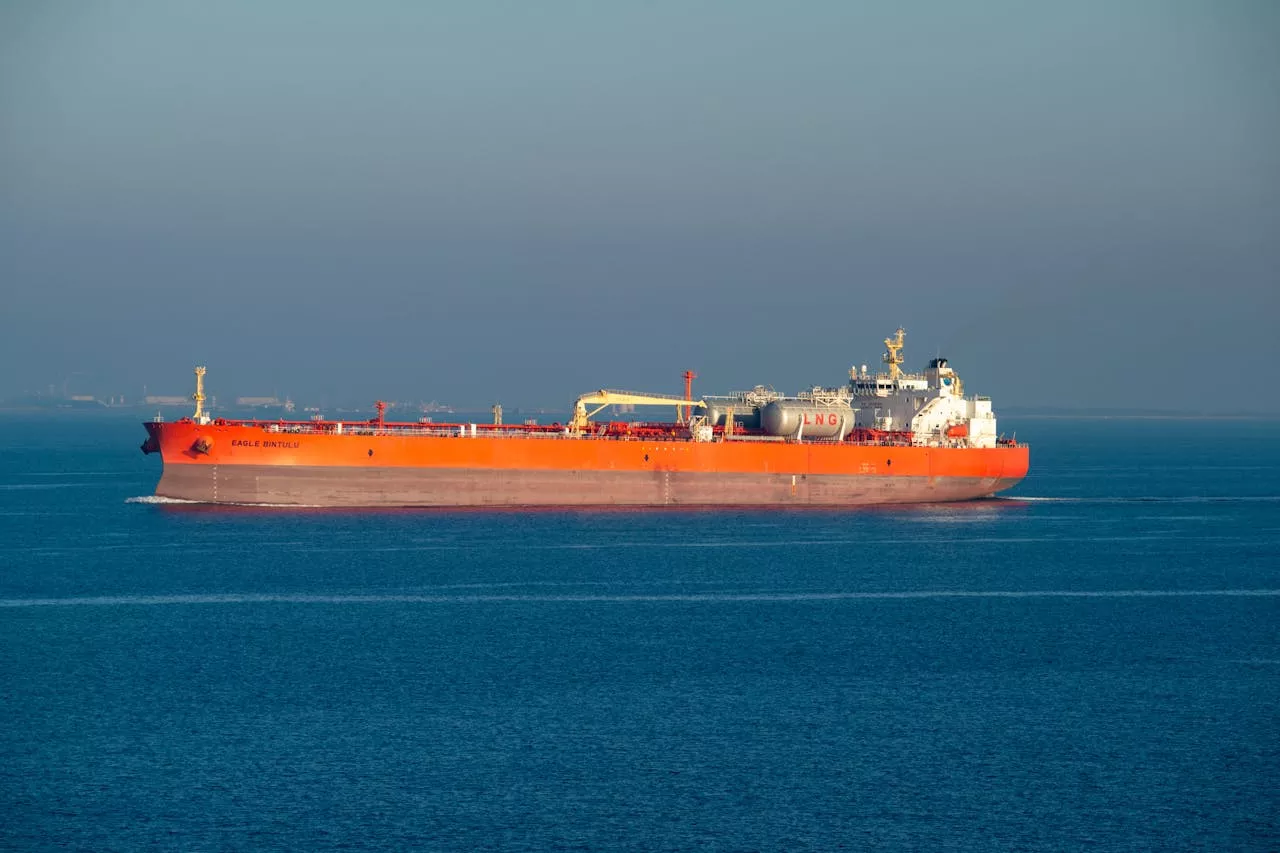
The two new carriers are designed to transport large volumes of liquefied natural gas from global production hubs to European markets. Once operational, they will significantly improve the reliability of LNG deliveries to Poland and provide the company with greater independence in managing its own gas supply chain. Each vessel is capable of carrying enough LNG in a single voyage to supply up to two million households, highlighting their strategic importance for regional energy security.
Strengthening Energy Independence
The expansion of the LNG fleet reflects ORLEN’s long-term commitment to strengthening energy independence and supply stability. According to the company’s leadership, investments in infrastructure, exploration, and transport capabilities are key elements of its broader strategy to diversify energy sources and reduce reliance on traditional pipeline supplies.
“ORLEN continues to invest consistently in the energy security and independence of both Poland and the entire region,” said Ireneusz Fąfara, President of the Management Board of ORLEN. “Our efforts include expanding domestic production, conducting successful exploration activities both in Poland and on the Norwegian Continental Shelf, and strengthening our trading operations by developing our own fleet of LNG carriers.”
He emphasized that each additional vessel enhances the flexibility of LNG transportation and improves the company’s ability to respond to market demand. By operating its own fleet, ORLEN can manage deliveries more efficiently, ensuring stable supplies for households, businesses, and industrial customers across the region.
Modern LNG Carriers with High Capacity
The two new ships are among the most technologically advanced LNG carriers currently operating in the global maritime sector. Each vessel has a storage capacity of approximately 174,000 cubic meters of liquefied natural gas, allowing them to transport about 70,000 tonnes of LNG per voyage.
Once the LNG cargo is delivered and regasified, it translates into roughly 100 million cubic meters of natural gas. This volume is comparable to the weekly consumption of gas by all households in Poland, demonstrating the enormous scale of energy transported in a single trip.
The ships have been named Danuta Siedzikówna-Inka and Rotmistrz Witold Pilecki, honoring two important historical figures in Poland. Their godmothers during the ceremony were Renata Rosiak, an executive director at ORLEN, and concert pianist Zuzanna Sejbuk. The naming tradition, long practiced in maritime culture, symbolizes good fortune and safe voyages for the vessels.
Flexible Global Operations
Both carriers have been designed with operational flexibility in mind. Their technical specifications allow them to call at the majority of LNG import terminals worldwide. This capability enables ORLEN to source LNG cargoes from multiple suppliers and regions, including North America, the Middle East, and other global LNG hubs.
The vessels have been chartered for an initial ten-year period, with the possibility of extending the agreement further in the future. This long-term arrangement ensures reliable transport capacity as ORLEN continues to expand its LNG supply portfolio.
In energy terms, each vessel can deliver the equivalent of nearly 1 terawatt-hour (TWh) of energy after regasification. This represents roughly 0.5–0.6 percent of Poland’s annual natural gas demand. Over the course of a year, a single LNG carrier operating on the transatlantic route between the United States and Europe can complete approximately eight to nine voyages, providing transport capacity of about 8–9 TWh of natural gas annually.
Advanced Technology and Environmental Efficiency
The vessels also incorporate several advanced technologies designed to improve efficiency and reduce environmental impact. One of the key features is a reliquefaction system, which captures LNG that naturally evaporates during transport. Instead of being lost as boil-off gas, the system converts it back into liquid form, increasing cargo efficiency and reducing emissions.
Additionally, the ships are equipped with integrated power management systems and engines capable of operating on both natural gas and conventional marine diesel fuel. This dual-fuel capability ensures compliance with current and future environmental regulations governing maritime transport, while also enhancing operational reliability.
Such technologies represent a broader trend in the LNG shipping sector, where vessel operators are increasingly focusing on efficiency, emissions reduction, and improved cargo management.
Expanding ORLEN’s LNG Fleet
With the addition of these two carriers, ORLEN’s LNG fleet now consists of eight vessels, marking a substantial expansion of the company’s transport infrastructure. Owning and chartering its own LNG carriers enables ORLEN to manage a significant portion of its contracted deliveries without relying heavily on external shipping providers.
This approach increases the company’s operational flexibility and helps reduce exposure to fluctuations in the global LNG shipping market. It also strengthens ORLEN’s position as one of the key players in LNG logistics in Central Europe.
LNG as a Key Transition Fuel
The development of LNG transport capacity forms a core part of ORLEN’s long-term corporate strategy. Natural gas is expected to play an important role as a transition fuel in the shift toward lower-carbon energy systems.
Over the coming decade, natural gas consumption in Poland could increase to around 27 billion cubic meters annually as the country continues to modernize its energy infrastructure and reduce coal dependence. ORLEN’s investment program aims to ensure that the company can meet this growing demand through diversified supply sources and robust logistics networks.
Growing LNG Imports
Recent years have already seen significant growth in LNG imports into Poland. In the previous year, the LNG terminal in Świnoujście LNG Terminal recorded its highest level of activity since operations began. The ORLEN Group received 81 LNG cargo shipments, which represented 20 more deliveries than the year before.
The total volume of LNG imported by sea reached nearly six million tonnes, marking an increase of about 30 percent compared with the previous year. This growth reflects both rising demand for natural gas and the company’s expanding network of international supply agreements.
Expanding Presence in the Global LNG Market
ORLEN has also been increasingly active in international LNG trading. The company has successfully delivered cargoes to several global markets, including Japan, China, Thailand, and Egypt, as well as to import terminals across Western Europe.
The expansion of the company’s LNG carrier fleet will enable it to participate more actively in the global LNG trade. Greater logistical capacity allows ORLEN to respond quickly to market opportunities, redirect cargoes when necessary, and optimize supply chains.
Strengthening Regional Infrastructure
Beyond shipping, ORLEN continues to invest in infrastructure that enhances the region’s ability to receive and distribute natural gas. The company currently uses regasification capacity at the floating storage and regasification unit in Klaipėda LNG Terminal. Gas processed there can be transported to Poland through the Poland–Lithuania interconnector and also supplied to Baltic markets.
At the same time, additional domestic infrastructure projects are under development. ORLEN has secured the entire regasification capacity of a planned floating LNG terminal in Gdańsk Bay. The facility will be capable of processing approximately 6.1 billion cubic meters of natural gas per year.
Once this terminal becomes operational, ORLEN’s LNG import capabilities will increase significantly. The company estimates that the number of LNG cargo deliveries it receives annually could rise by as many as 58 additional shipments, further strengthening Poland’s gas supply network.
Supporting Regional Energy Security
The introduction of the new LNG carriers represents another major step in ORLEN’s strategy to build a resilient and diversified energy system. By expanding its fleet, investing in infrastructure, and strengthening international partnerships, the company aims to ensure reliable gas supplies for Poland and neighboring countries.
As Europe continues to reshape its energy landscape, initiatives such as these play a critical role in supporting both energy security and the transition toward cleaner energy sources. The two new LNG carriers symbolize not only technological progress but also a broader commitment to building a stable and flexible energy future for the region.
Source Link: https://www.orlen.pl/