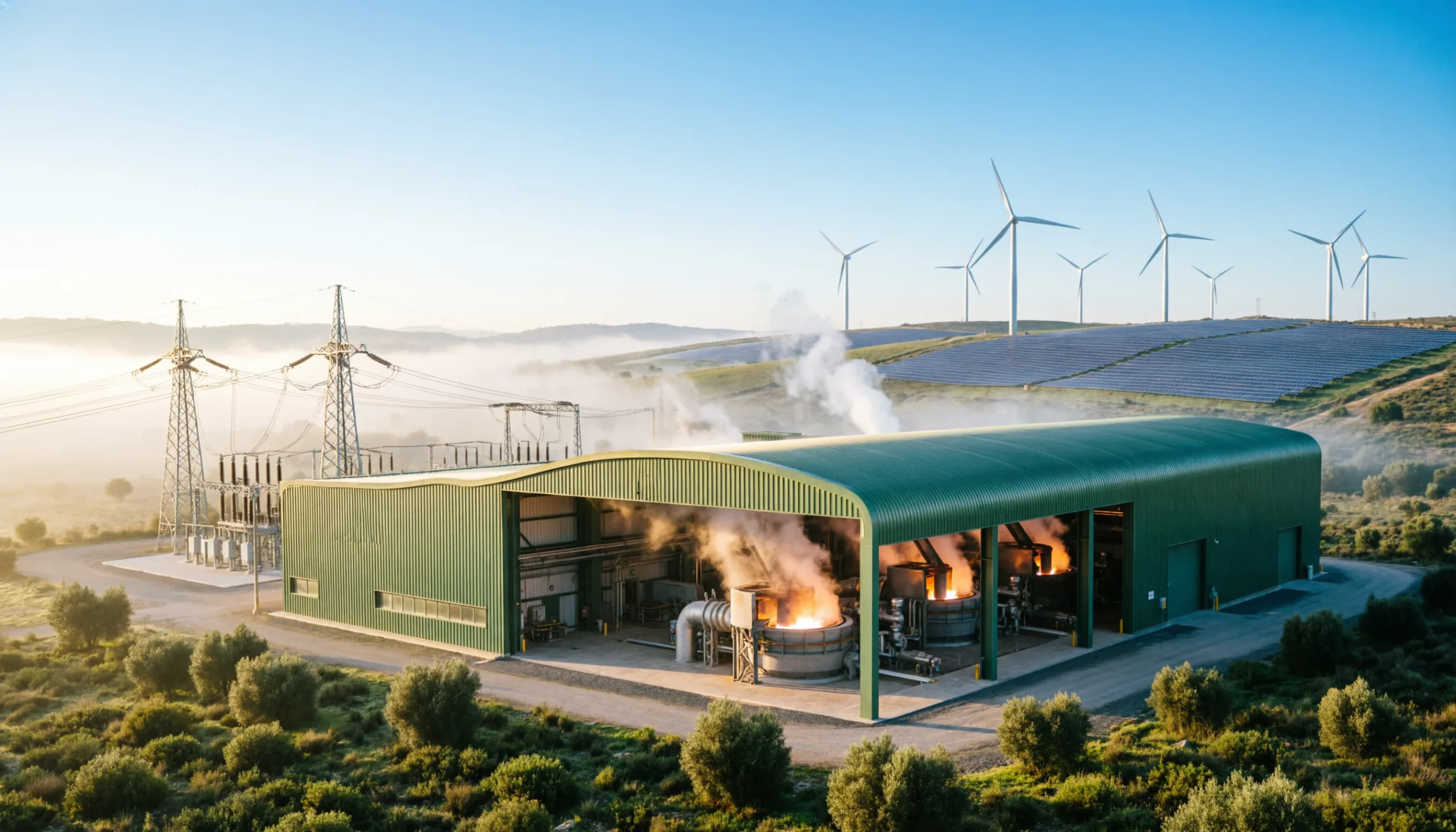
Power allocation strengthens company’s plans to advance low-carbon steel production and accelerate development of its sustainable manufacturing facility in Spain.
Hydnum Steel has reached a defining milestone in its journey to reshape Europe’s industrial landscape. The company has officially been granted access to the Brazatortas electricity grid in the province of Ciudad Real, securing 500 megawatts (MW) of power capacity to support what will become Spain’s first large-scale clean steel plant. The authorization, published in the Official Gazette, represents a decisive step forward not only for the company but also for Spain’s broader ambitions to decarbonize heavy industry and strengthen strategic industrial autonomy across the Iberian Peninsula.
The 500 MW allocation is critical to the viability of Hydnum Steel’s project. Steel production is one of the most energy-intensive industrial processes in the world, and stable, high-capacity electricity access is essential for operating electric arc furnaces (EAFs), the core technology that will power the new plant. With guaranteed grid access, Hydnum Steel now has the energy backbone required to move from planning to execution, reinforcing confidence among investors, partners, and future customers.
A Landmark for Spain’s Industrial Transition
Spain has long been a major industrial economy within Europe, yet much of its steel production has historically relied on conventional blast furnace methods powered by fossil fuels. Hydnum Steel’s project signals a decisive break from that model. The company’s facility will operate entirely on renewable electricity and will completely eliminate fossil fuels from its production process. Compared to traditional blast furnace steel plants, the new facility is expected to reduce carbon emissions by an extraordinary 98%.
This dramatic reduction aligns directly with Spain’s national climate objectives and the European Union’s broader decarbonization agenda. The Ministry for Ecological Transition, which oversees grid connection approvals, prioritizes projects based on their environmental benefits, investment scale, and readiness to begin construction. Hydnum Steel reportedly performed strongly across all these evaluation criteria, demonstrating both its technical preparedness and its long-term sustainability impact.
By adopting electric arc furnace technology powered exclusively by renewable energy, Hydnum Steel will help accelerate the transition toward green industrial production. Steel remains fundamental to modern infrastructure, automotive manufacturing, renewable energy installations, construction, and machinery. Decarbonizing steel production therefore carries significant multiplier effects across multiple sectors striving to reduce their own carbon footprints.
Strengthening Europe’s Steel Supply Chain
Europe currently imports nearly 11 million tons of steel annually, reflecting both structural demand and capacity constraints within the continent. Hydnum Steel’s initial annual production capacity is projected to reach 1.5 million tons of hot-rolled steel coils, with a long-term target of expanding output to 2.7 million tons per year. This volume represents a meaningful contribution to Europe’s flat steel market, particularly at a time when supply chain resilience and strategic autonomy have become central policy priorities.
The plant will focus on hot-rolled steel coils, a foundational material for automotive manufacturing, shipbuilding, heavy equipment production, and large-scale infrastructure projects. As European industries increasingly face carbon pricing mechanisms and regulatory pressures under the EU Emissions Trading System (ETS) and Carbon Border Adjustment Mechanism (CBAM), access to low-carbon steel will become a decisive competitive advantage.
Hydnum Steel’s production model is designed to address this emerging demand. By supplying steel that is both competitively priced and dramatically lower in carbon intensity, the company aims to position itself as a trusted partner for manufacturers seeking to decarbonize their own value chains. This alignment between environmental responsibility and industrial competitiveness underscores the project’s broader economic significance.
Digital Integration and Operational Efficiency
Beyond its renewable energy credentials, Hydnum Steel’s facility will be fully digitally integrated. Advanced automation, data analytics, and intelligent process controls will be embedded throughout the production chain. This digital-first approach is expected to enhance operational efficiency, reduce waste, optimize resource usage, and ensure consistent product quality.
Digitally integrated steelmaking facilities can monitor furnace performance in real time, predict maintenance needs, and optimize energy consumption patterns. These capabilities not only improve productivity but also reinforce sustainability goals by minimizing inefficiencies. In an era where industrial competitiveness increasingly depends on both environmental performance and technological sophistication, Hydnum Steel’s strategy reflects a forward-looking industrial model.
Investment and Regional Economic Impact
Construction of the plant is scheduled to begin in 2026, backed by an investment exceeding €1.5 billion. This scale of capital commitment underscores the project’s ambition and its long-term strategic importance. Large industrial investments of this magnitude typically generate substantial economic spillover effects, including local supplier contracts, infrastructure development, and workforce training programs.
Initially, Hydnum Steel expects to create more than 400 direct jobs, ranging from engineering and operations to digital systems management and administrative roles. Over time, total employment linked to the project could exceed 1,000 positions, including indirect and induced jobs across the regional economy. For the province of Ciudad Real and the broader Castile-La Mancha region, the plant represents a powerful engine of industrial revitalization and economic diversification.
In addition to direct employment, the project is likely to stimulate demand for local services, logistics providers, maintenance contractors, and renewable energy developers. As Spain continues expanding its renewable energy capacity, industrial off-takers such as Hydnum Steel can play a stabilizing role in long-term power purchase agreements, supporting further clean energy deployment.
Aligning Environmental and Economic Priorities
One of the most compelling aspects of Hydnum Steel’s initiative is the alignment between environmental objectives and economic development. Historically, heavy industry has often been viewed as incompatible with aggressive climate targets. This project challenges that assumption by demonstrating that advanced technology, renewable energy, and digital integration can enable industrial growth while sharply reducing emissions.
The Ministry’s approval process emphasized emission reduction benefits, investment size, and timeline credibility. Hydnum Steel’s strong performance across these metrics highlights the seriousness of its proposal and its readiness to move forward. The 500 MW grid allocation not only secures operational stability but also sends a broader signal to the market that Spain is open to large-scale clean industrial projects.
A Turning Point for the Iberian Peninsula
As Europe seeks to reduce dependency on imported raw materials and carbon-intensive industrial inputs, projects like Hydnum Steel’s clean steel plant may mark a turning point for the Iberian Peninsula. By combining renewable energy abundance with advanced manufacturing capabilities, Spain is positioning itself as a potential hub for green industrial production.
Hydnum Steel’s roadmap—beginning with construction in 2026, scaling production capacity, and targeting substantial emission reductions—illustrates a comprehensive strategy rather than a symbolic gesture. If successfully executed, the project could serve as a model for future decarbonized steel plants across Europe.
In securing access to the Brazatortas grid, Hydnum Steel has moved from ambition to tangible progress. The 500 MW permit lays the foundation for a facility that promises to reduce emissions by 98%, invest more than €1.5 billion into the regional economy, generate hundreds of jobs, and supply millions of tons of clean steel to a market hungry for sustainable alternatives. As the construction phase approaches, the project stands as one of Spain’s most significant industrial sustainability initiatives, bridging the gap between climate responsibility and industrial competitiveness.