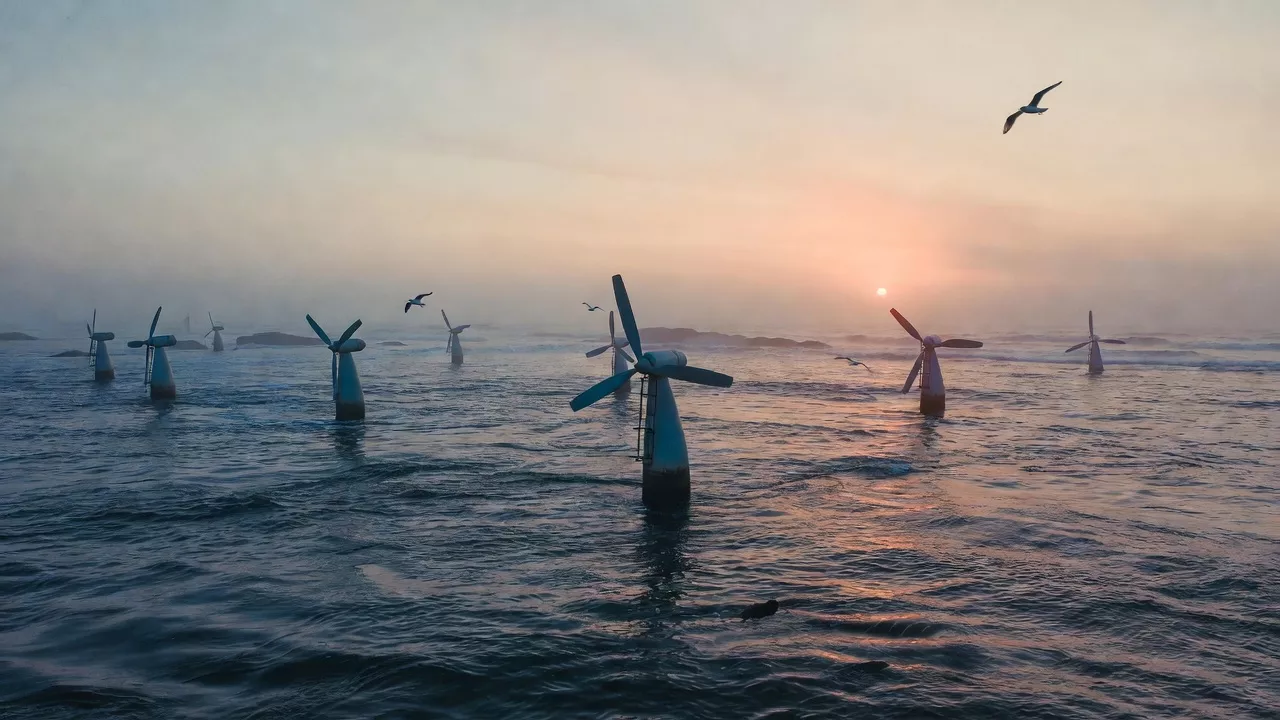
HydroQuest Applauds France’s Inclusion of Tidal Stream Energy in National Energy Plan, Paving the Way for a Global Industrial Leadership
HydroQuest, the global leader in marine tidal turbines, has welcomed France’s strategic decision to include tidal stream energy in its Multiannual Energy Plan (PPE), the country’s official 10-year roadmap for energy production and transition. This announcement marks a significant milestone for both the French renewable energy sector and HydroQuest, as it signals a firm governmental commitment to expanding tidal energy—a clean, predictable, and underutilized source of electricity.
The PPE outlines the French government’s long-term objectives for energy generation, including clear targets and the framework for future tenders. By incorporating tidal stream energy into this national strategy, the French authorities have confirmed a 250 MW allocation specifically for this innovative technology. The roadmap also sets the stage for the first government tender by 2030, providing a structured timeline for the development of tidal energy projects and signaling serious support for industrial players in this space.
Thomas Jaquier, the Founder and President of HydroQuest, commented on the announcement:
Confirming the 250 MW target in this roadmap is a clear commitment from the French government in support of tidal stream energy. With FloWatt, a French project and the most powerful tidal stream farm in the world, we now have a first concrete reference to structure a competitive industrial sector, create jobs and showcase our expertise internationally.”
Jaquier’s statement reflects not only HydroQuest’s vision for the future of tidal energy but also the broader ambitions of France to position itself as a leader in marine renewable energy. With this level of governmental backing, tidal stream energy is poised to transition from a promising niche technology into a fully industrialized sector, capable of delivering reliable, low-carbon electricity on a scale that can meaningfully contribute to the country’s renewable energy targets.
Tidal Stream Energy: A Predictable Source of Renewable Power
Unlike solar and wind energy, which are subject to the variability of weather conditions, tidal stream energy offers a fully predictable and continuous source of electricity. By harnessing the kinetic energy of tidal currents, turbines can generate electricity consistently, often at predictable peak times that align with national demand patterns. This reliability makes tidal stream energy an invaluable complement to other renewable sources, addressing one of the main challenges of renewable electricity—intermittency.
France is particularly well-positioned to exploit tidal energy due to its extensive coastline and favorable tidal conditions. Studies estimate that the country has a tidal stream potential exceeding 5 GW. If fully harnessed, this energy could supply electricity to approximately eight million people, which represents a substantial addition to France’s renewable energy portfolio. To put this into perspective, this volume is roughly 35% of the country’s onshore wind production recorded in 2024. Such numbers highlight the untapped potential of tidal energy and its strategic importance for France’s energy independence and carbon reduction objectives.
Moreover, tidal energy is inherently low-carbon. Unlike fossil fuel-based power generation, tidal turbines emit no greenhouse gases during operation. They operate entirely underwater, ensuring minimal visual and environmental impact. This environmental friendliness, combined with predictability and reliability, positions tidal stream energy as an essential component of a sustainable energy mix for the decades ahead.
FloWatt: France’s First and the World’s Most Powerful Tidal Stream Project
At the forefront of this emerging sector is HydroQuest’s flagship project, FloWatt. Developed in collaboration with the French renewable energy company Qair, FloWatt is set to become France’s first operational tidal stream farm and the most powerful industrial tidal project globally. With an installed capacity of 17 MW, the project is designed to showcase the full potential of tidal energy while providing a tangible reference for the nascent industrial sector in France.
The FloWatt project has already attracted significant financial backing, underlining the confidence of both national and European authorities in the viability of tidal energy. The European Union Innovation Fund has provided €20 million in funding to support the project’s technological development and deployment. Additionally, the French government has extended its support through France 2030, the national investment plan focused on strategic deep-tech and industrial sectors. FloWatt also benefits from a guaranteed feed-in tariff, ensuring that the electricity produced by its turbines can enter the national grid at a fixed rate, providing long-term financial stability for the project.
FloWatt’s infrastructure will consist of six state-of-the-art tidal turbines, which will be manufactured in Cherbourg, Normandy, in partnership with CMN, the leading French naval shipbuilder. Manufacturing locally not only strengthens regional industrial capabilities but also creates high-value jobs in engineering, manufacturing, and project management. Installation is scheduled at Raz Blanchard, one of the world’s most powerful tidal sites, in 2028. Construction of the farm begins this year, signaling a major step forward for France’s tidal energy ambitions.
Industrial, Economic, and Social Benefits
The development of tidal stream energy, and specifically the FloWatt project, represents more than just a technological achievement; it is also an engine for economic growth and job creation. By establishing a domestic industrial ecosystem around tidal energy, France can nurture high-skill employment opportunities in engineering, maritime manufacturing, project management, and renewable energy operations. The involvement of CMN and other local suppliers ensures that the economic benefits of this pioneering technology are retained within France, contributing to regional economic development in Normandy and beyond.
HydroQuest’s approach also emphasizes environmental sustainability and public acceptance. Its tidal turbines are fully submerged, meaning they are invisible from the coastline and have minimal impact on marine ecosystems. This low-environmental-impact design has been critical in garnering public support, a factor often challenging for renewable energy projects, particularly in coastal communities. By combining technological innovation with environmental stewardship, HydroQuest is setting a new benchmark for how industrial-scale renewable energy projects can coexist harmoniously with natural and human environments.
A Global Leader in Tidal Technology
Founded in 2010, HydroQuest has spent over a decade developing tidal turbines capable of harnessing the immense energy of ocean currents to produce fully predictable renewable electricity. The company’s technology leverages advanced hydrodynamics and robust mechanical design to ensure high efficiency, reliability, and durability even in the harshest marine environments.
FloWatt is a culmination of this expertise, representing the first fully industrial-scale tidal stream farm in France and the most powerful globally. By successfully deploying and operating this project, HydroQuest not only demonstrates the technical feasibility of tidal energy but also positions France as a global leader in marine renewable energy technologies. The project serves as a reference model for future tidal developments, both in Europe and internationally, showcasing how nations can leverage their marine resources to achieve ambitious renewable energy and carbon reduction targets.
Strategic Importance for France’s Energy Transition
The French government’s inclusion of tidal stream energy in the PPE is a testament to the technology’s growing strategic importance. By committing to a 250 MW allocation and outlining a clear tender process, France is sending a strong signal to investors, developers, and industrial partners that tidal energy is a priority in its energy transition plan.
This decision aligns with France’s broader goals under the European Union’s renewable energy and climate directives, which aim to reduce greenhouse gas emissions, increase energy security, and diversify energy sources. Tidal energy offers unique advantages in this context: it is low-carbon, predictable, and complementary to other renewables such as solar and wind. As France expands its tidal energy capacity, it not only strengthens its domestic energy security but also enhances its role as a leader in the global renewable energy sector.
Looking Ahead: The Future of Tidal Energy in France
HydroQuest’s FloWatt project represents the first major step in what is expected to be a rapid expansion of tidal energy in France. With government support, European funding, and local industrial partnerships, the project is laying the foundation for a competitive tidal energy sector capable of generating hundreds of megawatts of low-carbon electricity in the coming decades.
By 2030, the French government’s tendering process will open up further opportunities for industrial-scale projects, enabling a fully-fledged tidal energy market to emerge. This growth promises to create a robust industrial ecosystem, generate skilled jobs, and position France at the forefront of a renewable energy technology with enormous global potential.
In conclusion, the inclusion of tidal stream energy in France’s Multiannual Energy Plan marks a turning point for both HydroQuest and the French renewable energy sector. With FloWatt leading the way, France is demonstrating its commitment to innovation, environmental stewardship, and industrial excellence in tidal energy. As HydroQuest moves forward with construction, manufacturing, and eventual commissioning of the world’s most powerful tidal farm, the project promises to transform the renewable energy landscape, offering a reliable, low-carbon, and economically beneficial solution for France and the global community alike.
About HydroQuest
Founded in 2010, HydroQuest specializes in designing tidal turbines that exploit the power of tidal currents to generate fully predictable renewable electricity. The company is dedicated to providing low-environmental-impact solutions with strong public acceptance, ensuring its turbines are fully submerged and invisible from the coast. HydroQuest is the developer of FloWatt, France’s first tidal stream farm and the most powerful in the world, which will be commissioned in 2028 in Normandy.