Energy Vault Expands U.S. Energy Storage Portfolio With 175 MW Texas Battery Project
Energy Vault Holdings, Inc. (NYSE: NRGV), a global provider of grid-scale energy storage solutions, has announced the acquisition of the McMurtre Battery Energy Storage System (BESS), a 175 MW / 350 MWh energy storage project located near Dallas, Texas. The project was acquired from Belltown Power and represents a major step forward in the company’s effort to expand its energy storage footprint in the United States.
The acquisition is also an important milestone in the company’s broader deployment strategy. Energy Vault previously outlined a plan to deploy an initial 1,500 MW of battery energy storage capacity during its 2025 Investor and Analyst Day, and the McMurtre project is one of the latest additions helping advance that target. Once the project reaches Ready-to-Build (RTB) status, the company plans to place it within its dedicated investment platform, Asset Vault, which is responsible for owning, developing, and operating energy storage assets around the world.
Strategic Location in a High-Growth Power Market
The McMurtre BESS project will operate within the North zone of the Electric Reliability Council of Texas (ERCOT) electricity market, one of the most dynamic and rapidly expanding power markets in the United States. ERCOT manages the electricity grid that serves most of Texas and has become a focal point for large-scale energy infrastructure investment in recent years.
Energy Vault selected the McMurtre project’s interconnection point after evaluating a number of potential sites. The company determined that the ERCOT North region offered particularly strong revenue potential due to its unique combination of factors, including increasing power demand, competitive wholesale electricity prices, and ongoing investment in grid infrastructure.
One of the key drivers behind this demand growth is the rapid expansion of data centers and digital infrastructure in the Dallas region. As technology companies deploy large-scale computing facilities to support artificial intelligence (AI), cloud computing, and digital services, electricity consumption in the area continues to rise. Energy storage projects like McMurtre can play an important role in supporting grid stability by storing excess electricity when supply is high and releasing it when demand increases.
Project Timeline and Development Status
The McMurtre BESS has already achieved several development milestones that help reduce project risk and create a clear pathway toward construction. The project currently holds a Small Generator Interconnection Agreement (SGIA) with ERCOT, confirming the terms under which it can connect to the regional grid. In addition, Energy Vault has secured full control of the project site.
These milestones provide a strong foundation for the next stages of development. Energy Vault expects the project to receive its Notice to Proceed (NTP) during the fourth quarter of 2026. Construction would then follow, with commercial operations targeted for December 2027.
The company is also evaluating multiple offtake arrangements with investment-grade counterparties. These agreements could provide stable and predictable revenue streams over the lifetime of the project, consistent with Energy Vault’s strategy of prioritizing long-term, bankable cash flows for its energy infrastructure assets.
Long-Term Revenue Potential
Energy Vault estimates that the McMurtre BESS could generate average annual revenues of approximately $15 million to $20 million over its operational life. Over the long term, this could translate into more than $350 million to $375 million in total project revenues.
The company expects these revenues to come from a combination of electricity market participation, grid services, and contracted energy agreements. Battery storage systems can earn income by providing a variety of services, including frequency regulation, capacity support, and energy arbitrage—buying electricity when prices are low and selling it back to the grid when prices rise.
These capabilities are particularly valuable in markets like ERCOT, where electricity prices can fluctuate significantly during periods of high demand or supply shortages.
Leadership Perspective
According to Robert Piconi, Chairman and Chief Executive Officer of Energy Vault Holdings, Inc., the McMurtre project reflects the company’s focus on acquiring and developing high-quality energy storage assets with strong long-term value potential.
He explained that the project’s existing interconnection agreement, secured site control, and strategic location within ERCOT North make it a strong candidate for inclusion in the Asset Vault platform. The project’s proximity to Dallas and the surrounding technology infrastructure also enhances its long-term market potential.
Piconi noted that the acquisition supports Energy Vault’s near-term goal of deploying 1,500 MW of battery energy storage capacity while also strengthening the company’s integrated infrastructure strategy.
Supporting the “Time to Power” Imperative
Speed has become a critical factor in the rapidly evolving energy infrastructure market. As industries such as artificial intelligence, data processing, and advanced manufacturing expand, developers are under pressure to deliver reliable power solutions quickly.
Energy Vault views the McMurtre acquisition as an example of its ability to deploy capital and execute projects rapidly in response to market demand. The company has structured its investment strategy to enable faster project development timelines, ensuring that energy infrastructure can be delivered in step with emerging technology sectors.
The company’s access to approximately $300 million in preferred equity investment commitments also provides a substantial funding base. This capital can support more than $1 billion in project investments, giving Energy Vault the financial flexibility to move projects through development and into construction.
A Three-Asset-Class Infrastructure Strategy
Energy Vault’s growth strategy is built around three complementary infrastructure asset classes designed to support the evolving digital and energy landscape.
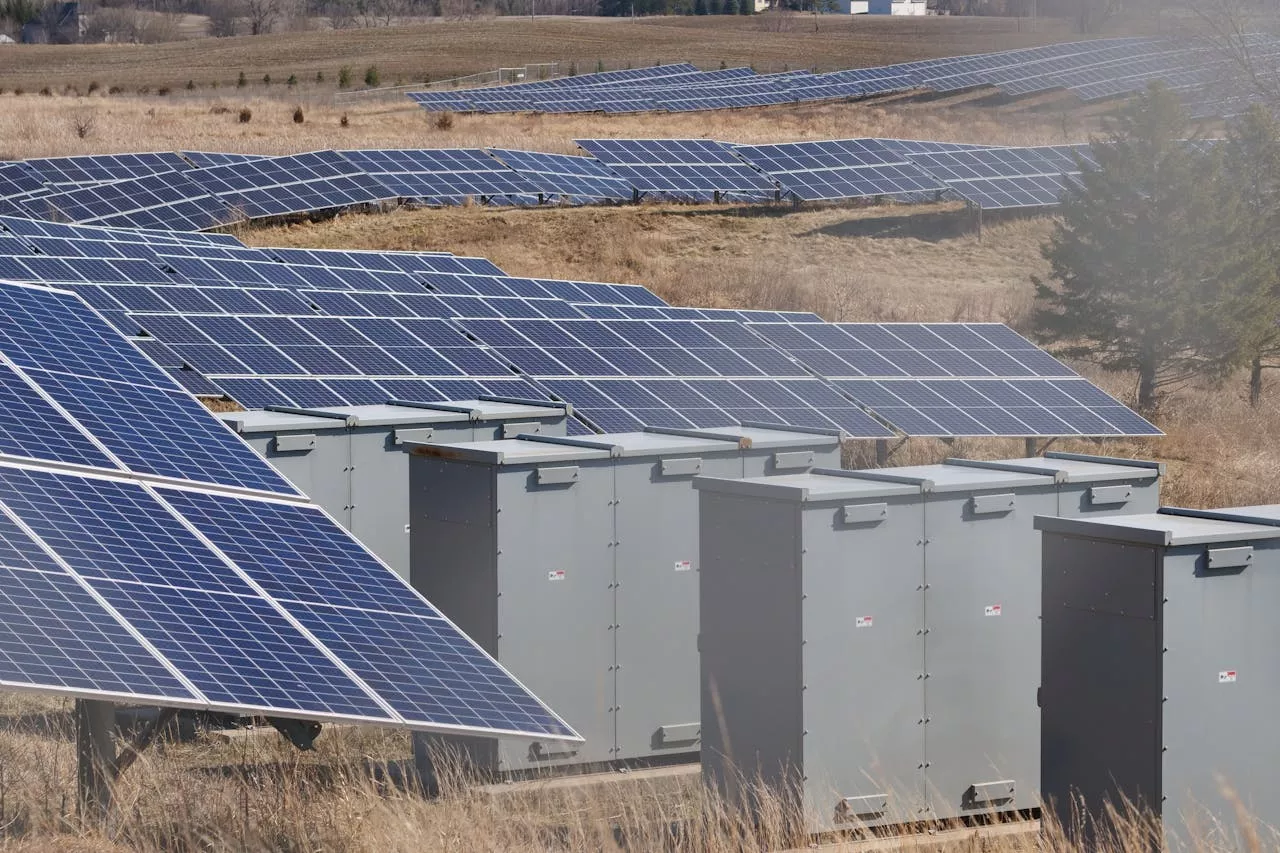
The first asset class focuses on battery energy storage systems, which form the backbone of the company’s energy infrastructure portfolio. These systems provide the reliability and flexibility needed to balance electricity supply and demand while supporting renewable energy integration.
The second and third asset classes—known as “powered land” and “powered shells”—are designed to support large-scale computing and data infrastructure. Powered land refers to sites with ready access to energy resources, while powered shells are modular data center facilities that can be rapidly deployed.
Together, these asset classes create a diversified portfolio that integrates energy generation, storage, and digital infrastructure development.
Integration With AI Infrastructure
Battery energy storage systems like McMurtre can also play a key role in supporting the growth of artificial intelligence and high-performance computing infrastructure. Energy Vault recently announced a collaboration with Crusoe Energy Systems aimed at deploying modular data center infrastructure in close proximity to energy storage facilities.
By co-locating data centers with reliable energy storage systems, the companies aim to create resilient and efficient power solutions for AI-driven computing applications. This approach can help address the growing electricity needs of AI while minimizing strain on existing power grids.
Technology Platform
The McMurtre project will utilize Energy Vault’s B-VAULT™ AC Technology Platform 3, the latest version of the company’s battery energy storage system design. The platform has been engineered to allow rapid deployment, reduce installation costs, and deliver high system availability.
Energy Vault’s B-VAULT platform is part of a broader portfolio of energy storage technologies that includes gravity-based storage systems, hydrogen storage solutions, and sodium-ion battery technologies designed for long-duration energy storage.
Globally, the company reports that its B-VAULT energy storage portfolio now exceeds 3 GWh of deployed or contracted capacity across projects in North America, Europe, and Australia.
Asset Vault Platform
The McMurtre project is expected to become part of Energy Vault’s Asset Vault platform once it reaches Ready-to-Build status. Asset Vault was created as a fully integrated investment platform that combines project development, construction, ownership, and operation under one structure.
Under this model, Energy Vault manages the engineering, procurement, and construction (EPC) of its projects while also providing long-term operational services. This vertical integration allows the company to capture value across the entire lifecycle of its energy storage assets.
In addition to the McMurtre project, several other developments are being prepared for inclusion in the Asset Vault portfolio. These include the SOSA Energy Center in Texas, the Cross Trails BESS project in Texas, the Calistoga Resiliency Center in California, and large-scale energy storage projects in New South Wales, Australia.
Building the Future Energy Infrastructure
With electricity demand increasing worldwide—driven by digital infrastructure, electrification, and renewable energy integration—energy storage is becoming an essential component of modern power systems.
Energy Vault’s acquisition of the McMurtre BESS highlights the company’s strategy to position itself at the center of this transformation. By combining advanced energy storage technology, strategic project development, and integrated infrastructure platforms, the company aims to play a leading role in building the next generation of reliable, sustainable energy systems.
As projects like McMurtre progress toward construction and operation, they will contribute to a growing network of storage assets designed to strengthen power grids, support renewable energy expansion, and provide the reliable electricity required by an increasingly digital global economy.
Source Link: https://www.businesswire.com/