
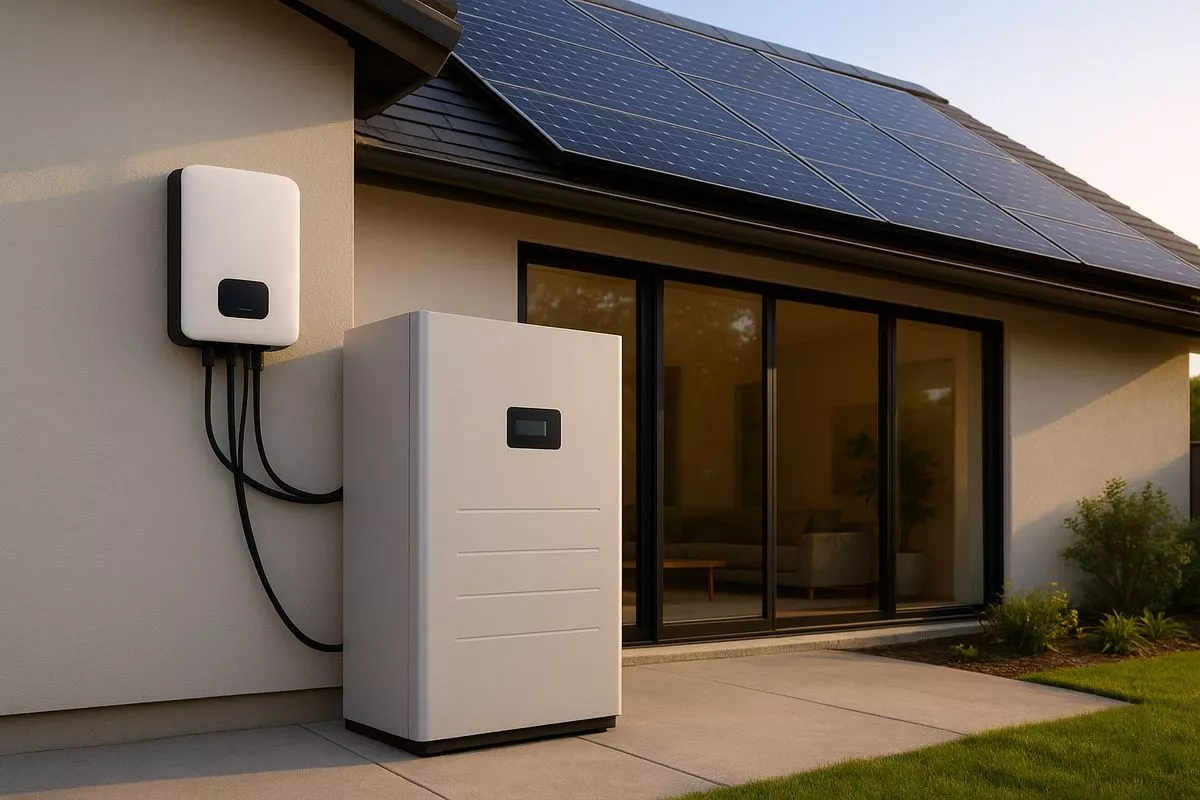
CoServ and Base Power Launch Major 100 MW Residential Battery Program to Strengthen North Texas Grid
Base Power has announced a major collaboration with Denton County Electric Cooperative, widely known as CoServ, to deploy a large-scale residential battery storage program across North Texas. The initiative will bring 100 megawatts (MW) of distributed energy storage capacity to CoServ’s service area, marking the largest agreement in Base Power’s history and positioning the program among the most significant residential battery initiatives led by an electric cooperative in Texas.
CoServ is a member-owned electric cooperative that serves more than 330,000 electric meters across the rapidly growing North Texas region. Through this partnership, thousands of residential battery systems will be installed at qualifying homes throughout the cooperative’s territory. These systems will collectively operate as a coordinated fleet of distributed energy storage resources that can be used to support the grid during periods of high electricity demand, enhance grid reliability, and provide backup power for participating homeowners.
The program reflects a growing shift in how utilities and cooperatives manage power systems as electricity demand increases, severe weather events become more frequent, and infrastructure costs rise. Distributed energy storage—batteries installed at homes and businesses but operated as part of a coordinated network—has emerged as a flexible solution that can provide grid services while delivering direct benefits to consumers.
Under the new agreement, Base Power will be responsible for deploying and managing the residential battery systems. This includes installation, integration, and ongoing maintenance of the battery units in participating homes. CoServ, meanwhile, will maintain operational control over the aggregated fleet of batteries and will be able to dispatch them strategically to support grid operations.
During periods of peak electricity demand—such as hot summer afternoons when air conditioning loads surge—CoServ will be able to draw on the distributed battery network to reduce strain on the grid. By discharging stored energy at critical times, the batteries will help lower peak demand, which can reduce the need for costly infrastructure upgrades and limit reliance on expensive wholesale electricity purchases.
The batteries will also allow CoServ to perform energy arbitrage, a strategy that involves charging the batteries when electricity prices are low and discharging them when prices are higher. Base Power’s proprietary software and algorithms will enable this process, optimizing when batteries charge and discharge in order to maximize grid efficiency and cost savings.
According to CoServ leadership, the initiative represents a practical and cost-effective approach to managing rapid load growth while strengthening grid resilience.
Gary Franzen, Chief Energy Resources Officer at CoServ, emphasized the importance of distributed energy storage as utilities navigate a changing energy landscape. He explained that increasing electricity demand, extreme weather events, and infrastructure constraints are forcing utilities to adopt new strategies for maintaining reliability and affordability.
Franzen noted that partnering with Base Power allows the cooperative to add flexible capacity to its system without the complexity of building and managing new large-scale generation facilities. By using distributed batteries installed in homes, CoServ can access dispatchable power exactly when it is needed while maintaining operational control of the resource.
The program also delivers direct value to participating homeowners. Each installed battery system will provide whole-home backup power during grid outages, offering households a reliable source of electricity when storms, equipment failures, or other disruptions occur. This capability is particularly valuable in Texas, where extreme weather events—from winter freezes to severe thunderstorms—can occasionally disrupt electricity supply.
Homeowners who participate in the program will receive access to battery backup power at an affordable cost, making advanced energy resilience technologies more accessible to a wider range of households. The systems are designed to automatically provide electricity during outages, allowing residents to continue powering essential appliances and devices.
The program is also compatible with existing rooftop solar installations. For homeowners who already have solar panels, Base Power can integrate the battery systems so that they are charged either by the home’s solar generation or directly from the grid. This flexibility ensures that batteries can remain charged and ready regardless of weather conditions or solar availability.
If solar generation is available, the battery can store excess energy produced during the day for use later in the evening or during outages. If solar production is limited, the system can charge from the grid during off-peak hours to ensure backup power remains available when needed.
Zach Dell, Chief Executive Officer of Base Power, said the collaboration with CoServ highlights the growing role that residential batteries can play in modern power systems. By aggregating thousands of individual home batteries into a single coordinated network, utilities gain access to a powerful grid resource that can improve reliability and reduce costs.
Dell explained that this model allows the cooperative to manage peak demand, support grid stability, and improve overall system affordability while simultaneously providing homeowners with dependable outage protection. The partnership demonstrates how distributed energy technology can serve both utility-scale needs and individual customer resilience.
The project represents Base Power’s fifth collaboration with a utility in Texas, reinforcing the company’s expanding role in the state’s rapidly evolving energy ecosystem. Texas has become one of the leading markets for battery energy storage in the United States due to its growing electricity demand, competitive power markets, and increasing focus on grid resilience.
As population growth and economic development continue across North Texas, energy demand in the region has risen steadily. Distributed energy resources such as residential batteries are increasingly viewed as a critical tool for utilities seeking to expand capacity quickly without building large centralized infrastructure projects.
Programs like the one launched by CoServ and Base Power can be deployed more rapidly than traditional power plants or transmission lines. Because the batteries are installed at individual homes, they can be added incrementally across the network, allowing utilities to scale capacity as demand grows.
The 100 MW residential battery network planned under the agreement represents a significant step forward for distributed energy in the cooperative sector. Electric cooperatives historically serve many fast-growing suburban and rural areas where grid upgrades can be costly and time-consuming. By leveraging residential energy storage, cooperatives can enhance system flexibility while keeping costs manageable for members.
For Base Power, the project also demonstrates the scalability of its distributed storage model. The company has focused on developing technologies and operational frameworks that enable residential batteries to function as coordinated grid assets rather than isolated home devices.
With installation, maintenance, and software management handled by Base Power, utilities like CoServ can access advanced energy storage capabilities without needing to manage the technical complexities themselves. This structure allows cooperatives to focus on grid operations while relying on technology partners to handle system deployment and performance optimization.
As the program rolls out across North Texas, thousands of households are expected to gain access to backup power solutions while contributing to a broader grid resilience strategy. By combining distributed energy resources with advanced control technologies, the collaboration between CoServ and Base Power illustrates how utilities can adapt to evolving energy challenges while delivering tangible benefits to the communities they serve.
Ultimately, the 100 MW residential battery initiative represents an important milestone for distributed storage adoption in Texas. It highlights how electric cooperatives can leverage innovative partnerships to strengthen grid reliability, improve affordability, and provide homeowners with greater energy security in an increasingly complex power landscape.
Source Link: https://www.businesswire.com/