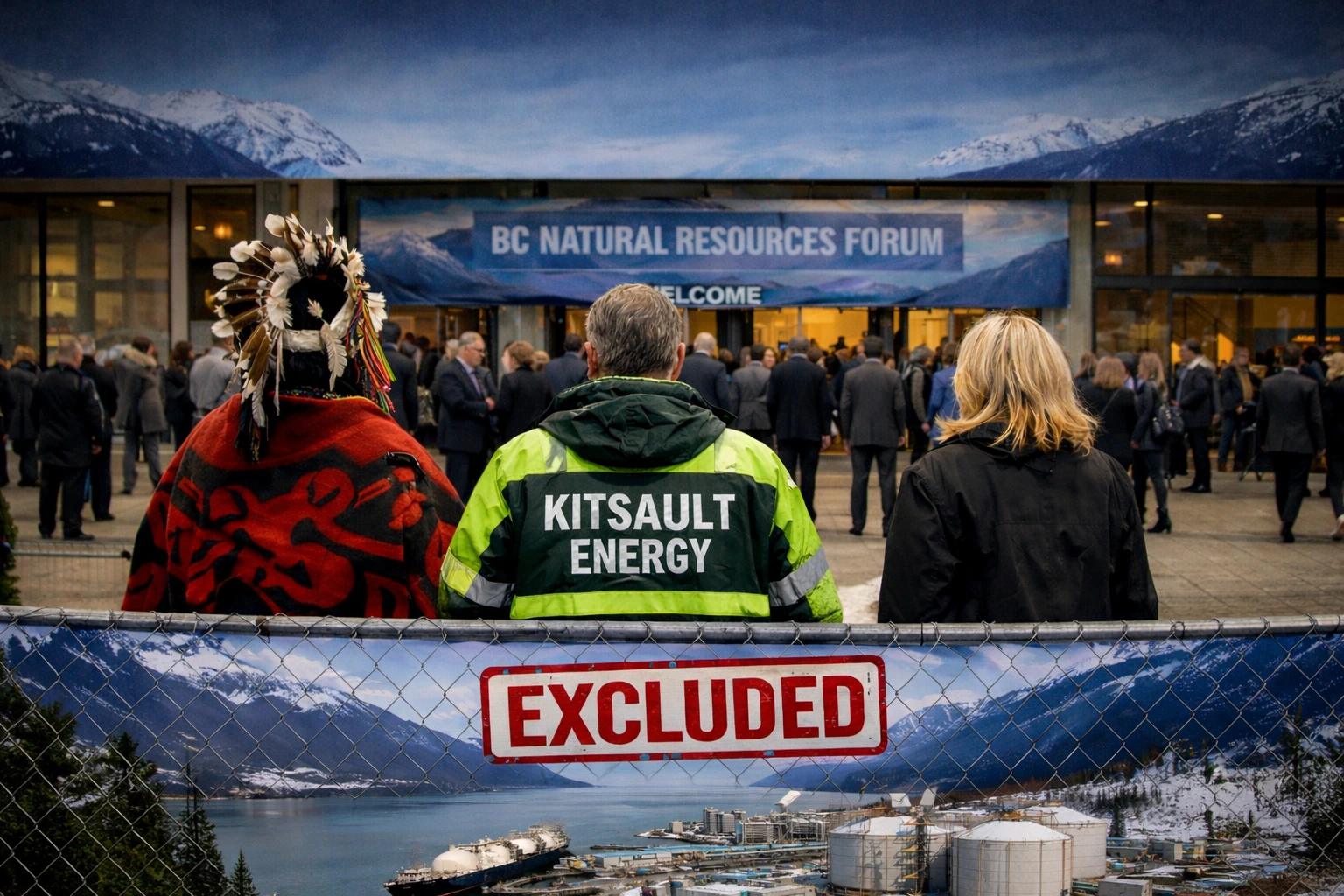
Questions of Inclusion and Vision Emerge as Kitsault Energy Is Excluded from BC Natural Resources Forum
The British Columbia Natural Resources Forum (BCNRF) positions itself as one of the province’s most influential and nonpartisan platforms for dialogue among energy and resource leaders. Each year, it brings together senior figures from government, industry, Indigenous communities, and the private sector to discuss emerging trends, opportunities, and challenges shaping British Columbia’s resource economy and Canada’s broader energy future. Against this stated mission of inclusivity and forward-looking discussion, the recent decision to decline a speaking request from Kitsault Energy has sparked renewed debate about how voices are selected and which projects are deemed worthy of attention at high-level forums.
At the center of the issue is Krishnan Suthanthiran, President and Founder of Kitsault Energy, who has publicly raised concerns after learning that he would not be invited to speak at the forum. According to Suthanthiran, the decision is difficult to reconcile with BCNRF’s own mandate to facilitate firsthand learning and open discussion about innovative and emerging opportunities in the resource sector. For him, the exclusion is not simply a personal disappointment, but a missed opportunity for meaningful dialogue at a time when British Columbia and the global community are grappling with energy security, infrastructure development, and long-term sustainability.
Kitsault Energy is a proposed large-scale energy development project located northwest of Prince Rupert, British Columbia, at the site of the former mining town of Kitsault. Once known as a “ghost town,” the area is now being reimagined as a potential hub for future-focused energy infrastructure. The project’s vision aligns closely with global priorities, including secure energy supply chains, responsible development, and economic revitalization in remote regions. Supporters of the initiative argue that such characteristics make Kitsault Energy precisely the kind of project that should be part of conversations at events like BCNRF.
“In a time when the world is actively seeking innovative and collaborative approaches to energy development, it is troubling that a project like Kitsault Energy was not afforded the opportunity to participate,” Suthanthiran said in response to the forum’s decision. He further emphasized that if BCNRF is genuinely committed to exploring evolving opportunities across the resource sector, then emerging projects with transformative potential should not be sidelined before discussions even begin.
The timing of the exclusion has added to the controversy. In recent weeks, Kitsault Energy has gained noticeable momentum through increased engagement with senior government officials, policy stakeholders, and industry figures. These discussions, according to the company, have focused on how the project could contribute to regional economic development, infrastructure investment, and Canada’s role in meeting future energy demand. Alongside these efforts, Kitsault Energy has also succeeded in raising public awareness through national and international media coverage.
Most notably, The Vancouver Sun recently published a feature on Kitsault Energy, spotlighting Suthanthiran’s long-term vision to transform the former mining settlement into a modern energy hub. The article outlined the historical significance of Kitsault, the rationale behind redeveloping the site, and the broader implications for British Columbia’s energy landscape. Following its publication, the story was picked up by multiple wire services, significantly amplifying international visibility and interest in the project. This wave of coverage has helped position Kitsault Energy not as a speculative idea, but as a serious proposal attracting attention well beyond provincial borders.
Against this backdrop, questions naturally arise about the criteria used by BCNRF organizers when allocating speaking platforms. For critics, the apparent disconnect between Kitsault Energy’s growing profile and its exclusion from the forum suggests that certain narratives or established players may be prioritized over new entrants, regardless of their relevance or potential impact. In an era marked by rapid change in energy systems, such an approach risks reinforcing the status quo rather than encouraging the innovation and debate required to navigate future challenges.
Industry observers note that forums like BCNRF play a critical role in shaping policy discourse and investment sentiment. The projects and perspectives highlighted on stage often influence how decision-makers, investors, and the public perceive the direction of the resource sector. As a result, excluding projects with demonstrated ambition and international resonance could unintentionally narrow the scope of discussion and limit exposure to alternative development pathways.
From Kitsault Energy’s perspective, the issue is not about confrontation but about inclusion. The company has reiterated its commitment to constructive engagement with governments, Indigenous partners, industry stakeholders, and international forums that value transparency and open dialogue. Suthanthiran has stressed that meaningful progress on energy security and sustainability will require hearing from a broad spectrum of voices, including those proposing new models and solutions that challenge conventional thinking.
The broader implications extend beyond a single event or project. As British Columbia and Canada position themselves within a rapidly evolving global energy landscape, the question of who gets a seat at the table becomes increasingly important. Balancing established industry perspectives with emerging ideas is essential for building resilient, future-ready strategies. When forums dedicated to dialogue and learning appear to limit participation, they risk undermining their own credibility and stated objectives.
Kitsault Energy has indicated that it will continue pursuing opportunities to present its vision on platforms that welcome inclusive discussion and recognize the value of emerging projects. While the BC Natural Resources Forum remains a prominent gathering, the company’s recent media exposure and stakeholder engagement suggest that interest in the Kitsault project will continue to grow regardless of its absence from the forum’s agenda.
Source Link: https://www.businesswire.com/