

Hadron Energy Adds Three Senior Engineers to Advance Halo Microreactor Development
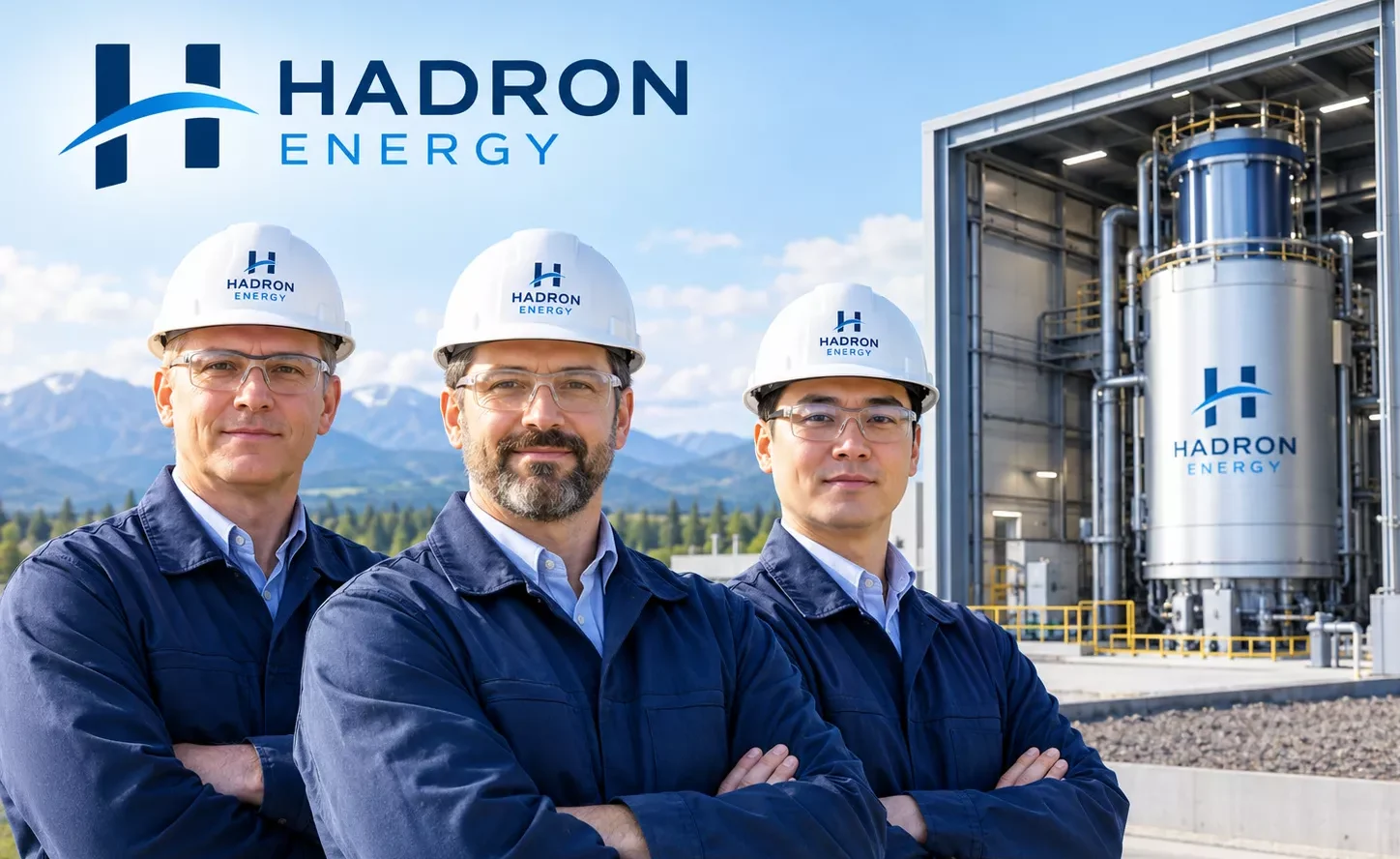
Hadron Energy, Inc. (Nasdaq: HDRN), a developer of light-water micro-modular nuclear reactor technology, has strengthened its engineering team with the appointment of three senior professionals. The new team members bring more than 40 years of combined engineering experience, including 25 years in the nuclear industry, spanning reactor vessel design, mechanical systems engineering, and structural integrity analysis of pressure boundary components.
The appointments are expected to strengthen Hadron’s capabilities as it advances the development of its 10-megawatt-electric Halo Micro-Modular Reactor (MMR). The engineers have contributed to major nuclear projects over the past two decades, including GE Hitachi Nuclear Energy’s BWRX-300 small modular reactor, TerraPower’s Natrium reactor, and the U.S. Navy’s nuclear propulsion program.
Their experience across boiling water reactor (BWR), pressurized water reactor (PWR), and CANDU technologies aligns with the established light-water reactor principles underlying Hadron’s Halo design. Their expertise will support the company as it progresses from engineering development toward component manufacturing, regulatory licensing, and eventual deployment.
The additions provide Hadron with greater in-house expertise in several critical areas of nuclear reactor development. These include designing reactor vessels, internal structures, and mechanical systems; verifying the structural integrity of pressure boundary components against American Society of Mechanical Engineers (ASME) Code and Nuclear Regulatory Commission (NRC) requirements; and coordinating with nuclear suppliers to prepare components for factory production.
Together, the three engineers bring practical experience in reactor design, regulatory reviews, and hardware fabrication. Their appointments are intended to help Hadron advance the Halo MMR toward a design that can be licensed, manufactured, and delivered to customers seeking reliable, continuous electricity.
Sam Gibson, founder and chief executive officer of Hadron Energy, said the company’s ability to commercialize microreactor technology depends on bringing experienced engineering professionals together to execute its development objectives.
He emphasized that the new team members have designed actual reactor components, supported regulatory assessments, and worked through hardware fabrication processes. Their decision to join Hadron reflects their interest in applying this experience to a light-water microreactor designed for factory production and timely deployment.
Gibson added that the expanded engineering team would help accelerate progress toward completing the Halo design and delivering dependable power solutions to customers.
Eric Williams, executive vice president of engineering at Hadron Energy, highlighted the complementary capabilities of the three appointments. Their expertise covers reactor vessel and mechanical system design, as well as the analytical work required to demonstrate that pressure boundary components can perform safely throughout a plant’s operating life.
Williams noted that the engineers have developed ASME Section III design specifications, supported NRC reviews, and collaborated directly with component fabricators. Their combined experience is expected to strengthen Halo’s engineering development while supporting the company’s licensing strategy and nuclear supply chain preparations.
Meet Hadron Energy’s New Engineering Leaders
Kent Olson, P.E. — Director of Component Design
Kent Olson brings 30 years of engineering experience, including 10 years in the nuclear industry. His background includes designing components for commercial nuclear reactors and the U.S. Naval Nuclear Propulsion Program.
Before joining Hadron, Olson served as reactor design engineering manager at GE Hitachi Nuclear Energy. In that position, he was responsible for reactor vessel design, internal structures, and penetrations. He also provided ASME Code oversight and supported regulatory reviews conducted by the U.S. Nuclear Regulatory Commission and the Canadian Nuclear Safety Commission.
Olson has led multidisciplinary engineering teams comprising more than 40 professionals working on reactor pressure vessels, internal components, and ASME Section III Class 1 equipment. Through the use of concurrent engineering practices, he helped accelerate reactor vessel design and fabrication schedules by two years.
Earlier in his career, Olson worked at Bettis Atomic Power Laboratory, where he designed nuclear servicing equipment for the U.S. Navy.
At Hadron Energy, Olson will oversee the design of the Halo MMR’s reactor vessel, internal structures, and major components. His experience is expected to support component integration, design coordination, and manufacturing readiness.
Stephen Moore, P.E. — Principal Mechanical Engineer
Stephen Moore joins Hadron with 12 years of engineering experience, including five years designing nuclear components under ASME Section III requirements at TerraPower.
During his time at TerraPower, Moore served as lead pump engineer for the Natrium reactor project. He directed the design and oversight of the reactor’s primary and intermediate coolant pumps and prepared design specifications under ASME Section III, Division 5.
He also worked as a senior primary heat transport system design engineer, contributing to reactor component and instrumentation design. His responsibilities included supporting engineering work involving pumps, heat exchangers, the reactor vessel, and internal reactor structures.
Moore is a licensed professional engineer and a named inventor on multiple U.S. patent applications. His combination of mechanical engineering expertise and nuclear component design experience will support Hadron’s efforts to develop practical, manufacturable reactor systems.
At Hadron, Moore will lead the design of thermal and fluid mechanical systems and components for the Halo MMR, helping advance the reactor’s mechanical architecture and associated engineering requirements.
Yifan Huang, Ph.D., P.E., P.Eng. — Principal Component Analysis Engineer
Dr. Yifan Huang brings 10 years of nuclear industry experience specializing in structural integrity, fracture mechanics, and component analysis across BWR, PWR, and CANDU reactor systems.
Most recently, Huang served as a principal engineer on Framatome’s fracture mechanics team. Previously, he managed more than 30 engineers as engineering manager of reactor component integrity at Candu Energy, an AtkinsRéalis company.
At GE Hitachi Nuclear Energy, Huang led the development of a leak-before-break methodology for BWRX-300 piping. His contributions earned him the company’s 2024 Emerging Engineer Award.
Huang also serves as an adjunct research professor at the University of Western Ontario and has authored 27 technical publications. His academic and industrial experience provides a foundation for evaluating the long-term performance and reliability of critical nuclear components.
At Hadron Energy, Huang will lead stress, fatigue, and fracture mechanics analyses for the Halo MMR’s pressure boundary components and piping. His work will help assess component integrity and support compliance with applicable engineering and regulatory requirements.
Advancing Halo Toward Commercial Deployment
The appointments strengthen Hadron Energy’s engineering organization as the company develops its 10-megawatt-electric Halo Micro-Modular Reactor. By combining experience in component design, mechanical systems, and structural integrity analysis, Hadron aims to build the technical foundation needed to progress toward licensing, manufacturing, and deployment.
The expanded team will focus on translating reactor design requirements into manufacturable components while coordinating engineering activities with regulators and nuclear suppliers. These capabilities are important to Hadron’s strategy of developing a factory-oriented microreactor capable of providing reliable, around-the-clock electricity.
With the three senior engineers in place, Hadron is positioned to advance key design activities and strengthen its preparation for the next stages of the Halo MMR development program.
Source Link: https://www.businesswire.com/