

Stem Partners With Bluesphere Ventures to Advance New York Battery Storage Projects
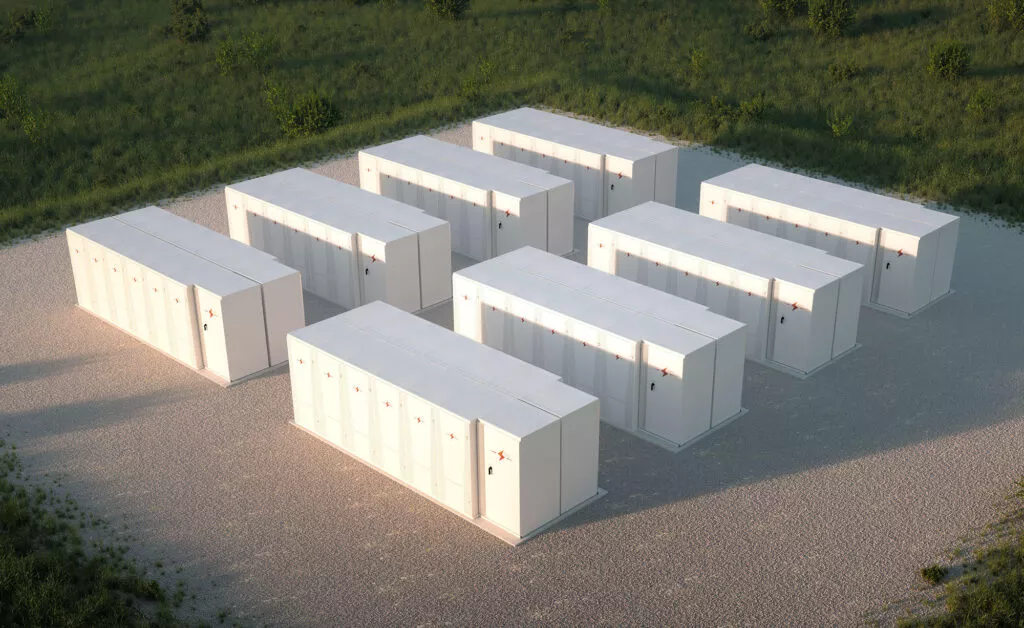
Stem, a leading provider of AI-driven clean energy software, has entered into a new strategic services agreement with Bluesphere Ventures to support the development and optimization of standalone battery energy storage projects in New York City under the state’s Value of Distributed Energy Resources (VDER) framework. The collaboration marks another important step in the continued expansion of energy storage infrastructure across New York, where developers and investors are increasingly focused on capturing the value of flexible grid resources in one of the most sophisticated energy markets in the United States.
Under the terms of the agreement, Stem will provide a range of advisory and analytical services for Bluesphere Ventures’ growing portfolio of battery energy storage systems located within the Consolidated Edison (ConEd) territory. The engagement will focus on helping Bluesphere evaluate and maximize project revenues through advanced modeling, tariff analysis, and operational forecasting tailored specifically to New York’s VDER program.
The partnership reflects the growing demand for highly detailed revenue forecasting and operational expertise in energy storage markets where multiple value streams must be balanced simultaneously. As battery storage projects become more central to grid modernization and renewable energy integration, developers are increasingly relying on real operational data and AI-based optimization tools to improve project economics and reduce investment uncertainty.
Stem’s role in the collaboration includes conducting detailed revenue modeling exercises across several operational scenarios. These analyses examine different utility tariff structures, battery cycling strategies, and combinations of stacked revenue streams available to standalone storage projects participating in the VDER program. The company will leverage its experience operating battery assets in similar market environments to produce models designed to more accurately reflect real-world asset performance rather than relying solely on theoretical assumptions.
A major component of the engagement also includes Stem’s proprietary optimization capabilities tied to New York City’s Local Law 97 (LL97), which has emerged as an increasingly important factor in commercial building decarbonization efforts. Local Law 97 establishes strict greenhouse gas emissions limits for large buildings in New York City and creates financial incentives for building owners to reduce emissions through energy efficiency measures and clean energy technologies, including battery storage systems.
By incorporating LL97-related opportunities into its analysis, Stem aims to help Bluesphere identify additional revenue potential beyond traditional grid services. This added layer of optimization can significantly enhance project economics, particularly in dense urban markets where energy demand charges, carbon compliance costs, and grid constraints intersect.
Mike Carlson, President of Managed Services at Stem, emphasized the importance of accurate modeling in a market as complex as New York.
According to Carlson, New York represents one of the most opportunity-rich yet operationally challenging environments for standalone battery storage developers. He explained that Stem’s approach differs from many conventional advisory firms because the company models battery systems using the same operational logic and dispatch methodologies it applies to assets already operating in the field.
Carlson noted that Stem’s use of real runtime operational data helps close the gap between projected revenues and actual system performance. This capability provides customers with more realistic expectations and stronger confidence when making investment decisions related to battery storage deployments.
The Value of Distributed Energy Resources program itself has become a cornerstone of New York’s clean energy strategy. Administered by the New York Public Service Commission, the VDER framework is designed to compensate distributed energy resources for the measurable value they provide to the electricity grid. These benefits include reducing peak electricity demand, improving local grid reliability, supporting renewable energy integration, and lowering environmental impacts.
Unlike traditional net metering systems, VDER uses a more sophisticated compensation methodology that assigns value to multiple grid services provided by distributed resources. For standalone storage developers, this creates opportunities to capture several revenue streams simultaneously, but it also introduces significant complexity into project planning and operational strategy.
Revenue potential under the VDER system depends heavily on factors such as utility tariff selection, battery dispatch timing, local grid conditions, and participation in multiple market programs. As a result, small differences in operational assumptions can substantially impact long-term project profitability.
Because of this complexity, investors and developers are increasingly prioritizing detailed modeling and operational validation during the project development phase. Poor assumptions regarding dispatch behavior or revenue stacking strategies can negatively affect financial performance over the lifetime of a storage asset.
Dustin Muscato, Partner and Principal at Bluesphere Ventures, said the company specifically sought a partner with practical operating experience in the New York storage market rather than theoretical market knowledge alone.
Muscato explained that Stem’s ability to simulate real dispatch behavior based on operational assets gave Bluesphere greater confidence in the credibility and realism of the modeling results. He added that such operationally grounded analysis is particularly valuable when evaluating investments and designing long-term storage portfolios in evolving energy markets.
Bluesphere Ventures has been expanding its activities in the battery storage sector as demand for grid flexibility and distributed energy resources continues to rise. The company sees New York as a particularly attractive market because of strong policy support, ambitious decarbonization goals, and increasing demand for resilient electricity infrastructure.
New York State has established some of the most aggressive climate and clean energy targets in the United States. Through policies such as the Climate Leadership and Community Protection Act (CLCPA), the state aims to achieve a carbon-free electricity sector by 2040 and economy-wide carbon neutrality by 2050. Battery storage systems are expected to play a crucial role in achieving these goals by helping integrate large amounts of intermittent renewable energy into the grid.
Energy storage also helps utilities manage peak demand, improve reliability during grid stress events, and reduce the need for expensive infrastructure upgrades. In densely populated urban areas such as New York City, these benefits are particularly valuable because of constrained transmission infrastructure and high electricity demand.
Eddie Soleymani, CEO of Bluesphere Ventures, highlighted the broader strategic importance of the partnership with Stem. He stated that Stem’s contribution extended beyond basic revenue modeling and helped strengthen Bluesphere’s broader investment thesis and strategic planning efforts.
Soleymani added that as Bluesphere expands its footprint in the ConEd VDER market and explores additional storage opportunities, having Stem as a commercial and operational partner provides significant value.
Stem’s Managed Services division has become an increasingly important part of the company’s overall business strategy. The division works with developers, investors, and asset owners throughout the full lifecycle of clean energy projects, from pre-development analysis and investment planning to operational optimization and long-term asset management.
The practice draws upon more than 1.5 gigawatt-hours of operational runtime data collected from deployed storage systems. This data enables Stem to refine dispatch algorithms, improve forecasting accuracy, and identify operational trends across various energy markets.
As distributed energy programs across the United States continue to evolve, market participants are placing greater emphasis on operational expertise and AI-driven optimization. Regulatory structures are becoming more sophisticated, and project owners increasingly require advanced analytical tools capable of navigating multiple overlapping revenue mechanisms.
The partnership between Stem and Bluesphere Ventures reflects this broader industry trend, where technical modeling alone is no longer sufficient. Instead, investors and developers are seeking partners capable of combining software intelligence, operational experience, and market expertise to improve investment outcomes and long-term project performance.
With battery storage expected to become an increasingly essential component of modern power systems, collaborations like this are likely to play an important role in shaping the future of distributed energy infrastructure in New York and beyond.
Source Link: https://www.businesswire.com/