

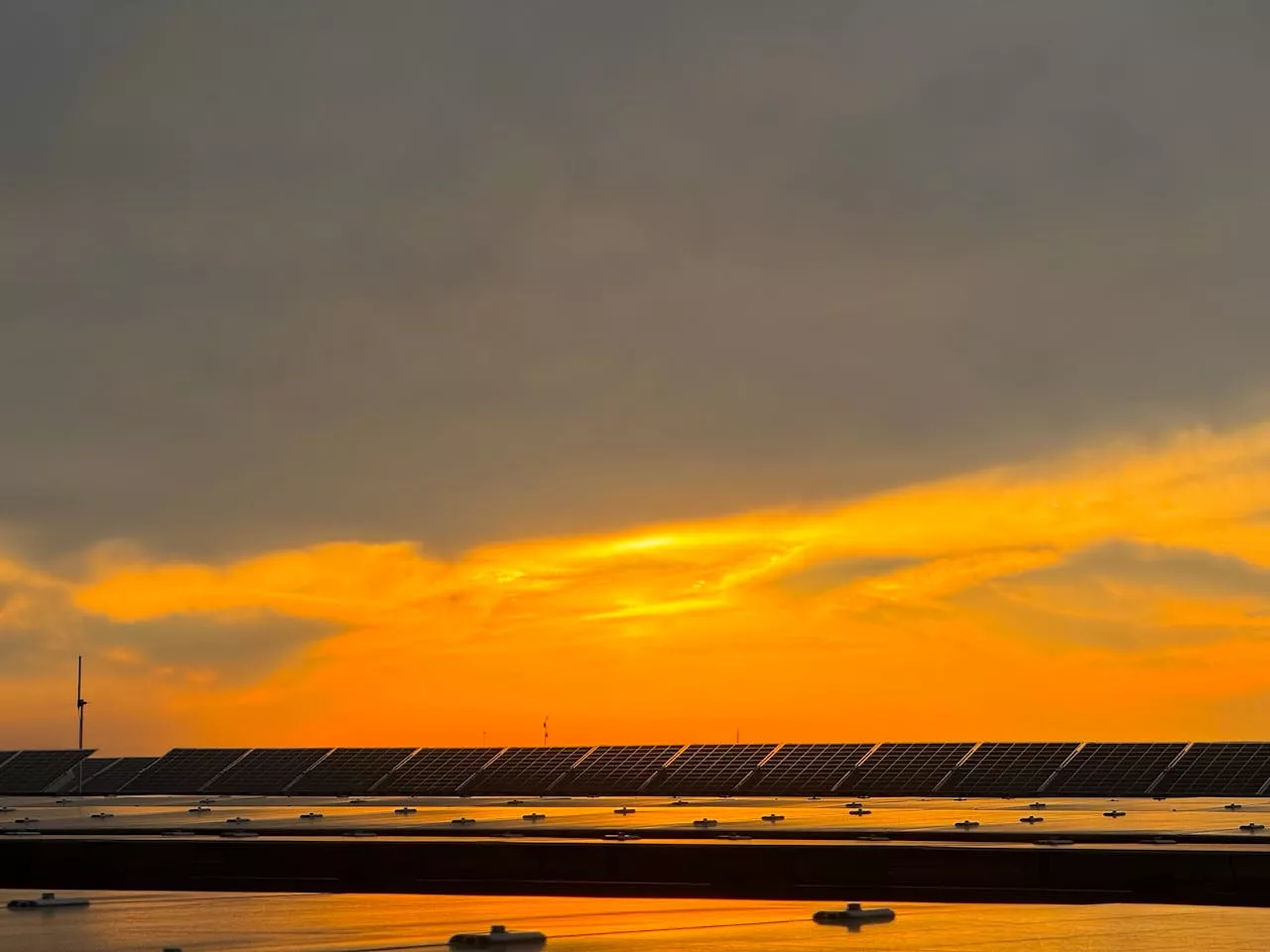
Swimsol’s SolarSea®: Transforming Island Energy with the Maldives’ Largest Floating Solar Array
Swimsol’s 2.4 MW SolarSea® photovoltaic (PV) system, installed on the ocean surface in the Maldives, is redefining how remote islands generate electricity. The floating solar installation powers the luxury resort Cheval Blanc Randheli entirely with solar energy during daylight hours, significantly reducing reliance on diesel generators. The system is projected to save the island approximately USD 1.5 million per year in fuel costs, a figure that becomes increasingly important as global diesel prices continue to rise.
In a nation composed of nearly 1,200 islands scattered across the Indian Ocean, energy generation has always been a logistical and economic challenge. The Maldives has no interconnected power grid between its atolls. Instead, each island must independently produce its own electricity. Historically, this has meant heavy dependence on diesel generators shipped across long distances. As a result, the country spends roughly 10% of its GDP on diesel imports alone—an economic burden that translates into high electricity costs and environmental pressure.
Against this backdrop, SolarSea® offers a fundamentally different model: predictable, renewable electricity for up to 30 years, independent of volatile fossil fuel markets.
A Shift from Diesel Dependency to Solar Stability
The Maldives’ reliance on diesel is not just an environmental issue—it is a structural economic constraint. Fuel must be imported, transported between islands, and stored securely. Every stage adds cost and complexity. With global fuel prices fluctuating sharply in recent years, island economies face constant uncertainty in electricity pricing.
Swimsol’s floating solar technology replaces this dependency with long-term price stability. By generating electricity directly on-site, SolarSea® reduces fuel consumption during daylight hours, when solar output is highest. Diesel generators are still used as backup or during nighttime demand, but their operational load is significantly reduced.
According to Swimsol, this transition can cut operating costs dramatically while also lowering carbon emissions. The Cheval Blanc Randheli installation alone demonstrates the financial impact—saving an estimated USD 1.5 million annually in diesel expenses.
Building the World’s First Offshore Floating Solar Platform
Swimsol pioneered the world’s first floating solar platform at sea in 2014. While floating solar systems had previously been installed on inland reservoirs and lakes, deploying such systems in open ocean conditions posed entirely new engineering challenges.
The Maldives presented a particularly difficult environment. Less than 1% of the country’s total area is land. The rest is ocean. Many islands are so small that they can be circled on foot in under 30 minutes. In such conditions, land-based solar farms are nearly impossible to build at meaningful scale.
A single 2.4 MW solar installation requires more than two football fields of space—space that simply does not exist on most resort islands. Swimsol’s answer was to move energy infrastructure offshore.
SolarSea® platforms are designed to float on the ocean surface, anchored securely to withstand waves, saltwater corrosion, and tropical storms. They allow solar power generation without occupying valuable land, preserving island landscapes while expanding renewable energy capacity.
Overcoming Early Skepticism
Despite the technical promise of floating solar, early adoption was far from guaranteed. When Swimsol first approached Maldivian resorts, the response was cautious. Diesel generators were well understood, widely available, and considered reliable. In contrast, solar—especially floating solar at sea—was seen as experimental and potentially risky.
For high-end resorts where guests pay thousands of dollars per night, even brief power disruptions were unacceptable. Engineers and operators were understandably hesitant to experiment with unfamiliar systems.
Swimsol’s strategy focused on gradual trust-building. The company began by installing rooftop solar systems to demonstrate that solar energy could integrate safely into island power systems. Next came hybrid systems that allowed diesel generators to operate alongside solar input, proving that power stability could be maintained. Only after years of successful operation did the company move toward large-scale floating solar installations.
This incremental approach paid off. The first major resort contract took six years to secure, but once operational success was proven, interest spread rapidly. Today, more than 50 resort islands in the Maldives use Swimsol photovoltaic systems. Clients include globally recognized hospitality brands such as Four Seasons, Waldorf Astoria, One&Only, and The Ritz-Carlton.
Engineering Energy in Remote Conditions
Building and maintaining energy infrastructure across remote islands presents unique logistical challenges. Many islands lack ports, warehouses, or roads capable of handling heavy equipment. In some cases, even transporting a transformer requires custom-built solutions.
Swimsol engineers routinely move equipment weighing several tonnes across sandy paths designed for golf buggies. In certain locations, the narrowness of island infrastructure requires completely custom transport systems just to deliver components from landing sites to installation points.
Each system is engineered according to strict European standards and maintained by a distributed team of more than 150 professionals based in Austria and the Maldives. Every installation is customized to the specific conditions of each island, including grid size, energy demand, and environmental exposure.
Despite these complexities, Swimsol manages the entire process end-to-end—design, construction, operation, and maintenance—under a single contract. For resort operators, this simplifies energy management significantly. Instead of managing fuel logistics and generator maintenance, they receive a predictable electricity supply at a lower long-term cost.
From Prototype to Scalable Platform
The evolution of SolarSea® reflects more than a decade of engineering refinement. Early prototypes installed in 2014 continue to operate today, demonstrating long-term durability in harsh marine conditions.
Swimsol founder and CEO Martin Putschek explains that initial skepticism was understandable:
“When we installed our first prototype in 2014, there were many valid questions about whether it would last. More than a decade later, those early platforms are still producing. The 2.4 MW system at Cheval Blanc proves it works at scale. Multiple SolarSea projects are now completed, with many more underway across the Maldives, Seychelles, and other island nations.”
The company’s expansion beyond the Maldives includes deployments in Indonesia and Chile, with additional projects under development in the Seychelles and other Small Island Developing States. These regions share similar challenges: high diesel dependency, limited land availability, and exposure to rising energy costs.
Sustainability and Luxury Coexisting
Luxury hospitality plays a significant role in the Maldives economy, and resorts increasingly see sustainability as part of their long-term value proposition. SolarSea® aligns environmental responsibility with operational efficiency.
Lionel Valla, General Manager of Cheval Blanc Randheli, emphasizes this connection:
“The beauty of the Maldives is a treasure that must be protected. By embracing the sun’s boundless energy, we honour nature’s generosity and reduce our reliance on fossil resources, illuminating a future where sustainability is not only our responsibility but also in the highest interest of our planet.”
For high-end resorts, solar energy is no longer just a cost-saving measure—it is part of a broader commitment to environmental stewardship. Guests increasingly expect sustainable operations without compromising comfort or service quality.
Scaling Beyond Resorts
While early adoption focused on luxury resorts, SolarSea® systems are now expanding into broader applications. These include fish farms, local communities, and island microgrids.
Across the Maldives, total installed electricity capacity is approximately 600 MW, with more than 90% still dependent on diesel. Swimsol has already installed around 50 MWp of solar capacity, representing a growing but still early-stage transition toward renewable energy.
As deployment scales, floating solar is expected to play a critical role in reducing national fuel imports and improving energy independence. For island nations with limited land but vast ocean access, the technology offers a uniquely practical pathway toward decarbonization.
A Model for Island Nations Worldwide
The success of SolarSea® in the Maldives demonstrates a broader global opportunity. Many Small Island Developing States face the same structural challenges: expensive imported fuel, limited land, and high exposure to climate change.
Floating offshore solar offers a way to bypass land constraints entirely while leveraging abundant sunlight and surrounding ocean space. By shifting power generation offshore, islands can reduce costs, stabilize energy prices, and cut emissions simultaneously.
Source Link: https://www.businesswire.com/