

Eni Announces Major Gas Discovery at Geliga-1 in Indonesia’s Kutei Basin
Eni has announced a significant natural gas discovery at the Geliga-1 exploration well, marking another major success in its ongoing deepwater exploration campaign in Indonesia’s Kutei Basin. The well was drilled in the Ganal Block, located offshore Indonesia approximately 70 kilometers from the East Kalimantan coast, and has revealed substantial hydrocarbon potential that could play an important role in future regional gas supply and liquefied natural gas (LNG) development.
A Major Deepwater Discovery in a Prolific Basin
The Geliga-1 well represents one of the most promising recent finds in the region. Preliminary evaluations indicate that the discovery contains approximately 5 trillion cubic feet (Tcf) of in-place gas resources along with about 300 million barrels of condensate within the encountered reservoir interval. These figures place Geliga among the larger gas discoveries in the area and reinforce the Kutei Basin’s reputation as a highly productive hydrocarbon province.
The well was drilled in challenging deepwater conditions, reaching a total depth of around 5,100 meters in approximately 2,000 meters of water depth. Despite the technical complexity of the operation, drilling successfully encountered a significant gas column in a Miocene-aged reservoir interval. Early geological and petrophysical assessments suggest that the reservoir has excellent characteristics, including favorable porosity and permeability, which are critical for high-flow gas production.
A Drill Stem Test (DST) is planned to further evaluate reservoir performance and confirm productivity rates. This step will provide crucial data for future development planning and production forecasting.
Part of a Broader Exploration Success Story
The Geliga-1 discovery is not an isolated achievement but part of a broader and highly successful exploration campaign conducted by Eni in the Kutei Basin. Over recent years, the company has consistently reported strong exploration results in the region, reinforcing confidence in the basin’s geological potential.
Geliga-1 follows the major Geng North discovery made in late 2023, located approximately 20 kilometers to the south, and the more recent Konta-1 discovery announced in December 2025. Together, these finds demonstrate a continuous string of successful exploration outcomes, highlighting both the richness of the basin and the effectiveness of Eni’s subsurface evaluation strategy.
These repeated discoveries also confirm the scalability of gas resources in the area, suggesting that the basin may support multiple large-scale development hubs in the future rather than a single centralized project.
Development Synergies and Infrastructure Advantages
In parallel with exploration activities, Eni and its partners are actively evaluating development strategies that could accelerate the commercialization of these discoveries. One of the key advantages of the Kutei Basin assets is their proximity to existing and planned offshore infrastructure, which offers opportunities for cost reduction and faster project execution.
The Geliga-1 discovery lies close to the undeveloped Gula gas field, which contains an estimated 2 Tcf of gas in place and approximately 75 million barrels of condensate. Preliminary assessments suggest that combining the Geliga and Gula resources could support production of up to 1 billion cubic feet per day (bscfd) of gas and around 80,000 barrels per day of condensate.
This potential synergy opens the door for a possible third production hub in the basin. Such a development would follow the model currently being implemented in Eni’s North Hub project, which integrates multiple fields into a shared infrastructure system designed to optimize capital expenditure and operational efficiency.
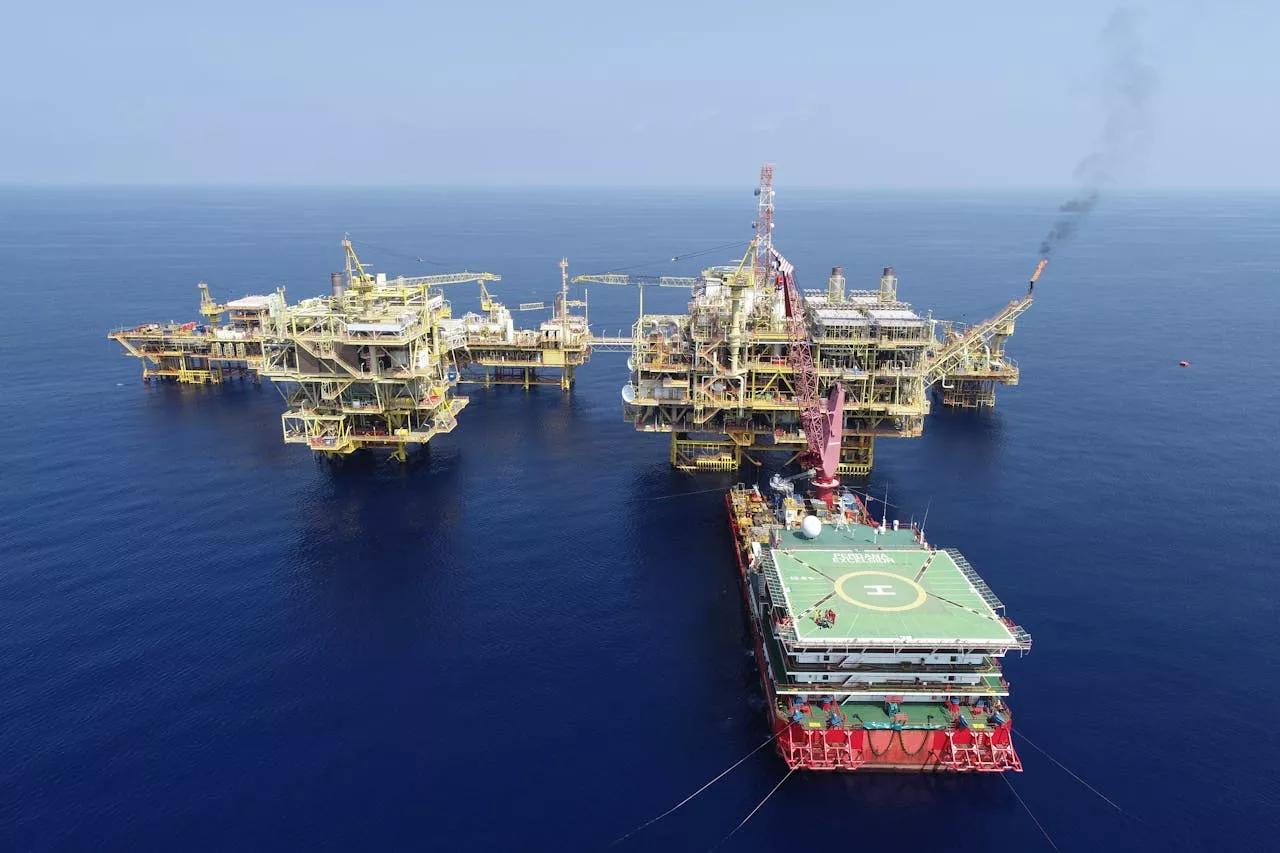
The North Hub itself includes the Geng North and Gehem fields and is supported by a newly built floating production, storage, and offloading unit (FPSO) with a gas handling capacity of 1 bscfd and condensate processing capability of 90,000 barrels per day. Production from this hub will also be connected to the existing Bontang LNG Plant, one of Indonesia’s key liquefaction facilities.
Expanding LNG and Processing Capacity
The potential integration of Geliga and surrounding discoveries into existing infrastructure could also contribute to the long-term extension and expansion of LNG processing capacity in the region. Studies are underway to evaluate whether the Bontang LNG Plant could be further rejuvenated beyond its current planned utilization.
If additional liquefaction capacity is added, it would significantly enhance Indonesia’s LNG export capabilities while extending the operational life of an already strategic energy asset. This would also align with broader regional energy demand trends, particularly in Asia, where natural gas continues to play a key role in the energy transition.
Strategic Expansion Through Continued Exploration
Eni has maintained an active and consistent exploration program in the Kutei Basin. Over the past six months alone, the company has drilled four additional exploration wells, further expanding its understanding of the subsurface geology and resource potential.
The exploration campaign is expected to continue, with one additional well planned for 2026 and two more scheduled for 2027. This sustained activity reflects Eni’s long-term commitment to developing the basin as a core upstream growth area.
The success rate of recent wells also suggests that the basin still holds significant untapped potential, particularly in deepwater Miocene reservoirs that have proven to be highly productive.
Corporate Structure and Joint Ventures
The Geliga-1 discovery is located within the Ganal Production Sharing Contract (PSC), where Eni operates with an 82% participating interest. The remaining 18% is held by Sinopec, the Chinese state-owned energy company.
The Ganal PSC is part of a broader regional portfolio spanning 19 exploration and production blocks across Indonesia and Malaysia. Fourteen of these blocks are located in Indonesia, while five are in Malaysia. This portfolio is expected to be consolidated into a new jointly controlled company called Searah, formed by Eni and Petronas, which was announced in November 2025.
Eni and Petronas intend for Searah to integrate assets, technical capabilities, and financial resources to accelerate upstream growth in Southeast Asia. The company’s development strategy includes bringing approximately 3 billion barrels of oil equivalent (boe) of discovered resources into production, while also unlocking additional exploration upside across its acreage.
The transaction is expected to close by the second quarter of 2026. In parallel, Eni is also progressing with the planned divestment of a 10% stake in its Indonesian portfolio (excluded from the Searah transaction), which is expected to be completed during 2026. The value of the Geliga discovery is expected to enhance the attractiveness of this partial sale.
Indonesia: A Key Growth Region for Eni
Eni has maintained a presence in Indonesia since 2001 and has steadily built a diversified upstream portfolio across exploration, development, and production activities. Today, the company’s net production in the country stands at approximately 90,000 barrels of oil equivalent per day.
This output is primarily supported by offshore developments such as the Jangkrik Field and the Merakes Field, both of which have contributed significantly to Indonesia’s gas supply and LNG exports.
With the addition of Geliga-1 and other recent discoveries, Eni is strengthening its position as one of the most active deepwater explorers in Southeast Asia. The company’s strategy is increasingly focused on cluster development, infrastructure sharing, and rapid monetization of discovered resources.
Source Link: https://www.eni.com/