


NUVVE JAPAN Signs 20-Year Merchant Aggregation Agreement for 2MW/8MWh Battery Storage Project in Gifu
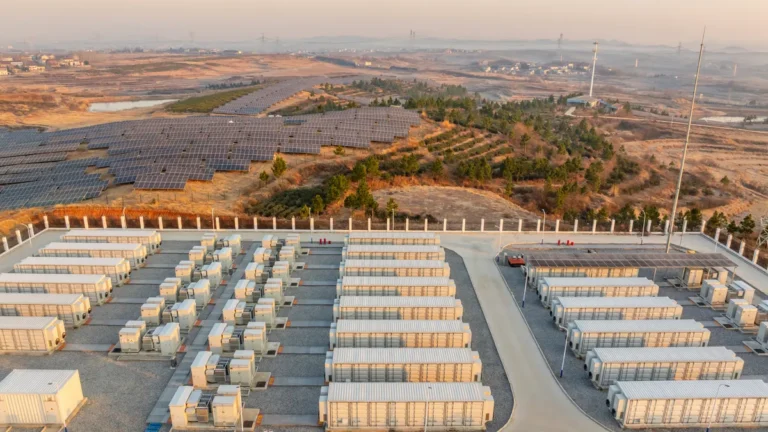
NUVVE JAPAN K.K. (NVJ), headquartered in Tokyo and recognized for its advanced energy aggregation solutions, has announced the signing of a long-term Merchant Aggregation Agreement with a Taiwanese corporation operating in Japan. The agreement covers the management and market integration of a 2MW / 8MWh grid-scale Battery Energy Storage System (BESS) currently under development in Kani City, located in Gifu Prefecture.
The new project represents an important step forward for both companies as Japan continues to expand its electricity storage infrastructure to support the increasing penetration of renewable energy resources. The grid-scale battery system is expected to be connected to the power grid in January 2027, marking the start of commercial operations under the 20-year agreement.
As the designated aggregator for the project, NVJ will oversee comprehensive asset management services, including market integration, energy dispatch optimization, and participation in several of Japan’s electricity markets. In connection with the agreement, NVJ has already received a subscription fee of $70,000.
Strengthening Japan’s Energy Storage Infrastructure
Japan’s energy transition has accelerated in recent years as the country seeks to increase renewable power generation and reduce its dependence on fossil fuels. Solar and wind energy capacity has grown significantly, but the intermittent nature of these resources has placed additional pressure on grid operators to maintain stability and balance supply with demand.
Battery Energy Storage Systems are emerging as a vital component of modern power infrastructure, providing flexibility that helps stabilize electricity networks. These systems store excess electricity generated during periods of high renewable output and release it when demand rises or renewable generation falls.
The Kani City battery storage project will play a key role in supporting these grid-balancing functions. With a rated output of 2 megawatts and an energy storage capacity of 8 megawatt-hours, the system will provide four hours of continuous power delivery when fully charged. This level of storage capability enables the system to help smooth fluctuations in renewable generation while also supporting grid reliability.
NVJ’s Expanding Role in Energy Aggregation
The new agreement further strengthens NVJ’s position as a leading energy aggregation provider in Japan. Aggregators act as intermediaries between distributed energy assets—such as battery storage systems, electric vehicles, and renewable generation—and electricity markets. By coordinating these resources through advanced software platforms, aggregators can maximize their value while contributing to grid stability.
Under the terms of the agreement, NVJ will manage the project using its proprietary aggregation platform. The system incorporates artificial intelligence–driven dispatch optimization, allowing the battery to respond dynamically to real-time market signals and grid conditions.
Through automated decision-making algorithms, NVJ’s platform determines when the battery should charge, discharge, or provide grid support services. This approach helps ensure that the storage asset operates in the most economically efficient manner while also meeting grid requirements.
The agreement marks another milestone in NVJ’s strategy to expand its portfolio of battery assets under management. By integrating the 8MWh system into its aggregation network, the company is continuing to build toward its broader vision of creating a large-scale Virtual Power Plant (VPP).
Advancing the Virtual Power Plant Vision
A Virtual Power Plant is a digitally coordinated network of distributed energy resources that operate collectively like a single power plant. These resources may include stationary battery storage, solar generation, electric vehicle fleets, and other flexible energy assets.
Through sophisticated control systems and advanced data analytics, a VPP can coordinate the operation of multiple energy resources across different locations. This enables them to provide grid services such as load balancing, frequency regulation, and peak demand support.
NVJ’s long-term goal is to expand its aggregation platform so that it integrates a wide variety of distributed energy resources. By connecting battery storage projects such as the Kani City facility with electric vehicle charging networks and other flexible energy assets, NVJ aims to create a highly responsive energy ecosystem capable of supporting Japan’s evolving power grid.
The addition of this grid-scale storage asset represents another building block in that long-term strategy. As more projects are integrated into NVJ’s platform, the company expects to increase the overall flexibility and resilience of Japan’s electricity system.
Full-Merchant Market Participation
The Kani City project will operate under a “Full-Merchant” model, meaning that the storage asset will generate revenue by participating in several electricity markets rather than relying solely on fixed contractual payments.
Through NVJ’s aggregation platform, the battery will participate in three major segments of Japan’s electricity market:
Japan Electric Power Exchange (JEPX):
The system will perform energy arbitrage by storing electricity during periods of low prices and discharging it during times of higher demand and higher market prices. This process, known as time-shifting, allows the battery to capture value from price fluctuations in the wholesale electricity market.
Ancillary Services Market:
Battery storage systems are particularly well suited for providing frequency regulation services. In this role, the system can quickly inject or absorb electricity to help stabilize grid frequency and maintain reliable operations. These services are often compensated through specialized ancillary services markets.
Capacity Market:
The system will also participate in Japan’s capacity market, which compensates energy assets for maintaining reliable availability to meet future electricity demand. By guaranteeing that the storage system will be available when needed, the project can earn additional revenue based on its capacity value.
By combining these three revenue streams, NVJ expects the project to generate annual margins ranging between $255,000 and $382,000 for the 2MW system. This diversified revenue strategy helps improve the financial viability of grid-scale battery projects while contributing to the stability of the power system.
Project Overview
The key technical and operational details of the project include:
- Location: Kani City, Gifu Prefecture, Japan
- Rated Power Output: 2 megawatts
- Energy Storage Capacity: 8 megawatt-hours
- Duration: Four hours of storage capacity
- Planned Grid Connection: January 2027
- Contract Duration: 20 years
The project will be developed, owned, and maintained by the Japanese subsidiary of the Taiwanese partner company. NVJ will serve as the designated aggregator and asset manager, responsible for market participation, operational optimization, and automated dispatch control.
Long-Term Confidence in Japan’s Storage Market
The 20-year duration of the aggregation agreement reflects growing confidence in Japan’s long-term energy storage market. As the country continues to expand renewable power generation, the need for flexible resources capable of balancing supply and demand is expected to increase significantly.
Battery storage is widely viewed as one of the most effective solutions for addressing this challenge. By storing surplus renewable electricity and delivering it when needed, BESS installations can reduce curtailment, stabilize the grid, and improve overall system efficiency.
For NVJ, the Kani City project represents not only a new addition to its asset portfolio but also an important step in advancing the company’s broader mission. By deploying advanced aggregation technologies and expanding its Virtual Power Plant platform, NVJ aims to play a central role in Japan’s transition toward a decentralized and carbon-neutral energy system.
Looking ahead, the company plans to continue expanding its managed asset base and forging partnerships with developers and investors seeking to unlock the full value of energy storage in Japan’s rapidly evolving electricity market.
Source Link: https://www.businesswire.com/