

Europe’s Solar Market Continues Its Strong Growth Trajectory
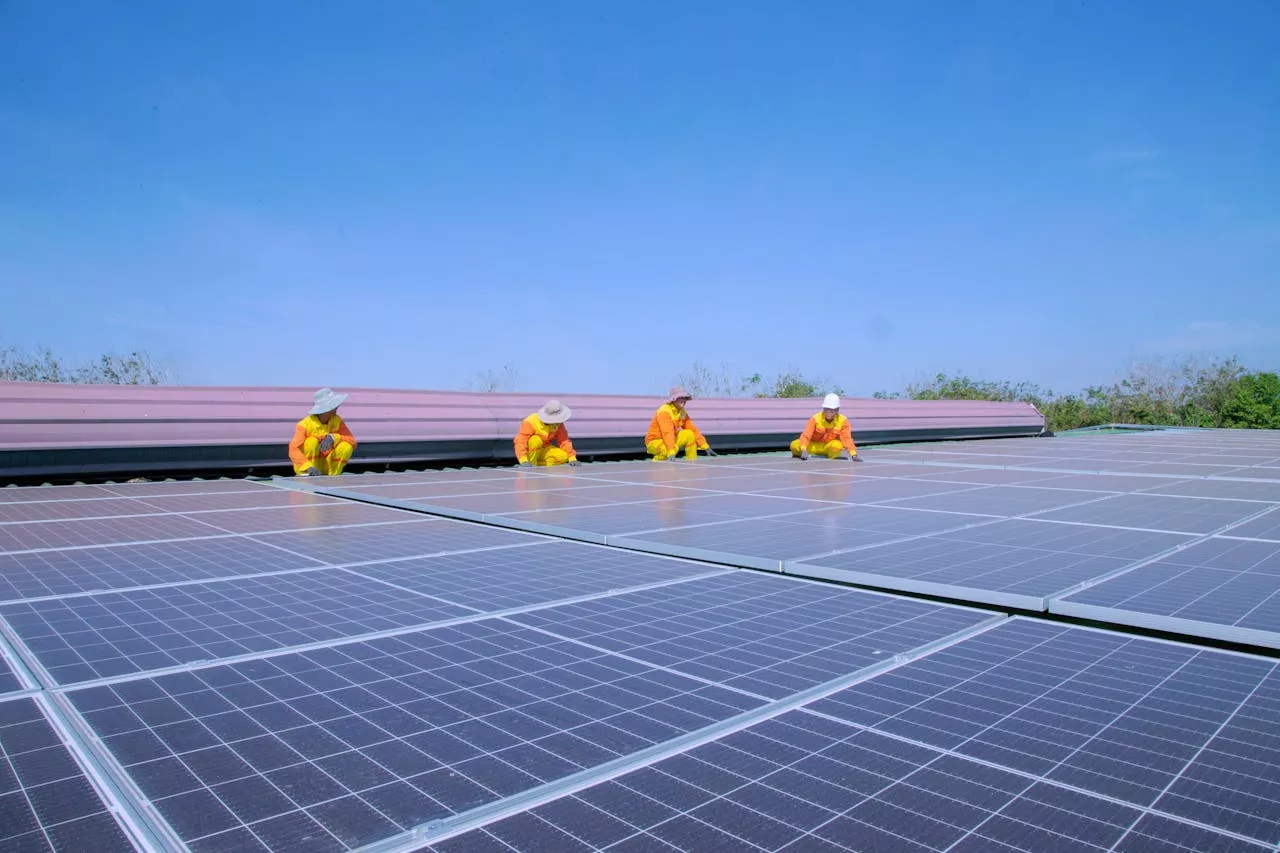
The European solar energy market is entering a pivotal stage in its evolution. According to the latest European Market Outlook published by SolarPower Europe, 2025 represented yet another robust year for photovoltaics (PV) across the European Union. The momentum in solar deployment remains strong, driven by national energy policies, technological advancements, and increasing demand for clean, renewable energy sources.
Among European countries, Germany continues to lead in annual expansion rates, followed closely by Spain, France, Italy, and Poland. Germany’s leadership stems from decades of committed renewable energy policies, a highly competitive solar market, and ambitious national targets for reducing carbon emissions. Spain and France are making significant strides as well, with favorable regulatory environments, attractive financing schemes, and increasing public and private sector investment in renewable energy. Italy and Poland, while historically slower in deployment, are rapidly catching up thanks to favorable subsidy adjustments, rising energy demand, and growing awareness of the economic and environmental benefits of solar power.
Solar energy is no longer a niche segment in Europe’s power supply landscape; it is now a core component of the continent’s strategy to meet energy demand while reducing carbon emissions. The rapid deployment of PV systems has also highlighted the dynamic nature of the European regulatory environment. Many countries are actively revising their subsidies and financing models, a move that brings both opportunities and challenges for investors. Traditional feed-in tariffs are increasingly being replaced by new mechanisms such as contracts for difference (CFDs), which aim to stabilize electricity prices and secure predictable revenue streams for project developers.
At the same time, the industry is innovating in response to these changing frameworks. Market-based solutions, including hybrid PV power plants and hybrid power purchase agreements (PPAs), are emerging as effective ways to optimize the integration of solar energy into the grid while enhancing project profitability. Hybrid PV plants, which combine solar generation with energy storage or complementary renewable sources, provide flexibility in energy dispatch and help mitigate the financial risks associated with volatile electricity prices.
Intersolar Europe: Showcasing Innovation and Collaboration
One of the key events highlighting Europe’s solar market innovation is Intersolar Europe, part of The smarter E Europe, Europe’s largest alliance of exhibitions for the energy industry. Scheduled to take place at Messe München from June 23–25, 2026, Intersolar Europe is a hub for professionals from across the value chain, including project developers, manufacturers, investors, and policymakers. The event provides a platform for discussing the latest trends, exploring new business models, and showcasing cutting-edge technology solutions.
The 2026 edition is expected to host over 2,800 exhibitors and attract more than 100,000 visitors from around the world. Attendees can participate in conferences, forums, and workshops, providing unique opportunities to network, exchange knowledge, and identify strategic partnerships. The event also emphasizes hybrid PV systems, energy storage solutions, and new financing models, reflecting the sector’s response to regulatory shifts and market demands.
Global PV Growth and Grid Integration Challenges
While Europe continues to lead in PV deployment, the global landscape is also witnessing unprecedented growth. According to Wood Mackenzie, cumulative worldwide PV capacity had reached nearly three terawatts by early 2026. This extraordinary growth highlights the increasing importance of solar power in the global energy mix, but it also introduces new challenges for grid operators and market participants.
Large-scale integration of solar energy into power systems can lead to phenomena such as negative electricity prices during periods of peak generation and an increased need for redispatch measures. Negative pricing occurs when electricity supply exceeds demand, often during sunny midday hours when PV generation peaks. This situation creates both operational and economic challenges, as grid operators must balance supply and demand while ensuring the stability of the network.
Energy storage is emerging as a crucial solution to these challenges. Large-scale stationary storage systems enable the storage of surplus solar energy, which can later be dispatched to meet demand during periods of low solar generation. By providing flexibility, storage systems enhance grid integration, reduce reliance on fossil-fuel backup plants, and improve the overall efficiency of renewable energy utilization.
The Rising Profitability of Stationary Storage
Stationary storage devices, including battery storage systems, are increasingly becoming an economically attractive component of solar projects. According to BloombergNEF, the price of stationary storage dropped to $70 per kilowatt-hour in 2025, representing the most significant decline across all battery segments. Several factors have contributed to this price reduction:
- Overcapacity in Battery Cell Manufacturing: The rapid scaling of battery production has created surplus capacity, driving down costs.
- Intense Competition Among Chinese Manufacturers: Chinese battery manufacturers continue to dominate the global market, spurring innovation and competitive pricing.
- Adoption of Lithium-Iron-Phosphate (LFP) Batteries: LFP technology offers enhanced safety, longer cycle life, and lower cost compared to traditional lithium-ion chemistries.
Stationary storage can be integrated with PV systems to form hybrid setups, which combine electricity generation and storage into a single optimized system. These hybrid solutions increase system stability, enable innovative business models such as time-shifting electricity sales, and improve the financial performance of solar projects under changing subsidy and regulatory conditions.
New Financing Models: The Rise of Contracts for Difference
Financing models for solar projects in Europe are undergoing a significant transformation. Traditional feed-in tariffs, which guaranteed fixed payments for electricity generated by renewable projects, are gradually being replaced by contract-for-difference (CFD) schemes. CFDs provide project developers with revenue certainty by stabilizing electricity prices over the long term.
Under a CFD, the government or regulatory authority sets a strike price for electricity, and project developers receive payments to bridge the gap between the market price and the strike price. If market prices exceed the strike price, the excess revenue is typically refunded, ensuring consumer electricity prices remain stable.
Germany is among the countries implementing such changes. The government-approved feed-in tariff under the Renewable Energy Sources Act (EEG) is scheduled to be discontinued at the end of 2026. This transition has raised concerns among market players, who fear that securing financing for new projects may become more difficult without the EEG’s guaranteed revenue structure. Stakeholders are calling for clear and reliable framework conditions to support investment in renewable energy projects, ensuring that the European energy transition continues unabated.
The Importance of Hybrid PV Plants and PPAs
Hybrid PV plants, often combined with energy storage or other renewable generation sources, are gaining traction as an effective response to regulatory and market challenges. By integrating storage, hybrid plants can store excess solar power during peak generation periods and supply electricity during high-demand periods or when market prices are favorable.
Hybrid power purchase agreements (PPAs) are also evolving. Traditional PPAs involve selling electricity at a fixed price over a long term, typically to utilities or large corporate buyers. Hybrid PPAs incorporate energy storage and market-based mechanisms, allowing developers and buyers to optimize revenue while mitigating risks associated with price fluctuations. These solutions represent a convergence of technological innovation and financial engineering, designed to maximize the viability of solar projects under changing policy landscapes.
Intersolar Europe 2026: A Global Stage for Collaboration
The 2026 edition of Intersolar Europe, held in conjunction with The smarter E Europe, will focus heavily on hybrid PV systems, storage integration, and innovative financing models. The event kicks off on June 22 with the Intersolar Europe Conference, featuring renowned experts and strategic discussions on market trends and investment opportunities. The Intersolar Forum, running from June 23–25, will offer practical insights into implementing these technologies and business models.
Exhibitors will present real-world solutions in the exhibition halls, allowing visitors to explore state-of-the-art PV systems, storage technologies, and integrated hybrid solutions. Intersolar Europe, along with other exhibitions such as ees Europe, Power2Drive Europe, and EM-Power Europe, will serve as a critical platform for connecting developers, investors, policymakers, and technology providers from around the world.