

Graforce Secures Strategic Multi-Million Euro Investment to Scale Plasma Pyrolysis Technology for Low-Carbon Hydrogen and Syngas Production
Berlin-based Graforce GmbH, a pioneering company in the field of CO₂-free hydrogen and syngas technologies, has successfully closed a strategic financing round valued in the double-digit million-euro range. The investment comes from a consortium of highly reputable players in the renewable energy and industrial technology sector, including the Paris-based Next Generation Fuels Industrial & Technological Fund Calderion, initiated by Audacia, the infrastructure developer Terravent, and the WenCo Family Office. This significant capital injection is earmarked to accelerate the industrial scale-up of Graforce’s proprietary plasma pyrolysis technology, which promises to revolutionize the production of low-carbon hydrogen, syngas, and carbon capture solutions.
The investment signals growing confidence in Graforce’s innovative approach, which addresses the urgent global demand for sustainable industrial processes and cost-efficient decarbonization technologies. With global energy transition efforts accelerating, the need for low-carbon alternatives to conventional fossil fuel-based processes has never been more critical. Graforce’s technology not only offers a sustainable alternative to CO₂-intensive industrial methods but also enables the creation of valuable byproducts, contributing to circular economy solutions and industrial resource optimization.
A Disruptive Alternative to Conventional Industrial Processes
Traditional hydrogen and syngas production methods, such as steam methane reforming and classical gasification, are known for their significant CO₂ emissions. These processes rely heavily on fossil fuels and are inherently energy-intensive, contributing to greenhouse gas emissions and global climate challenges. Graforce’s plasma pyrolysis technology represents a paradigm shift in industrial chemistry.
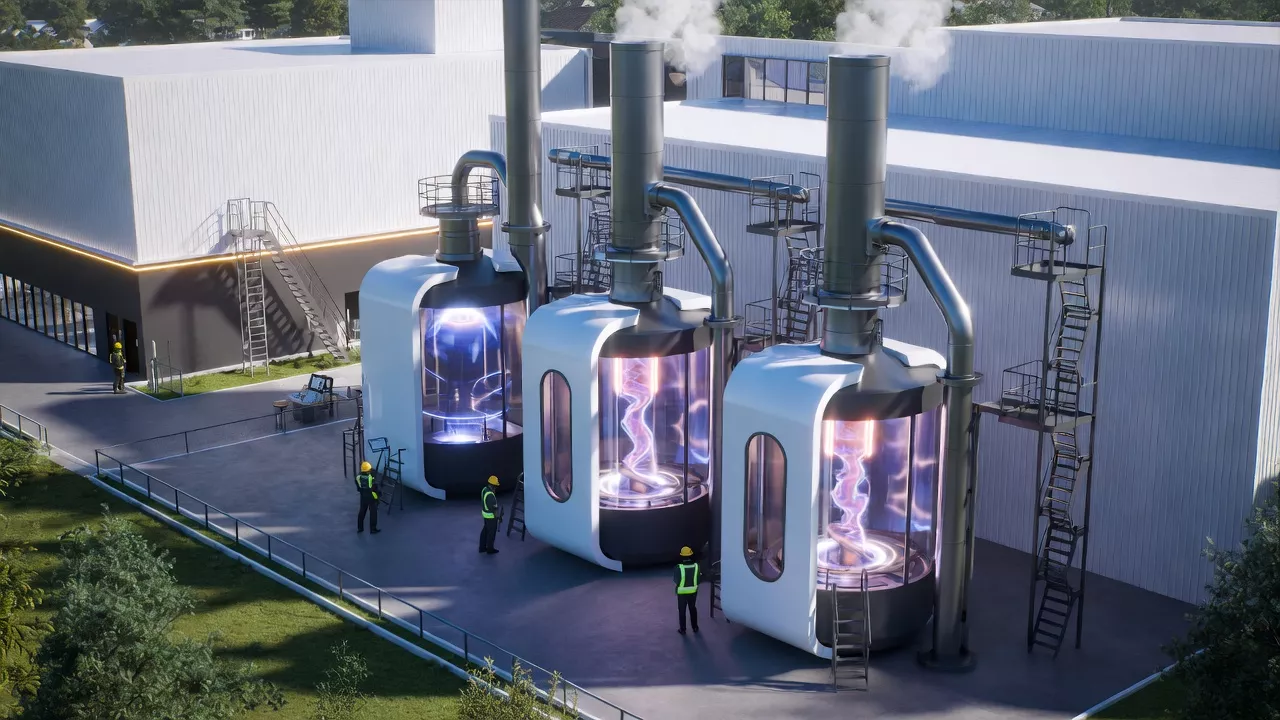
By applying high-temperature plasma to various feedstocks—including methane, biogas, flare gas, and landfill gas—Graforce’s process effectively breaks down these molecules into their constituent components. The result is the production of clean hydrogen and syngas, while carbon is recovered as a high-purity industrial material, suitable for integration into existing material cycles. When biogenic feedstocks are used, the process achieves a negative CO₂ footprint, as carbon is permanently stored rather than released into the atmosphere. This makes the technology not only a tool for decarbonization but also an innovative carbon removal solution, aligning with global net-zero goals.
Unlike centralized industrial plants, Graforce’s modular technology enables decentralized production directly at the point of consumption. This approach offers multiple operational and economic advantages, including the reduction of transportation costs, minimization of energy losses, and flexibility to adapt to varying local energy availability. Such flexibility is crucial for industries aiming to integrate renewable energy sources into their operations while maintaining consistent output of hydrogen and syngas.
Strengthening Strategic Cooperation: Graforce and RAG Austria AG
Alongside the financing round, Graforce has announced a deepening of its strategic partnership with RAG Austria AG, a leading energy storage and resource management company. RAG Austria AG is providing targeted financial and industrial support for the ongoing development of Graforce’s methane plasma pyrolysis plants. The collaboration focuses on system optimization, industrial integration, and scaling of modular plants, allowing Graforce to enhance plant efficiency and adapt installations to locations with variable renewable energy availability.
By leveraging RAG Austria AG’s industrial expertise, Graforce is accelerating the path toward continuous industrial operation, ensuring the technology’s reliability, cost-effectiveness, and performance at scale. This collaboration not only strengthens Graforce’s operational capabilities but also demonstrates the strategic importance of partnerships in accelerating the deployment of next-generation energy solutions globally.
Deployment and Use of Funds: Industrial Scale-Up and Market Expansio
The newly secured funds will serve as a catalyst for Graforce’s industrial and commercial expansion, enabling the company to advance its technological capabilities, roll out additional industrial plants, and explore international market opportunities. Specifically, Graforce intends to:
- Enhance technological performance: The investment will support research and development to further optimize plasma pyrolysis processes, improve efficiency, and reduce operational costs.
- Scale industrial production: With modular plant designs, Graforce plans to expand production capacity to meet increasing demand from sectors such as steel manufacturing, chemicals, transportation, and energy-intensive industries.
- Expand international presence: The funding will facilitate entry into new markets, positioning Graforce as a leading provider of low-carbon hydrogen, syngas, and carbon removal solutions worldwide.
Through these initiatives, Graforce is not only scaling its own operations but also contributing to the broader global energy transition, providing industries with sustainable, cost-effective alternatives to legacy CO₂-intensive processes.
Insights from Partners: A Shared Vision for a Low-Carbon Future
Key stakeholders in this financing round have emphasized the transformative potential of Graforce’s technology.
Vincent Brillault, Founding Partner of Calderion, highlighted the strategic significance of the investment:
“With Graforce’s addition to our portfolio, Calderion strengthens its coverage of next-generation fuel value chains, combining CO₂ capture, plasma-based methane conversion, and synthetic fuels. This enables integrated pathways from methane and CO₂ to low-carbon hydrogen and syngas, serving both industrial decarbonization and sustainable fuels for maritime and aviation. Graforce’s technology also offers natural hydrogen explorers a solution to valorize associated methane without CO₂ emissions.”
Similarly, Jens Rötteken, CEO of Terravent, noted the operational and industrial advantages of Graforce’s approach:
“The flexibility to provide various product gases in a decentralized and emission-free manner closes a critical gap in the industrial value chain. We are contributing our project planning expertise to bring this technology to the global market.”
Dr. Jens Hanke, CEO of Graforce GmbH, expressed enthusiasm about the future of plasma pyrolysis:
“This investment underscores the enormous potential of our plasmalysis technology for a sustainable energy transition. We look forward to working together to make our plasmalysis technology scalable and cost-effective.”
Graforce’s Technology: Key Features and Advantages
Graforce’s proprietary plasma pyrolysis technology is distinguished by several key features that make it a game-changer for industrial decarbonization:
- CO₂-free hydrogen and syngas production: Converts methane and other carbon-containing gases into valuable molecular products without direct CO₂ emissions.
- Carbon recovery as an industrial raw material: The process produces high-purity carbon suitable for reuse, supporting circular economy principles.
- Negative carbon footprint with biogenic feedstocks: Permanent carbon storage enables true carbon removal.
- Modular and decentralized design: Plants can be deployed directly at industrial sites, reducing transport and energy losses.
- Versatile feedstock utilization: Can process methane, biogas, flare gas, and landfill gas, providing flexibility and adaptability to regional resources.
This combination of efficiency, sustainability, and modular deployment positions Graforce as a technology leader in next-generation fuel production and carbon management.
About the Partners
Graforce GmbH – Based in Berlin, Graforce is a pioneer in plasma pyrolysis technologies, enabling the CO₂-free conversion of methane, biogas, flare gas, and landfill gas into hydrogen, syngas, and valuable carbon products. Their solutions are designed for industrial-scale deployment, contributing to the decarbonization of hard-to-abate sectors. www.graforce.com
Calderion & Audacia – Calderion is an industrial deep-tech fund initiated by Audacia, dedicated to scaling next-generation fuel technologies. Audacia is listed on Euronext Growth Paris and focuses on investments that integrate CO₂ capture, synthetic fuels, and low-carbon industrial processes. calderion.com | audacia.fr
Terravent – A leading project developer and investor in renewable energy and integrated hydrogen infrastructure, Terravent has over a gigawatt of realized projects spanning 25 years, focusing on sustainable energy solutions and industrial project deployment.
WenCo Family Office – A strategic investor providing financial support to innovative companies driving industrial and technological transformation.
RAG Austria AG – An energy storage and resource management company providing industrial support for Graforce’s plasma pyrolysis plant development, focusing on operational efficiency and industrial integration.
A Step Forward in Global Energy Transition
This strategic financing round and the reinforced partnership with RAG Austria AG mark a significant milestone for Graforce GmbH. By providing the financial resources and industrial expertise required for scale-up and market deployment, Graforce is set to become a key player in the global shift toward sustainable energy solutions. The company’s approach demonstrates that industrial processes can be both economically viable and environmentally responsible, meeting the growing demand for low-carbon hydrogen, syngas, and carbon removal technologies.
As industries worldwide face pressure to reduce emissions and embrace renewable energy integration, Graforce’s plasma pyrolysis technology offers a practical and scalable pathway to decarbonization. With its modular, decentralized approach and versatility in feedstock utilization, Graforce is poised to transform industrial value chains, enabling cleaner production processes, enhanced resource efficiency, and measurable contributions to global climate targets.