Viridi Energy Successfully Sells First Section 48 Investment Tax Credits from Magnolia Landfill RNG Project in Alabama
Viridi Energy (“Viridi”), a leading renewable natural gas (RNG) platform and a portfolio company of global private equity firm Warburg Pincus, has announced the successful sale of its first Investment Tax Credits (ITCs) under Section 48 of the U.S. Internal Revenue Code. The credits are associated with Viridi’s landfill gas-to-renewable natural gas project located at the Magnolia Landfill in Baldwin County, Alabama. The transaction represents a major milestone for the company and underscores its ability to efficiently finance, construct, and monetize high-quality renewable energy infrastructure assets in the United States.
The completion of this initial ITC sale highlights Viridi’s execution capabilities at a time when transferable tax credits are playing an increasingly important role in accelerating investment in domestic clean energy projects. By leveraging the Section 48 tax credit framework, Viridi has unlocked additional capital to reinvest into the development and expansion of RNG projects that capture landfill methane emissions and convert them into pipeline-quality renewable natural gas.
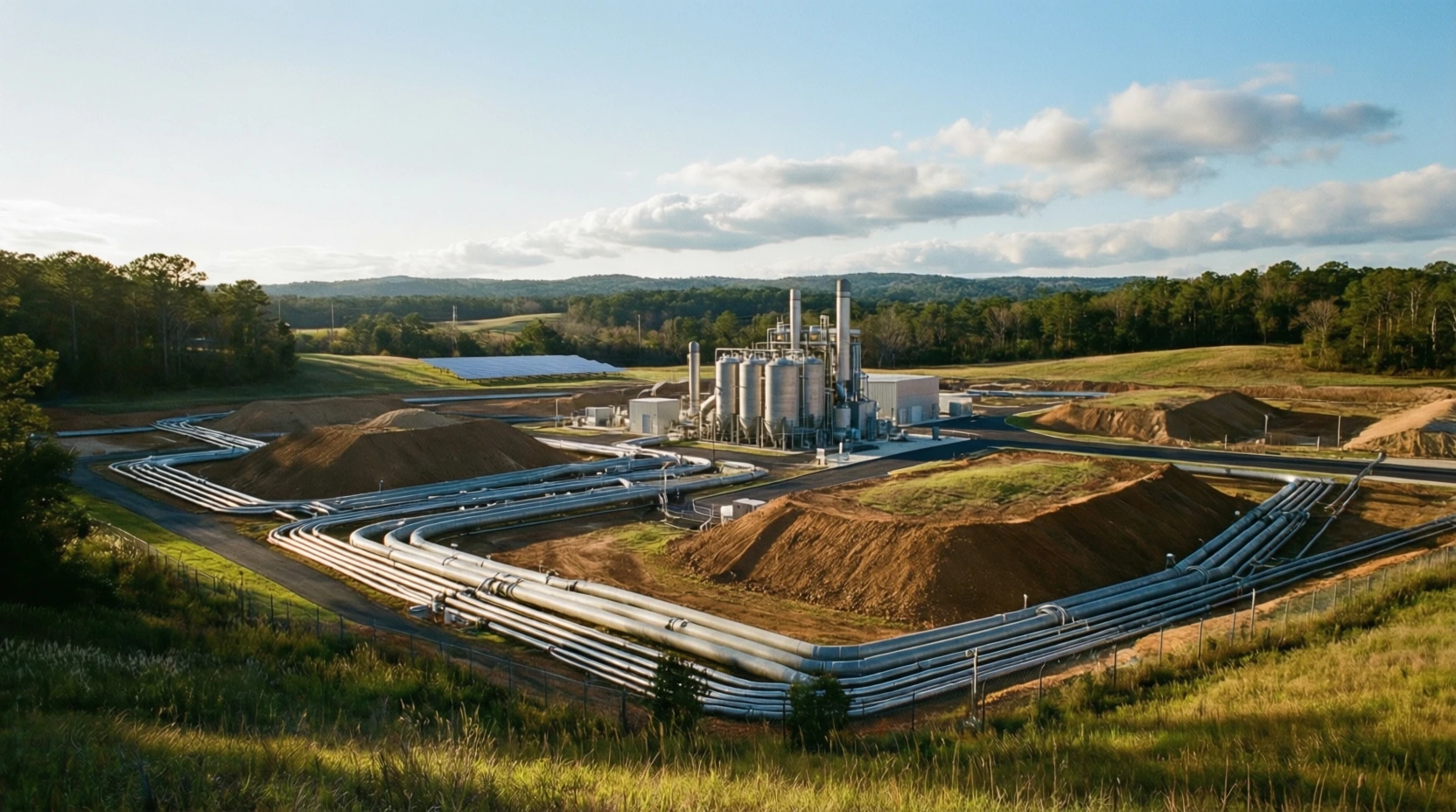
The Magnolia Landfill RNG project is designed to collect methane generated from decomposing waste, process the gas through advanced upgrading technology, and deliver RNG that meets stringent pipeline specifications. Once injected into the natural gas network, the RNG can be used across a variety of end markets, including transportation, industrial, and commercial applications. In particular, the project generates low-carbon fuel attributes that support the decarbonization of the U.S. transportation sector, aligning with both state and federal clean fuel initiatives.
Proceeds from the ITC transaction will support Viridi’s broader strategy of scaling its RNG platform while delivering tangible economic and environmental benefits to host communities. By capturing landfill methane—one of the most potent greenhouse gases—and converting it into a usable energy source, the Magnolia Landfill project reduces emissions that would otherwise be released into the atmosphere. At the same time, it creates local economic value through infrastructure investment, long-term operations, and skilled jobs.
Dan Crouse, Chief Executive Officer of Viridi Energy, emphasized the strategic significance of the transaction. “Selling our first ITC credits is an important milestone for Viridi and validates our ability to execute and finance projects that deliver real-world outcomes,” Crouse said. “This transaction reflects the intent of federal energy policy: enabling private capital to flow efficiently into domestic clean energy infrastructure. Transferable tax credits help accelerate real projects with real outcomes, and this transaction demonstrates how effective that mechanism can be.”
The Section 48 ITC monetization illustrates how policy-driven financial tools are reshaping the clean energy investment landscape. Historically, tax equity structures limited participation to a relatively small pool of investors. The introduction of transferability has expanded access, allowing project developers like Viridi to sell tax credits directly, reduce transaction complexity, and recycle capital more rapidly into new developments. This flexibility is particularly important for capital-intensive RNG projects, where upfront investment is critical to capturing environmental benefits as quickly as possible.
Viridi’s leadership views the successful sale as a foundation for future transactions across its growing portfolio. With multiple RNG projects in development or construction, the company expects Section 48 credits to remain a key component of its financing strategy. By standardizing processes and building trusted relationships with advisors and counterparties, Viridi aims to streamline future monetization efforts while maintaining high execution standards.
David Barry, Chief Financial Officer of Viridi Energy, highlighted the importance of collaboration in completing the transaction. “We appreciate the collaboration from all parties involved in this transaction,” Barry said. “Bringing together strong counterparties and advisors is essential to executing efficiently and ensuring these projects deliver long-term, reliable performance. This transaction reinforces our confidence in the Section 48 framework and our ability to deploy it across our portfolio.”
The transaction was supported by a team of experienced advisors with deep expertise in renewable energy finance and tax credit monetization. Faith Larson of Mickelson & Co. served as the broker for the transaction. Mickelson & Co. is a financial advisory firm specializing in arranging tax-motivated investment capital and facilitating the transfer and monetization of renewable energy tax credits. The firm’s role included structuring the transaction, identifying suitable counterparties, and guiding the parties through the execution process.
Legal advisory services were provided by Hogan Lovells, a global law firm with extensive experience across the energy transition and infrastructure sectors. Hogan Lovells advised Viridi on all legal aspects of the transaction, drawing on its deep knowledge of clean energy project development, financing structures, and regulatory compliance. Michael Bonsignore, Steve Schneider, and Markley Schlegel represented Viridi on behalf of the firm, ensuring that the transaction aligned with both federal tax regulations and long-term project objectives.
Faith Larson of Mickelson & Co. expressed enthusiasm about supporting the transaction and working with Viridi. “We are excited to have participated in this transaction supporting the RNG market,” Larson said. “It was a pleasure to help broker this deal, and through the process we developed a deep respect for the Viridi team and their business model. We look forward to continuing our partnership and collaborating with Viridi as they develop additional RNG projects that monetize Section 48 tax credits, expanding the value these projects deliver.”
As the RNG sector continues to mature, transactions like this demonstrate how policy incentives, private capital, and technical expertise can align to deliver scalable decarbonization solutions. Landfill gas-to-RNG projects are increasingly recognized for their dual benefits: reducing methane emissions while producing a renewable fuel that can be deployed using existing natural gas infrastructure.
For Viridi, the Magnolia Landfill transaction represents not only a financial achievement but also a proof point for its long-term vision. By combining disciplined project execution, innovative financing, and a commitment to environmental performance, the company is positioning itself as a leading player in the U.S. RNG market. With its first Section 48 ITC sale completed, Viridi is well positioned to accelerate the development of additional projects that contribute to energy security, emissions reduction, and sustainable economic growth across the country.
Source Link: https://www.businesswire.com/