


Ebb Secures Prepurchase Agreement with Google to Advance Scalable Ocean-Based Carbon Removal Technologies
Ebb, an emerging leader in climate and water technology, has taken a significant step forward in the commercialization and scale-up of ocean-based carbon removal with the announcement of a prepurchase agreement from Google. Under this agreement, Google will procure 3,500 tons of high-durability carbon dioxide removal (CDR), supporting the deployment and validation of Ebb’s innovative ocean alkalinity enhancement (OAE) technology. The deal marks another major milestone for the California-based startup, which only recently disclosed a wide-reaching partnership with the Saudi Water Authority (SWA) aimed at enabling up to 85 million tonnes of annual CO₂ removal capacity at full deployment across the Kingdom’s desalination infrastructure.
Ebb has emerged as one of the most promising companies in the rapidly growing field of ocean-based carbon removal. Over the past several years, the company has been recognized for pioneering an approach that enhances a natural oceanic process—converting atmospheric CO₂ into bicarbonate dissolved safely and durably in seawater. This is the same mechanism through which the ocean has absorbed roughly 30 percent of anthropogenic carbon dioxide emissions since the Industrial Revolution. By accelerating this natural chemistry, Ebb’s technology offers a pathway for storing carbon for thousands of years while leveraging the vast scale of the global ocean.
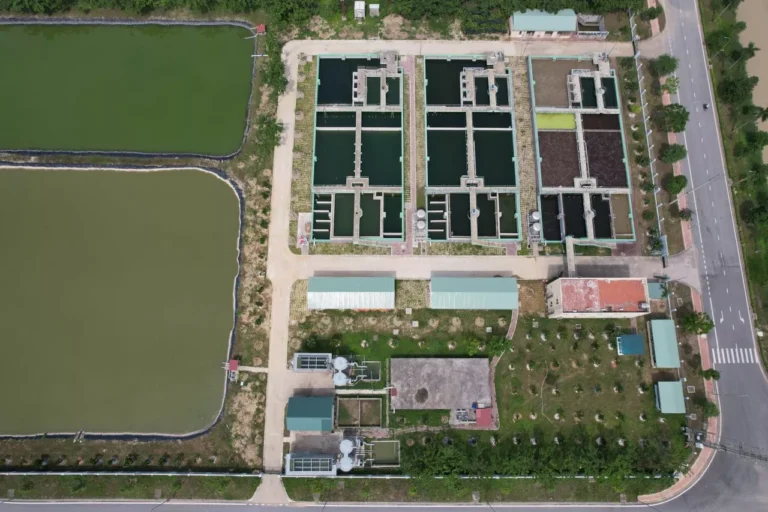
A defining aspect of Ebb’s strategy is its focus on integrating OAE directly into desalination facilities. Desalination plants, which process hundreds of millions of tonnes of seawater every day, represent a vastly underutilized platform for carbon removal. Ebb’s modular electrochemical system is designed to plug into existing plant operations with minimal disruption, intercepting the concentrated brine waste stream produced during the desalination process. Rather than being discharged back into the sea unchanged, this brine is fed through Ebb’s system, which converts it into an alkaline solution. When this alkalinity-enhanced water is returned to the ocean, it naturally draws down CO₂ from the atmosphere and converts it into stable bicarbonate.
This approach offers multiple complementary benefits for desalination operators. In addition to enabling carbon removal, Ebb’s process increases freshwater recovery, reduces energy consumption, and generates valuable chemical co-products that can be reused in the desalination process or sold to offset operational costs. By turning brine—a major environmental and economic challenge for desalination plants—into a climate solution, Ebb provides a compelling business case that aligns decarbonization with operational efficiency and profitability.
Because the company’s technology relies heavily on existing infrastructure, Ebb sees a clear pathway to rapid scale. With global desalination capacity continuing to grow, the company estimates that current infrastructure alone could theoretically support billions of tonnes of carbon removal per year. This scalability is a key reason that large corporate buyers such as Google have begun making early investments in OAE-based carbon removal.
“We’re thrilled to work with Google to scale low-cost carbon removal with Ebb’s technology,” said Ben Tarbell, CEO of Ebb. “The natural systems in the ocean represent the most powerful and rapidly scalable path to meaningful carbon removal. By integrating our technology with desalination facilities, we’re transforming what has historically been a waste stream into a climate solution. Perhaps most importantly, Ebb’s technology can support our desalination partners’ core business through additional freshwater recovery, energy savings, and valuable chemical co-products. Our ability to remove CO₂ at scale becomes the natural outcome of smart business decisions—a powerful financial incentive that will drive expansion of our technology.”
Ebb is also expanding its R&D ecosystem through collaboration with Alphabet’s innovation lab, X, the Moonshot Factory. The two organizations have been working together to explore value-added uses for the acid coproduct generated through Ebb’s OAE process. Acid management has historically been a challenge for many electrochemical climate technologies, but X has developed a new approach that uses this type of acid to recycle concrete waste. By dissolving and repurposing concrete fines—the byproducts of demolition and construction—this method not only supports the circular economy in building materials but also holds the potential to enable extremely low-cost or even cost-negative carbon removal.
X estimates that, if proven at scale, this acid utilization pathway could enable approximately 100 million tonnes of annual CO₂ removal while preventing concrete waste from entering landfills. Turning a waste stream into a revenue stream could fundamentally shift the economics of ocean alkalinity enhancement.
“Combining Ebb’s electrochemical approach to ocean alkalinity enhancement with X’s acid utilization technology has the rare potential for cost-negative carbon sequestration,” said Antonio Papania-Davis, Project Lead at X. “It’s rare for waste streams to become revenue streams, and we hope our research provides the industry with a blueprint for harvesting this untapped value.”
John Platt, Google Climate & Science Fellow, echoed this perspective, emphasizing the importance of innovation in the carbon removal landscape. “The possibility of highly affordable carbon dioxide removal is extremely exciting. The combination of ideas from Ebb and X are the kind of creative thinking that we need to solve the climate crisis.”
The partnership between Google and Ebb is grounded in a shared history. Before launching Ebb in 2021, cofounders Ben Tarbell and Matt Eisaman previously led climate and carbon removal programs at Alphabet. This foundation has helped establish deep trust and alignment around the scientific rigor, transparency, and technological ambition needed to advance the early-stage CDR industry.
As the world moves toward gigaton-scale decarbonization pathways, investments like Google’s prepurchase agreement with Ebb demonstrate increasing corporate commitment to emerging climate technologies. While engineered and ocean-based carbon removal approaches remain early in commercial deployment, partnerships between technology innovators, large corporate buyers, and infrastructure operators—such as desalination authorities—are rapidly accelerating the pace of progress.
Ebb’s expanding partnerships signal a broader shift toward integrated, infrastructure-based carbon removal solutions that can scale responsibly, cost-effectively, and in harmony with existing industrial systems. With strong momentum from both the public and private sectors, Ebb is positioning itself at the forefront of the global effort to unlock durable, ocean-powered carbon sequestration at unprecedented scale.
Source Link: https://www.businesswire.com/