

Duke Energy Files North Carolina Rate Requests to Support Reliability Investments and Rapid Economic Growth
Duke Energy has submitted formal requests to the North Carolina Utilities Commission (NCUC) seeking revised rates for its two state-regulated utilities, Duke Energy Carolinas and Duke Energy Progress. The filings outline substantial investments the company says are necessary to strengthen grid reliability, support surging electricity demand, and maintain long-term affordability for customers.
Major Revenue Adjustments Proposed
In its filings, Duke Energy is requesting an annual revenue increase of $1 billion for Duke Energy Carolinas—$727 million in 2027 and $275 million in 2028—which reflects a 15% rise over current revenues. For Duke Energy Progress, the company is seeking $729 million in additional annual revenue, including $528 million in 2027 and $200 million in 2028, representing a 15.1% increase. These requests assume a 10.95% return on equity and a 53% equity capital structure, subject to NCUC review and approval.
If approved, typical residential customers using 1,000 kWh per month would see the following changes:
- Duke Energy Carolinas:
Bills would rise by $17.22 per month on Jan. 1, 2027 (from $144.98 to $162.20), followed by another $6.34 increase in 2028. Commercial customers would experience average increases of 8.7% in 2027 and 3.9% in 2028, while industrial customers would see hikes of about 6.3% and 3.4%, respectively. - Duke Energy Progress:
Monthly bills would increase by $23.11 on Jan. 1, 2027 (from $163.84 to $186.95), with an additional $6.59 rise the following year. Commercial bills would increase 9.2% in 2027 and 4.6% in 2028; industrial customers would see 7.4% and 4.3% increases.
Focus on Affordability and Cost Savings
Kendal Bowman, Duke Energy’s North Carolina president, emphasized the company’s effort to balance customer affordability with the need for ongoing investment. “Our goal is to deliver reliable power at the lowest possible cost for customers,” Bowman said. “It’s important to strike the right balance of prioritizing investments that enhance the energy grid for current and future needs while also maximizing cost-saving measures for our customers.”
The company outlined several initiatives that have reduced costs for customers or helped mitigate rate impacts:
- Storm recovery bonds issued after Hurricane Helene and other major weather events are saving customers $422 million.
- Duke Energy’s nuclear fleet is generating substantial tax credits. Current rates return $150 million in nuclear production tax credits to Duke Energy Carolinas customers in 2025–2026. The new filings propose extending nuclear credits to Duke Energy Progress customers and adding new tax credits tied to solar and hydropower.
- Falling fuel costs enabled reductions to winter rates last year—6.2% for Duke Energy Carolinas and 4.5% for Duke Energy Progress.
- Duke Energy says merging Duke Energy Carolinas and Duke Energy Progress would generate more than $1 billion in future customer savings.
Strengthening Grid Reliability
The proposed rate adjustments support continued investment in grid modernization, including rapid expansion of self-healing technology. Since 2022, the number of North Carolina customers served by this technology has tripled, and now reaches 75% of customers statewide. The benefits are substantial: in the first 10 months of 2025, self-healing systems prevented more than 1.1 million outages, saving nearly 2.6 million hours of cumulative outage time.
Other reliability-focused work over the past five years includes:
- 43,500 miles of vegetation trimming
- 116,430 distribution pole replacements
- 13,403 wooden transmission poles upgraded to steel or concrete
Notably, no upgraded steel or concrete poles required replacement after Hurricane Helene—helping accelerate restoration after the state’s most destructive storm on record.
Powering North Carolina’s Rapid Growth
Duke Energy serves 3.6 million retail customers statewide and has added approximately 150,000 new customers over the past two years, driven primarily by residential and small business growth. The state’s booming economy has triggered unprecedented electricity demand. In 2025 alone, companies have announced new projects totaling more than 25,000 jobs and $19 billion in capital investment, much of it tied to new manufacturing facilities.
To meet this surging demand, the company is investing in both its existing generating fleet and new capacity:
- Duke Energy is increasing output from its nuclear fleet by adding nearly 300 MW of clean capacity through power uprates at four stations by 2031. The fleet has delivered the nation’s lowest operating cost per MWh in four of the past six years.
- New natural gas projects recently approved by the NCUC for Person and Catawba counties will provide highly efficient, dispatchable capacity.
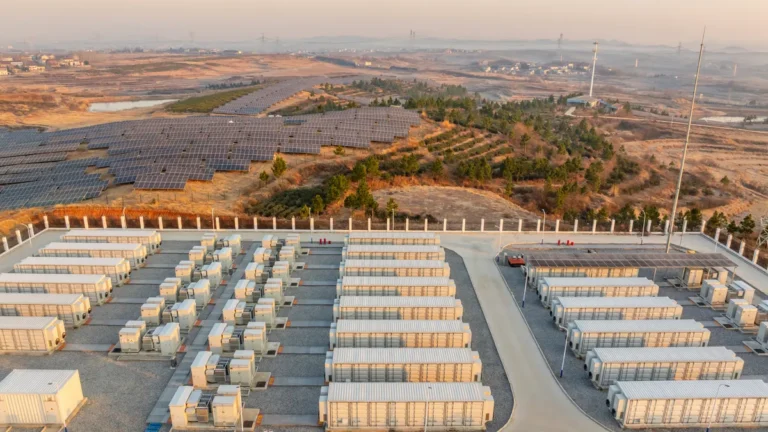
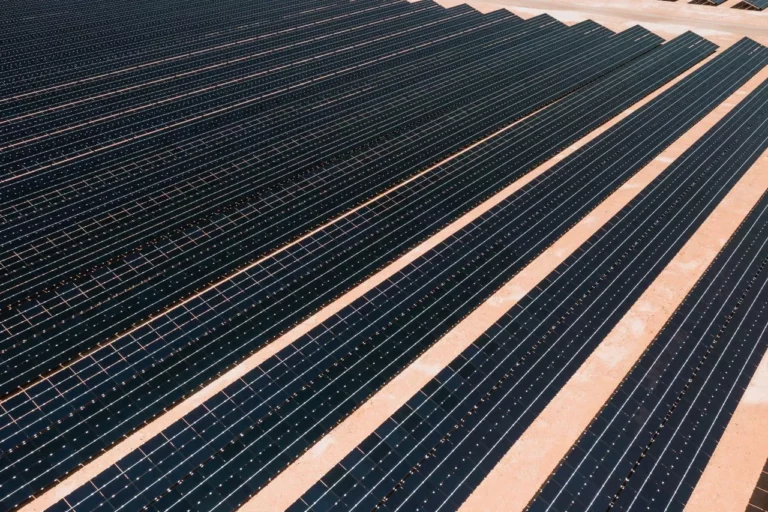
- The multiyear rate plan includes $1.7 billion in battery storage investments for 2027–2028, plus nearly $400 million in solar and solar-plus-storage developments—totaling 276 MW of new solar capacity and 31 MW of paired storage.
Source Link: https://news.duke-energy.com/